
[Asia Economy Reporter Junho Hwang] Even among the same individuals, some are vulnerable to drug addiction while others are not. How does this difference arise? The Korea Brain Research Institute, in collaboration with POSTECH and Mount Sinai School of Medicine in the United States, confirmed through joint research that a gene in certain neurons located in brain regions responsible for mood and emotions determines this vulnerability. The research results were published on the 26th in the leading psychiatry journal, Biological Psychiatry.
Identifying Characteristics of Rats Vulnerable to Drug Addiction
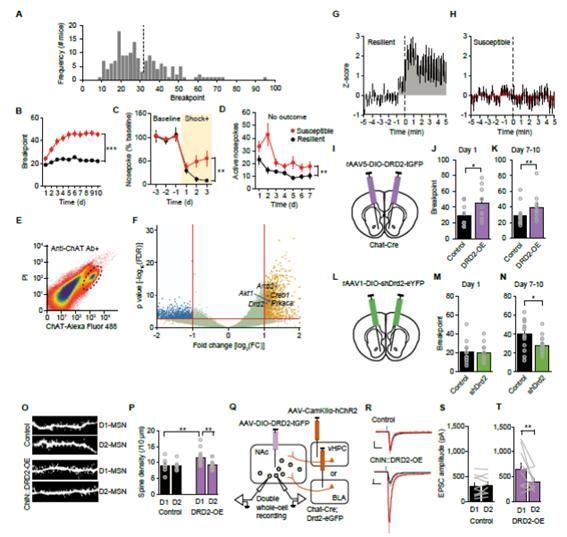 Elucidation of Cocaine Addiction Behavior Induced by DRD2 Overexpression in Cholinergic Neurons within the Medial Septum
The research team conducted experiments using a rat model designed for self-administration of cocaine. As a result, they found that even among rats administered the same amount of cocaine, only the cholinergic neurons of the rats vulnerable to addiction showed an increased expression of the DRD2 (dopamine D2-type receptor gene) and a relatively decreased cellular activity.
The team determined that DRD2 expressed in cholinergic neurons suppressed the neurons' own activity. They confirmed that changes in DRD2 cause cholinergic neurons to regulate the activity of the entire population of medium spiny neurons in various ways, making the subject more vulnerable to addiction.
Cholinergic neurons are nerve cells located in the medial septum of the limbic system in the cerebrum, which regulates mood and emotions. Although cholinergic neurons constitute only a very small portion (1?2%) of the medial septum, they are known to regulate the activity of this area by secreting acetylcholine (a neurotransmitter).
Dopamine is a hormone commonly called the "pleasure hormone," and dopamine receptors are receptors on the cell membrane that bind dopamine and induce physiological changes inside the cell. Among these, DRD2 refers to the gene that expresses the D2-type dopamine receptor, one of five types of dopamine receptors. Typically, when drugs such as marijuana or cocaine enter the body, dopamine levels in the brain's reward circuit increase directly. As a result, dopamine receptors are activated, increasing cravings for the drug, which leads to addiction. Drug addiction refers to the behavior of compulsively seeking and using drugs despite anticipating harmful consequences.
Could This Lead to Treatments for Drug Addiction?
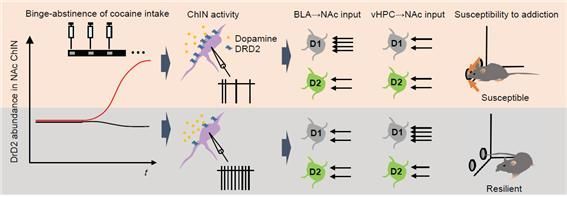 Physiological Change Model Occurring in Cholinergic Neurons of Drug-Addicted Mice and Non-Addicted Mice
The research team stated, "By exploring gene expression patterns in cholinergic neurons at the whole-genome level among individuals, we have pioneered a new field in addiction research," and added, "We plan to conduct follow-up studies not only on the detailed molecular mechanisms explaining why DRD2 is more highly expressed in addiction-vulnerable populations but also on the efficacy of candidate drugs that regulate this."
The team expects that if follow-up studies such as "Efficacy testing of acetylcholine receptor agonists that regulate synaptic plasticity in a neural circuit-specific manner on addictive behaviors" are conducted, new therapeutic strategies for substance use disorders could be established.
© The Asia Business Daily(www.asiae.co.kr). All rights reserved.
![Clutching a Stolen Dior Bag, Saying "I Hate Being Poor but Real"... The Grotesque Con of a "Human Knockoff" [Slate]](https://cwcontent.asiae.co.kr/asiaresize/183/2026021902243444107_1771435474.jpg)


















