[Asia Economy Reporter Kiho Sung] The government is repeatedly deliberating on the extension of the individual consumption tax (ICT) reduction on passenger cars, which is set to expire at the end of next month. Given the current circumstances, the possibility of extending the 70% tax cut appears low. For this reason, domestic automakers have expressed concerns that if domestic demand collapses on top of exports being halved due to the impact of the novel coronavirus disease (COVID-19), the parts industry and related sectors will suffer significant damage.
According to the Ministry of Economy and Finance and other government sources on the 25th, the extension plan for the passenger car ICT reduction is unlikely to be included in the economic policy direction for the second half of the year, which is scheduled to be announced in early next month.
As part of COVID-19 domestic demand measures, from March to June, the government has been reducing the ICT on passenger cars by 70%, from 5% to 1.5%, up to a limit of 1 million KRW for purchases made during this period. Customers purchasing passenger cars during this time can receive benefits of up to 1.43 million KRW, including a maximum ICT reduction of 1 million KRW, an education tax of 300,000 KRW (30% of the ICT), and a value-added tax of 130,000 KRW (10% of the combined ICT and education tax).
The biggest reason the government finds it difficult to extend the 70% ICT reduction is due to legal obstacles. Extending the 70% ICT cut requires a revision of the law. With the 20th National Assembly ending this week and the 21st National Assembly opening, considering negotiations for the organization of the National Assembly, a gap of one to two months in the legislature is inevitable. A Ministry of Economy and Finance official stated, "Various options are currently being discussed," but added, "In principle, the ICT reduction is scheduled to end at the end of June."
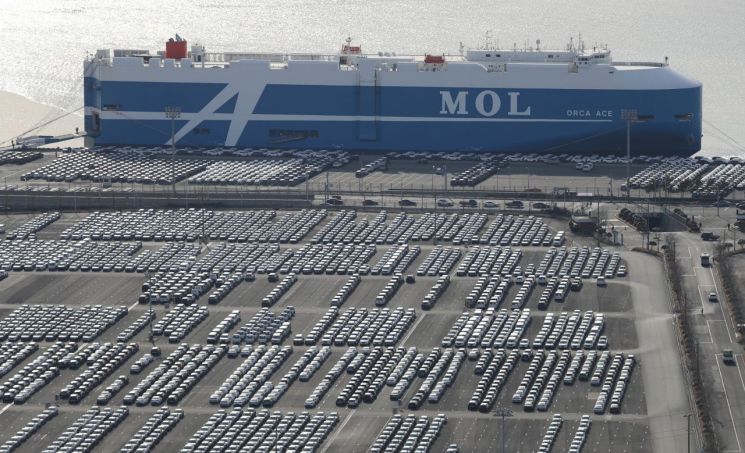
Domestic automakers, facing an export cliff, are deeply concerned. According to the Korea Customs Service, passenger car exports from the 1st to the 20th of this month decreased by 58.6% compared to the same period last year. Considering that passenger car exports decreased by 35.6% last month, exports have been hit even harder.
In particular, many popular domestic models take more than a month from contract to delivery, so they are expected to be directly affected. A representative from an automaker said, "If the ICT reduction ends, we expect at least a 20% drop in sales." A dealer representative said, "Most customers visiting our stores recently have been asking about the extension of the ICT reduction," adding, "If the ICT reduction ends, things will become more difficult." If domestic sales suffer due to the end of the ICT reduction, it will inevitably have a negative impact not only on automakers but also on parts manufacturers and related industries such as steel and metals.
The industry hopes that if extending the 70% ICT reduction is difficult, at least a 30% reduction plan will be implemented. A 30% ICT reduction can be implemented through an enforcement decree without the need for a legal amendment. The automotive industry has already made various appeals to the government to extend the ICT reduction to maintain the domestic market.
© The Asia Business Daily(www.asiae.co.kr). All rights reserved.
![Clutching a Stolen Dior Bag, Saying "I Hate Being Poor but Real"... The Grotesque Con of a "Human Knockoff" [Slate]](https://cwcontent.asiae.co.kr/asiaresize/183/2026021902243444107_1771435474.jpg)
















