UNIQLO Sister Brand Jiyu Ultimately Ceases Korean Operations
Japanese Brands Like Descente and Ministop Face Management Difficulties and Operating Losses
[Asia Economy Reporter Lee Seon-ae] Japanese brands operating in Korea are collapsing. They were hit hard by the consumer recession caused by the COVID-19 pandemic, following the 'Japan boycott movement' that began last year. Most Japanese brands posted large-scale losses last year and are leaving the Korean market due to management difficulties.
Uniqlo's Sister Brand Jiyu "Withdrawing from Korea"
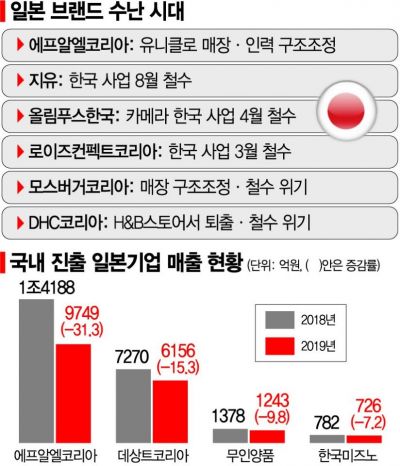
According to FAL Korea on the 22nd, Jiyu, Uniqlo's sister brand, will cease operations of its stores in Korea in August. The company decided to withdraw from the business just two years after entering the Korean market. Jiyu currently operates three stores: Lotte World Mall, Lotte Mall Suji, and Yeongdeungpo Times Square. The domestic online store will also operate only until the end of July. After that, only some products will be sold through the Uniqlo online store. The biggest reason for Jiyu's decision to withdraw is the impact of the boycott movement against Japanese products. Jiyu, which had a small sales scale and low brand awareness, found it increasingly difficult to sustain operations. Additionally, after COVID-19, many people have been reluctant to go out, leading to a situation where clothes simply do not sell. Uniqlo itself has also been conducting intensive restructuring, including closing some stores and pushing for layoffs due to poor sales last year and this year.
On top of that, the fast fashion SPA (Specialty retailer of Private label Apparel) brands, known for quickly releasing short-lived trendy clothes, have inevitably suffered greater damage, according to industry analysis. A fashion industry insider explained, "Due to social distancing and refraining from going out, SPA brands, which are sensitive to trends, have inevitably been hit harder."
Olympus Korea will also withdraw from the domestic camera market next month. Given the rapid shrinkage of the domestic camera market in recent years, the poor image of Japanese brands, and the lack of recovery in consumer sentiment due to COVID-19, it was judged that continuing the business would be difficult. Royce Confect Korea, which operates the chocolate brand 'Royce Chocolate,' closed its Korean business in March. The hamburger brand 'Mos Burger' expanded to 23 stores in 2018 but has been sequentially closing stores since the Japanese product boycott movement, and it is understood that fewer than 10 stores remain nationwide, facing a withdrawal crisis. The cosmetics brand 'DHC' has also been ousted from major online and offline sales channels, including H&B stores and e-commerce, due to the boycott movement, and is unable to conduct proper business.
Boycott Movement and COVID-19, Adding Insult to Injury
The deterioration of Japanese companies' performance is at a serious level. Descente Korea boasted significant growth until the boycott movement began. Sales, which reached 20.7 billion KRW in 2002, grew to 727 billion KRW in 2018. However, it suffered the humiliation of withdrawing its store from Gangnam-daero, the mecca of the domestic sports market, due to the boycott. Last year's sales were 615.6 billion KRW, down 15.3% from the previous year, and operating profit plunged 86.7% to 9 billion KRW.
FAL Korea, which operates Uniqlo and Jiyu, also saw sales drop 31.3% year-on-year to 974.9 billion KRW last year, and operating profit turned to a loss of 1.9 billion KRW. It is the first time since 2014 that Uniqlo's annual sales in Korea fell below 1 trillion KRW. Muji, a representative Japanese lifestyle brand, is also experiencing poor performance. Last year's sales fell 9.8% to just 124.3 billion KRW, and operating profit turned to a loss of 7.1 billion KRW.
Korea Ministop also received a poor report card due to the boycott movement. According to the securities report of Japan Ministop, Korea Ministop recorded sales of 1.1953 trillion KRW in fiscal year 2019 (March 2019 to February 2020), down 9.4% from the previous year. Operating profit was 2.8 billion KRW, a sharp drop of 50.8% compared to 2018. Net loss was 1.3 billion KRW, turning to a deficit from the previous year.
Japanese beer is also struggling in the Korean market. Last year, imports of Japanese beer decreased by 49.2%, recording 39.76 million USD, losing the top spot to China. This is the first time in 14 years that Japanese beer imports have declined. Accordingly, companies are also facing serious performance declines. Lotte Asahi Liquor's sales last year were 62.3 billion KRW, down by half from 124.8 billion KRW the previous year. Net income turned into a loss of 18.2 billion KRW from a profit of 6.6 billion KRW.
An official from the distribution industry said, "The boycott movement was intense and unusually prolonged, causing Japanese brands' performance to plummet," adding, "Facing the COVID-19 recession as well, this year's situation does not look good, and movements to reduce business scale or withdraw are expected to increase."
© The Asia Business Daily(www.asiae.co.kr). All rights reserved.

















