[Asia Economy Beijing=Special Correspondent Sunmi Park] During this year's China Two Sessions, the voices of heads of information technology (IT) companies advocating for the development of advanced emerging industries are gaining momentum. Especially this year, as the Chinese government has announced plans to expand advanced industrial infrastructure to revive the economy hit by the COVID-19 pandemic, policy proposals from IT companies are pouring in like a flood.
According to Xinhua News Agency, on the 22nd, Chinese Premier Li Keqiang stated in the government work report at the National People's Congress (NPC) held at the Great Hall of the People in Beijing that they will promote manufacturing upgrades and the development of emerging industries while expanding effective investment. He explained, "We will develop the industrial internet and promote smart manufacturing," and "continue to introduce support measures to fully promote 'Internet+' and build a digital economy." He added, "China will enhance the resilience of advanced technologies," and "develop next-generation information networks and expand 5G applications."
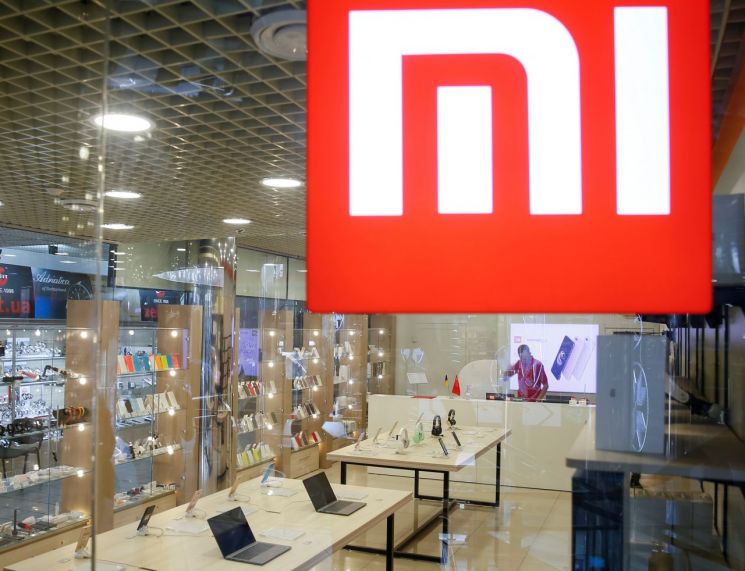
Lei Jun, chairman of Xiaomi (小米), a smartphone and home appliance manufacturer attending this year's Two Sessions as an NPC delegate, prepared four policy proposals in the areas of ▲satellite internet ▲disaster early warning systems through smart devices ▲complementing financial support services for small and medium-sized enterprises ▲and attracting overseas high-level talent.
Regarding emerging industries, Chairman Lei stated, "The satellite internet industry chain, including satellite manufacturing, satellite launches, equipment manufacturing, satellite operation, and services, all require significant capital investment and long investment periods. Currently, most Chinese companies entering this industry are small and focused on the research and development stage. National-level planned guidance is necessary. The 14th Five-Year Plan (2021?2025) should include a focused development strategy for satellite internet to nurture it as a national industry. Also, entry restrictions should be relaxed for private enterprises to use commercial satellites for commercial services."
He also said, "The year 2020 was an important year for the comprehensive construction of a moderately prosperous society and the conclusion of the 13th Five-Year Plan. It is crucial to identify, control, and provide early warnings for risks in advance. A nationwide disaster early warning system should be established based on 5G, artificial intelligence, and Internet of Things technologies. To achieve this, key research projects should be fostered, relevant regulations revised, and administrative obstacles removed. Although China's internet penetration rate and smart device ownership have reached world-leading levels, unlike hardware requirements, the software environment to utilize these still has many areas needing improvement."
Li Yanhong, chairman of Baidu (百度), China's largest search company, attending the Two Sessions as a member of the Chinese People's Political Consultative Conference (CPPCC), proposed that the Chinese government establish a personal information management system based on data collected during the COVID-19 response.
Chairman Li advised that to reduce the risks of leakage and misuse of personal information related to COVID-19, government agencies should establish standards and standardize management for the collection, storage, and use of personal information under "special circumstances." He also proposed accelerating the construction of nationwide digital social infrastructure and smart transportation systems by utilizing the latest technologies such as 5G and artificial intelligence.
Ma Huateng, chairman of Tencent (騰迅), a Chinese internet and gaming company, submitted seven proposals related to ▲industrial networks ▲rural revitalization ▲financial technology ▲medical services ▲small and medium enterprise development ▲regional development ▲and ecological protection. He emphasized that the industrial network should be maintained as a national strategy and various systems and mechanisms should be devised to accelerate its implementation.
In his proposal, he explained the background for the need to develop industrial networks: "The important role of industrial networks was confirmed during the COVID-19 prevention and control process. This is a representative example of the integration of advanced technologies such as the internet, big data, and artificial intelligence with the real economy." He added, "Policy focus should be on promoting new infrastructure construction, digital transformation of all aspects of life, innovation in scientific research and development, smart city initiatives, and internet information security." He stressed, "To this end, it is urgent to build cloud computing infrastructure, foster data intermediary platforms for data sharing, activate open-source innovation ecosystems, and enhance digital research and development capabilities." Furthermore, he emphasized promoting the establishment of industrial network platforms based on international standards and ensuring that various industries in the national economy are connected to the internet and digitalized.
Chairman Ma has attended the Two Sessions annually as an NPC delegate but reportedly did not attend this year's NPC meeting due to health issues. He also missed the NPC meeting in 2014 due to lumbar disease.
Meanwhile, China is expected to invest 1,730 trillion won in advanced new technology fields such as artificial intelligence and the Internet of Things by 2025. According to Bloomberg, China has a new plan to invest 10 trillion yuan (approximately 1,730 trillion won) by 2025 to wrest the top spot in the global advanced technology sector from the United States. Bloomberg reported that this plan is likely to be approved during the Two Sessions (CPPCC and NPC) held until the 28th. It is also part of the fiscal policy promoted by the Chinese government but aligns with the direction of the 'Made in China 2025' project, which has faced U.S. restrictions, aiming to reduce China's dependence on foreign technology.
This plan, which will invest 1,730 trillion won over six years from this year to 2025, involves local governments and leading Chinese IT companies such as Huawei, Alibaba, Tencent, Digital China, and SenseTime playing central roles. The focus of investment includes 5G communication network construction, cloud computing, IoT, big data, AI software supporting autonomous driving, factory automation, and facial recognition.
Nanan Kou, head of research at market research firm BloombergNEF, explained, "China's new economic stimulus plan could drive the integration of industrial internet companies," adding, "Industry 'giants' capable of competing with major global leaders like General Electric (GE) and Siemens could emerge. By 2025, China could produce one of the world's top three companies in the IoT platform sector."
© The Asia Business Daily(www.asiae.co.kr). All rights reserved.
![Clutching a Stolen Dior Bag, Saying "I Hate Being Poor but Real"... The Grotesque Con of a "Human Knockoff" [Slate]](https://cwcontent.asiae.co.kr/asiaresize/183/2026021902243444107_1771435474.jpg)
















