Most Food and Retail Stores
Card Companies Provide Regional Lookup Services
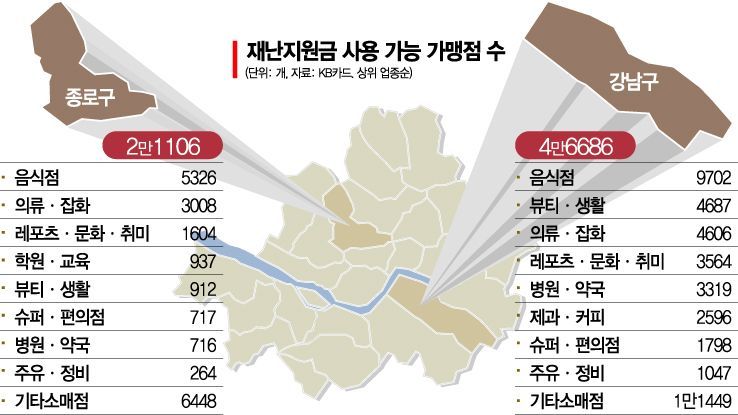
[Asia Economy Reporter Ki Ha-young] It has been reported that the number of places where the government’s emergency disaster relief funds can be used in Gangnam is nearly twice that of Jongno. This is analyzed to be because Gangnam has a large floating population and is concentrated with hospitals and academies.
According to the disaster relief fund usage merchant map by KB Kookmin Card on the 14th, there are a total of 46,686 merchants in Gangnam-gu, Seoul, where the emergency disaster relief funds can be used. Among them, restaurants and other retail stores accounted for the largest shares in disaster relief fund usage locations, with 9,702 and 11,449 places respectively.
Restaurants accounted for 20.8% of the total. Emergency disaster relief funds can be used not only at famous brands such as Saeng Augustin and Bondo Lunchbox but also at small-scale restaurants that are not franchises.
The proportions of beauty & lifestyle businesses, clothing & miscellaneous goods stores, and academies & educational stores also approached 10% each. Among the stores in the beauty & lifestyle sector, 4,687 places accepted the disaster relief funds, accounting for 10%. Clothing & miscellaneous goods stores, such as clothing shops in the Gangnam Station underground shopping center, numbered 4,606, accounting for 9.9%. There were as many as 3,918 academies where the disaster relief funds could be used.
Due to the characteristics of the Gangnam commercial district, which is densely populated with hospitals such as plastic surgery and dermatology clinics, there were 3,319 hospitals and pharmacies where the disaster relief funds could be used. Although the government’s emergency disaster relief funds cannot be used at department stores, large marts, or entertainment bars, there are no special restrictions on hospitals, so the funds can be used to pay for plastic surgery procedures. There were 3,564 merchants in the leisure, culture, and hobby sector, including CGV cinemas and bookstores, and 2,596 in the bakery & coffee sector. Supermarkets and convenience stores numbered 1,798, accounting for 3.85% of the total.
In Jongno-gu, Seoul, where large offices such as Gwanghwamun are concentrated, a total of 21,106 places accept the disaster relief funds. Similar to Gangnam-gu, restaurants and other retail stores accounted for the largest shares of disaster relief fund usage locations.
The number of restaurants where the disaster relief funds could be used totaled 5,326, accounting for 25.2% of the total. Other small-scale retail stores and small to medium-sized businesses numbered 6,448, making up the highest proportion of 30.55% among all disaster relief fund usage locations.
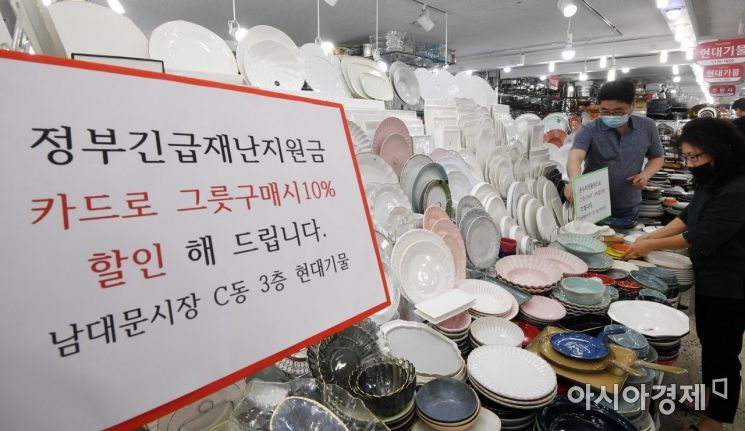
In Jongno, there were many clothing & miscellaneous goods stores where the disaster relief funds could be used due to the concentration of small clothing businesses such as Dongdaemun Shopping Center. The total was 3,008 places, accounting for 14.3%. Merchants in the leisure, culture, and hobby sector followed with 1,604 places (7.6%). Additionally, in Jongno-gu, there were 1,174 bakery & coffee shops such as cafes, 912 beauty & lifestyle stores including cosmetics shops, 937 academies & educational institutions, 717 supermarkets & convenience stores, and 716 hospitals & pharmacies where the disaster relief funds could be used.
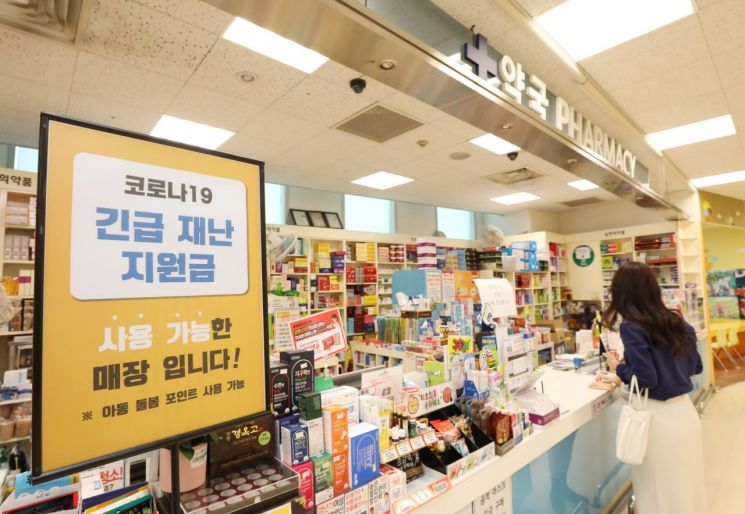
Meanwhile, the government’s emergency disaster relief funds have been available for use since the 13th of this month. After applying for the disaster relief funds, a text message confirming that the funds are available for use is sent within 48 hours of the funds being credited. Card companies send usage details via text message when the disaster relief funds are used. For example, “Government emergency disaster relief fund usage amount 10,000 KRW, remaining balance 390,000 KRW.” The disaster relief funds must be used by August 31 at credit card merchants located within the special/metropolitan city or province where the head of the household resides. Any unused balance after this date will be forfeited and returned to the national treasury, so refunds are not possible.
Card companies are offering merchant guidance services. KB Kookmin Card has been providing a “disaster relief fund usage merchant map” service based on customer location through its app and mobile website since the 12th. Shinhan Card plans to offer a disaster relief fund map inquiry service within about two weeks. Samsung Card and Lotte Card allow searching for available merchants by region on their websites. Hyundai Card, Hana Card, and BC Card (Woori Card) are also preparing merchant search services.
The emergency disaster relief funds cannot be used at department stores (Shinsegae, Lotte, Hyundai, NC Department Store, AK Plaza, etc.), large marts (Emart, Emart Traders, Emart Everyday, Homeplus, Homeplus Express, Lotte Mart, Lotte Super, etc.), large electronics retailers (Samsung Digital Plaza, Hi-Mart, Electronic Land, LG Best Shop), or online shopping malls such as Coupang. However, delivery apps like Baedal Minjok and Yogiyo allow usage if payment is made on-site.
Merchants accept the disaster relief funds, but direct stores can only be used in the metropolitan area where the headquarters is located. Major convenience stores such as GS25, CU, Seven Eleven, and Emart24 are mostly franchises, so the funds can be used at virtually all their stores. Starbucks, which operates under a direct management system, only allows usage in Seoul, where its headquarters is located. However, Starbucks card recharging is not possible even in Seoul because Starbucks cards, which are prepaid and deducted as needed, are classified as gift certificates.
Additionally, usage is restricted at entertainment and luxury business merchants, gift certificate sales stores, and duty-free shops. Automatic payment transactions such as the four major insurances (life insurance, non-life insurance, health insurance, national pension), public transportation, and mobile communications are also excluded from the emergency disaster relief fund usage.
When using the emergency disaster relief funds with a card, all benefits of the card used, such as point accumulation, previous month’s spending requirements, and billing discounts, are applied equally. For example, if you use the disaster relief funds with a card that offers a 5% billing discount and spend 10,000 KRW, you can receive a 500 KRW refund later.
© The Asia Business Daily(www.asiae.co.kr). All rights reserved.



















