Production of ‘Gwangjin-type Village Bus Shade IoT Shade Shelter’ Utilizing Advantages of Smart Shade... Pilot Installation at 6 Village Bus Stops Including Gangbyeon Station and Gwangjin Information Library with High Foot Traffic
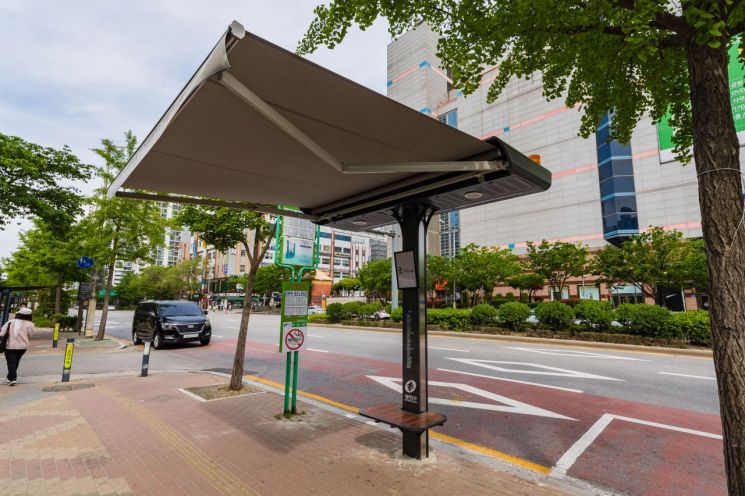
[Asia Economy Reporter Park Jong-il] Gwangjin-gu (District Mayor Kim Seon-gap) has taken the lead nationwide by installing and operating a pilot project called the ‘Gwangjin-type Village Bus IoT Shade Shelter’ at village bus stops to enhance convenience for residents using village buses in preparation for the upcoming summer heatwave.
The ‘Gwangjin-type Village Bus IoT Shade Shelter’ combines Internet of Things (IoT) and solar power technology, preserving the advantages of smart shade structures while significantly reducing the installation area compared to traditional bus stops, so as not to obstruct pedestrian movement.
The smart shade automatically opens and closes its canopy according to temperature and wind conditions, enabling rapid response to sudden weather events such as typhoons. It is also equipped with LED lighting powered by solar energy, which functions as nighttime security lighting.
Additionally, to address the inconvenience faced by residents who had to wait standing under direct sunlight without a designated bus stop due to narrow and cramped sidewalks, the district specially manufactured and installed convenience seats within the shelter.
The district selected six village bus stops, including Gangbyeon Station and Gwangjin Information Library, based on factors such as pedestrian density, shade availability, and sidewalk conditions, and installed the Gwangjin-type Village Bus IoT Shade Shelters as a pilot project.
During winter, the Gwangjin-type Village Bus IoT Shade Shelter will also be used as a cold wind-blocking shelter booth by installing transparent shields on the exterior.
District Mayor Kim Seon-gap stated, “This Gwangjin-type Village Bus IoT Shade Shelter project was initiated after careful consideration to proactively respond to the 2020 summer heatwave and to implement a project that benefits residents’ daily lives. We will do our best to always discover new projects from the residents’ perspective to ensure their safety throughout the summer.”
Following the installation of 11 smart shade shelters, the first of their kind in Seoul last year, the district expanded the number by adding 6 more in April this year, currently operating a total of 17 locations.
Furthermore, the district operates 61 fixed parasol-shaped shade shelters near crosswalks or traffic islands, as well as 19 tent-type shade shelters utilizing cold wind-blocking shelters.
Moreover, the district is promoting a cool roof project that applies special paint with solar reflection and heat-blocking effects on building rooftops of heat relief shelters, aiming to mitigate urban heat island effects and protect vulnerable groups such as the elderly from heatwaves.
© The Asia Business Daily(www.asiae.co.kr). All rights reserved.

















