Tax and Fiscal Research Institute's Tax and Fiscal Brief published on the 11th
Professor Gugi-dong "Abolishing transaction tax and switching to capital gains tax has more drawbacks than benefits"
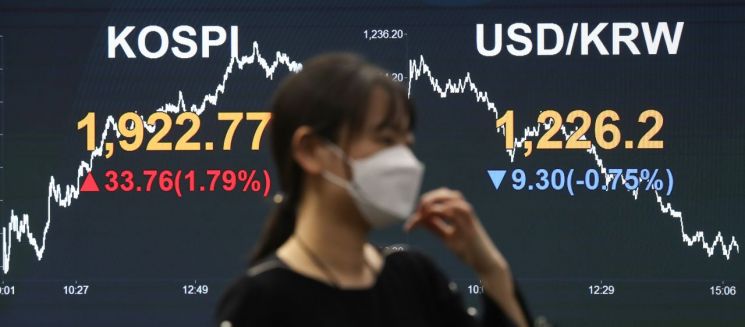
[Asia Economy Reporter Kim Hyunjung] Amid the so-called 'Donghak Ant Movement,' characterized by strong individual buying following the recent crash caused by the novel coronavirus disease (COVID-19) crisis, a claim has been raised that easing securities transaction tax could instead encourage short-term investments. This directly challenges market expectations both inside and outside that anticipated a phased abolition of transaction tax and strengthening of capital gains tax on stocks.
On the 11th, Professor Koo Kidong of Shingu University stated in the 'Tax and Fiscal Brief: The Role of Securities Transaction System and Taxation' published by the Korea Institute of Public Finance, "To control short-term investments, it is necessary to continue the concurrent application of securities transaction tax and capital gains tax." The Korea Institute of Public Finance is a government-affiliated research institute under the Office for Government Policy Coordination.
Professor Koo first emphasized the need to establish a complementary system by concurrently applying transaction tax and capital gains tax. He explained, "Transaction tax serves as a supplementary measure to capital gains tax to control speculation in securities trading and can resolve issues of tax equity undermined by the exemption of capital gains tax for foreign investors," adding, "In the structure of the domestic capital market, abolishing transaction tax and switching solely to capital gains tax has more drawbacks than benefits." He further stressed, "For stabilizing the domestic market sensitive to changes in the international financial environment and for establishing long-term investment, it is a desirable judgment to maintain both capital gains tax and transaction tax concurrently."
Regarding some claims that securities transaction tax reduces liquidity and lowers asset prices, thereby impairing market efficiency, he rebutted, "There is no significant difference in trading volume before and after the reduction of securities transaction tax in June 2019." In fact, the average daily trading volumes from April to August 2019 were 1,284.17 million shares, 1,357.97 million shares, 1,448.33 million shares, 1,306.44 million shares, and 1,261.645 million shares respectively, showing no major changes.
Professor Koo also argued for the need to expand monitoring and management functions against tax evasion in line with changes in trading systems, such as the increase in non-face-to-face financial transactions. He said, "As non-face-to-face financial transactions increase, online and mobile channel financial services are growing, and there is concern that high-frequency trading and program trading could undermine market stability," adding, "Especially, as the transaction tax rate decreases, the spread of high-frequency trading could disrupt the market." Furthermore, he stated, "Rather than restricting the trend of non-face-to-face contracts, it is necessary to establish specific compliance monitoring and internal control standards for algorithms suited to their characteristics, and to strengthen tax policies on non-face-to-face sales to minimize the risk of incomplete sales while preventing tax blind spots."
© The Asia Business Daily(www.asiae.co.kr). All rights reserved.

















