Children's Lost 'Noliteo'... Low Happiness Index Among Kids
No Time to Play Due to Private Academies and After-School Education
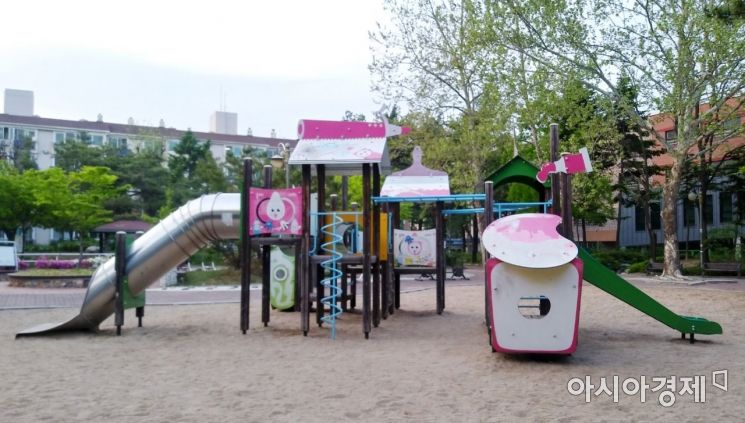 On the afternoon of the 4th, a day before Children's Day, the playground located in an apartment complex in Seoul. No children can be seen using the facility. Photo by Han Seung-gon hsg@asiae.co.kr
[Asia Economy Reporter Han Seung-gon, Intern Reporter Kang Joo-hee] "Have you ever seen children running and playing in a playground?"
On the occasion of Children's Day on the 5th, concerns are being raised that so-called 'children's right to play' is not being properly guaranteed. Due to studying at school and academies, children have no time at all, and playing in playgrounds has become a mere hope from the children's perspective.
A man in his 30s who recently said he had never encountered children in playgrounds said, "Even during the recent holiday period, I did not see any children in the playground," adding, "I don't know if everyone is just staying at home, but when I see the playground left empty, I feel sorry for the kids."
A parent in their 40s said, "Sometimes I come out to the playground with my children in the evening, but this is more like exercise," adding, "It doesn't seem like the usual noisy playing that we typically imagine children doing in playgrounds." He continued, "Children should be running around and playing like that to grow up, and as a parent, I feel sorry."
The United Nations Convention on the Rights of the Child is an international agreement encompassing all rights of children under 18 years old, adopted unanimously by the UN on November 20, 1989. A total of 196 countries worldwide, including South Korea (as of 2019), have committed to uphold it. The convention includes the rights to survival, protection, development, and participation that every child should enjoy.
The right to play is specified in Article 31 of the convention, stating, "States Parties recognize the right of the child to rest and leisure, to engage in play and recreational activities appropriate to the age of the child and to participate freely in cultural life and the arts."
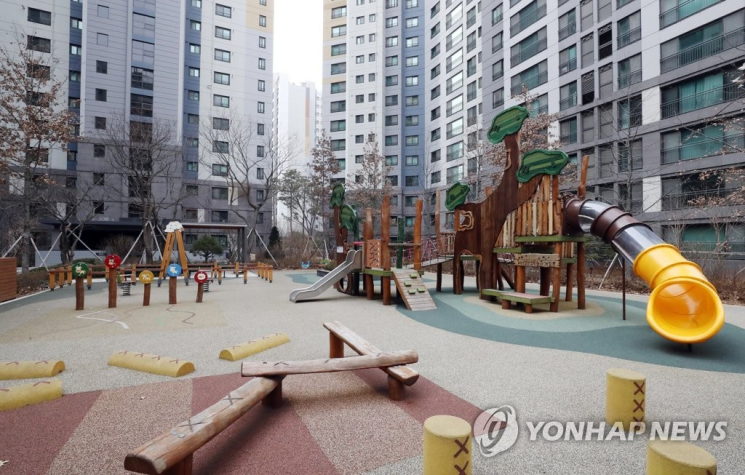
However, the reality is different. According to a survey, children literally have no 'play time' and are unable to run and play in playgrounds. The rights and authority of children are being infringed upon.
According to the '2018 Comprehensive Survey on Children' commissioned by the Ministry of Health and Welfare to the Korea Institute for Health and Social Affairs to assess time poverty, over 70% of children aged 9 to 17 responded that they usually lack time (always or sometimes). The older the age group (12 to 17 years), the more they struggled with lack of time.
The reasons were reported as follows: △ school (27.5%), △ friendships and activities outside school (27%), △ academies or private tutoring (23.3%), △ self-study (19.6%). Studying at school, academies, or private tutoring accounted for 70.4% of the responses indicating time shortage. The survey targeted 2,219 students aged 9 to 17, with 743 aged 9 to 11 and 1,476 aged 12 to 17 participating.
Youth felt a significant gap between their 'desired after-school activities' and 'actual activities' due to time constraints. In particular, the percentage of those who 'hope to play' with friends at playgrounds or PC rooms was 18.9% higher than those who actually did.
Conversely, the responses for 'attending academies or private tutoring' and 'doing homework at home' were 27.9% and 11.1% higher, respectively, than the desired levels.
 Academy district. The photo is unrelated to specific expressions in the article. [Image source=Yonhap News]
Parents feel they have no choice. Although some criticize this as greed, parents feel compelled to send their children to academies due to the anxiety that 'my child alone might fall behind' in the academic process.
A man in his 40s with two elementary school children said, "In our case, we don't send our children to many academies," adding, "It is true that school classes alone are insufficient." He continued, "Ultimately, children inevitably have less time to play, but parents try to make time to play with them as much as possible. Of course, we do feel sorry about this."
A parent in their mid-30s said, "Academies are not optional," adding, "Among parents, whether children run and play in playgrounds is honestly not a big issue." He emphasized, "However, parents always pay attention to ensure their children do not get stressed."
Given this situation, a survey showed that children's happiness index is low. In November last year, Save the Children, an international child relief organization, and Seoul National University's Social Welfare Research Institute compared children from 22 countries participating in the 'International Survey on Children's Quality of Life,' finding that South Korean children's 'subjective happiness' ranked 19th (84.4 points).
Albania (97.2 points), Greece (94.1 points), and Malta (91.7 points) ranked 1st to 3rd. Only Taiwan (84.0 points), Nepal (83.2 points), and Vietnam (82.4 points) scored lower than South Korea. The survey involved about 90,000 children aged 10 from 40 countries, including 3,171 from South Korea, comparing data from 22 countries where data compilation was completed.
The researchers compared happiness indices based on six indicators: money, time use, learning, relationships, safe environment, and self-satisfaction. South Korean children ranked 22nd in satisfaction with time use, the lowest. This is interpreted as being mainly due to the heavy burden of private education such as academy attendance. According to Statistics Korea, as of 2018, 82.5% of South Korean elementary students received private education, with an average of 6.5 hours per week.
Experts emphasize the need for social interest in guaranteeing children's right to play. The Korea Institute for Health and Social Affairs suggested in its report, "The state should continuously provide strong support so that children's right to play can become a culture of children in their living spaces, and local community private entities should actively develop various play projects."
© The Asia Business Daily(www.asiae.co.kr). All rights reserved.



















