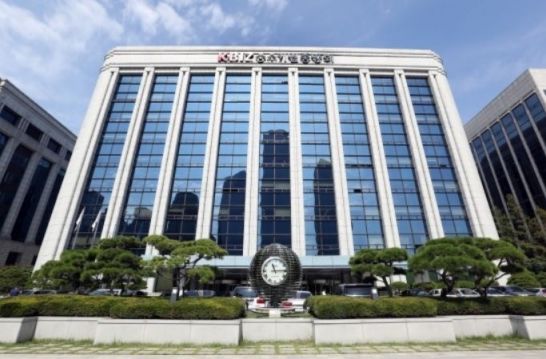
[Asia Economy Reporter Kim Daeseop] The Korea Federation of Small and Medium Business (Kbiz) announced on the 28th that it held the Corporate Succession Activation Committee meeting to discuss tax systems and other matters.
The Corporate Succession Activation Committee was held that day at the Kbiz headquarters in Yeouido, Seoul. Attendees included Seo Seungwon, Executive Vice President of Kbiz; Kim Hwamman, Co-Chairman of the Corporate Succession Activation Committee (President of the Korea Federation of Furniture Industry Cooperatives); Kim Deoksul, Co-Chairman (CEO of Samhae Sangsa); and Shin Sangcheol, Senior Research Fellow at the Small and Medium Business Research Institute.
Seo Seungwon, Executive Vice President, stated, "Due to the worsening economic crisis caused by the COVID-19 pandemic, job issues have become serious. It is necessary to prepare more proactive corporate succession policies and review tax support so that jobs can be maintained and created through corporate succession."
Kim Hwamman, Co-Chairman, said in his opening remarks, "The biggest reason corporate succession is difficult is the tax burden, such as inheritance tax. To facilitate smooth corporate succession, the business inheritance deduction system should be improved to reduce the burden on small and medium enterprises and promote long-term national development."
Kim Deoksul, Co-Chairman, also stated, "Successful corporate succession requires systematic and planned succession over more than 10 years, but the current gift tax special taxation system supporting prior gifts does not reflect reality, which is regrettable."
Shin Sangcheol, Senior Research Fellow at the Small and Medium Business Research Institute, presented on tax systems to activate business succession for small and medium enterprises.
Shin Sangcheol said, "Along with the overall aging trend in society, the aging of small and medium enterprise representatives is also progressing rapidly. It has been found that more than 27% of CEOs of small and medium corporations are aged 60 or older, indicating that succession procedures for small and medium enterprises will continue to proceed."
He emphasized, "If corporate succession is not smooth at this time, small and medium enterprises face risks of growth stagnation or exit, and socio-economic assets such as know-how accumulated over decades may be lost. Discussions on corporate succession due to the aging of small and medium enterprises should be approached not as wealth inheritance but from the perspective of sustainable corporate growth, economic stability, and job creation and maintenance."
In particular, he raised the necessity of shifting corporate succession from an inheritance perspective to a gift perspective, emphasizing the activation of the prior gift system.
Shin said, "Although the business succession tax system has had significant effects, such as reducing the tax burden to about 30% compared to 10 years ago through continuous institutional improvements, the risk of elderly-to-elderly succession remains, as children are already older when they inherit. Now, to make the economy younger and more dynamic, activation of the prior gift system is necessary."
He added, "First, the current special taxation limit for gift tax, which is only 10 billion KRW, should be expanded to 50 billion KRW, and the tax base should be expanded to ensure the sustainable growth of individual enterprises as well as corporations. The pre- and post-conditions of the business inheritance deduction system should be made realistic to fit the management environment of small and medium enterprises to enhance the effectiveness of the system."
© The Asia Business Daily(www.asiae.co.kr). All rights reserved.
![User Who Sold Erroneously Deposited Bitcoins to Repay Debt and Fund Entertainment... What Did the Supreme Court Decide in 2021? [Legal Issue Check]](https://cwcontent.asiae.co.kr/asiaresize/183/2026020910431234020_1770601391.png)
















