Forced Unpaid Leave Reaches 25 Days... Ruling Party Receives Government Proposal, Plans Lawmaker Bill Early Next Week
Kim Seong-won, Future United Party Lawmaker, Leads Special Act on Support for Korean Workers of USFK
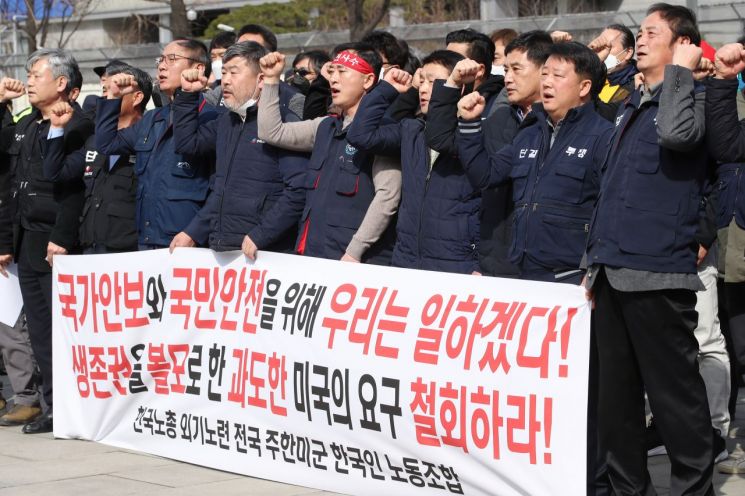
[Asia Economy Reporter Lim Cheol-young] The unpaid leave period for about 4,000 Korean workers employed by the US Forces Korea (USFK) has entered its 25th day. As the South Korea-US defense cost-sharing negotiations have once again reached a deadlock, if there is no dramatic change in the situation, the unpaid leave will soon reach one month. While the USFK, the employer, is not actively addressing the unpaid leave crisis of Korean workers, the Korean workers find themselves having to rely on a 'special law' being promoted by the government and the National Assembly for their livelihood.
According to the National Assembly and related ministries on the 25th, the Democratic Party of Korea, led by Ahn Kyu-baek, chairman of the National Defense Committee of the National Assembly, will propose a special law to support the livelihood of Korean workers employed by the USFK early next week. Earlier, on the 24th, Kim Sung-won, a member of the Budget and Accounts Special Committee from the United Future Party, had already submitted a 'Special Act on Support for Korean Workers Employed by the US Forces Korea,' which has been officially received.
The government, mainly through the Ministry of National Defense, has already collected opinions from Korean workers employed by the USFK to expedite the special law and plans to submit a government proposal to Chairman Ahn. Chairman Ahn intends to include a fast-track provision based on the plan submitted by the Ministry of National Defense to finalize the enactment of the special law in the 20th National Assembly and proceed with the review and deliberation process after the resolution is received.
Son Ji-oh, Secretary-General of the Korean Workers' Union of the US Forces Korea, said, "The government has actively gathered workers' opinions through various channels," adding, "Since the biggest issue is the livelihood of those on unpaid leave, we hope the opposition party will also actively cooperate to pass the special law promptly."
The longer the unpaid leave period extends, the more threatened the livelihoods of USFK Korean workers become. The Democratic Party's Policy Committee has defined Korean workers employed by the USFK as victims of the delay in the South Korea-US defense cost-sharing negotiations and expressed a willingness to provide swift support. The special law is expected to focus on indirect support measures for Korean workers, including specific support criteria and duration.
Yoon Kwan-seok, senior deputy chairman of the Democratic Party's Policy Committee, strongly criticized the US stance, saying, "They are blatantly pressuring us by repeating the existing logic that Korea should pay more because it is prosperous," and added, "It is a fact known to both South Korea and the US that this is a unilateral claim ignoring the long-standing rules maintained by the alliance."
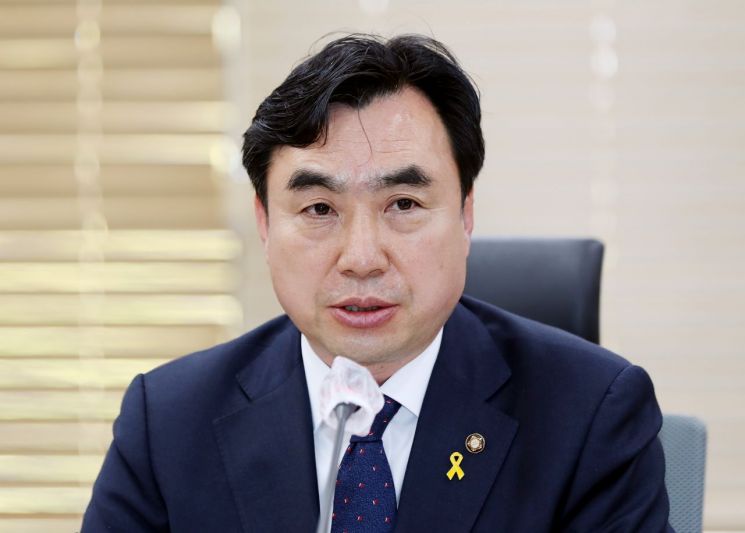
The special law is centered on indirect support for Korean workers at the government's expense. It is expected to include specific criteria, duration, and provisions to prevent recurrence. A government official explained, "We understand that all possible measures have been reviewed," adding, "The top priority is to resolve the threat to livelihoods."
Kim Sung-won, who previously submitted the special law bill, also emphasized the need to establish institutional measures to support Korean workers who are in a desperate situation struggling to maintain even basic livelihoods and to guarantee employment stability. The bill includes provisions such as △ government-funded livelihood stabilization allowances for unpaid leave Korean workers employed by the USFK △ priority payment of wages if South Korea-US negotiations are delayed again (recurrence prevention) △ establishment of a Korean Workers Support Committee under the Prime Minister △ establishment of a Korean Workers Support Working Committee under the Minister of National Defense.
Although the government and the National Assembly are working on a special law for Korean workers employed by the USFK, the fundamental solution?the South Korea-US defense cost-sharing negotiations?remains at a standstill. There are observations that the negotiations have returned to square one after President Donald Trump rejected the tentative agreement for a 13% increase in defense cost-sharing.
The South Korean government is reportedly not planning to make a new proposal to the US side immediately, suggesting that the deadlock will not be easily resolved. Some predict that progress in negotiations will be difficult until the US presidential election in November. If so, the unpaid leave period for Korean workers employed by the USFK will extend beyond seven months. A government official said regarding the defense cost-sharing negotiation schedule, "We are conducting discussions based on fair and reasonable sharing principles," adding, "There is nothing to report about the schedule at this time."
In the US, concerns about weakening the South Korea-US alliance and readiness against North Korea have also been raised, but the US government has continued to increase pressure by officially calling for a significant increase in defense cost-sharing. Since the start of the 11th Special Measures Agreement (SMA) negotiations in September last year, the US initially demanded $5 billion in defense cost-sharing, more than five times the previous amount.
On the 15th (local time), four US lawmakers including Senator Robert Menendez (Democratic ranking member of the Senate Foreign Relations Committee), Senator Jack Reed (ranking member of the Senate Armed Services Committee), Representative Eliot Engel (chairman of the House Foreign Affairs Committee), and Representative Adam Smith (chairman of the House Armed Services Committee) expressed concerns and regrets about the prolonged negotiations to US Secretary of State Mike Pompeo and Secretary of Defense Mark Esper.
They stated, "We agree that South Korea should take additional responsibility and meet increased burdens," but emphasized, "We have deep concerns that failure to reach a mutually acceptable agreement will undermine the proper functioning of the alliance itself." They also added, "(The prolonged defense cost-sharing negotiations) pose challenges to readiness and could threaten US security and the lives of US military personnel."
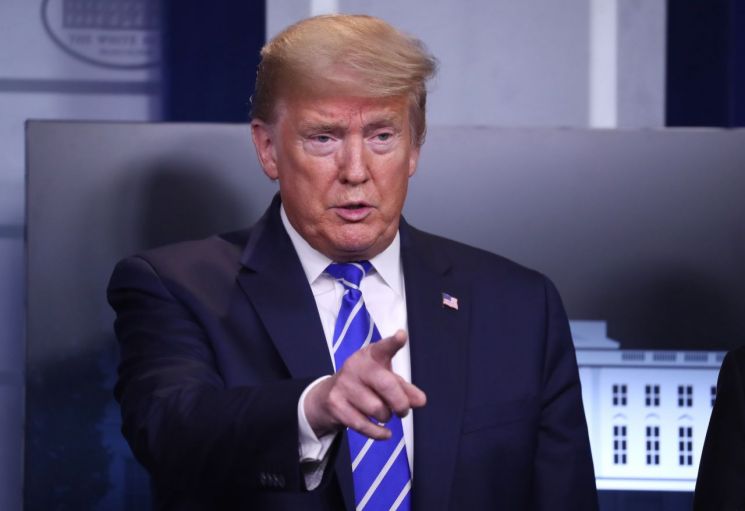
On the other hand, on the day (15th) when 600,000 Korean-made diagnostic test kits were loaded onto a Federal Emergency Management Agency (FEMA) cargo plane bound for Louisville, Kentucky, US Secretary of Defense Mark Esper emphasized in a briefing, "Wealthy Korea should pay more for our mutual defense and specific defense." Earlier, on the 6th, Esper had also stressed the "importance of fair defense cost-sharing" during a phone call with South Korean Minister of National Defense Jeong Kyeong-doo. Subsequently, on the 20th (local time), President Trump officially confirmed at a White House briefing that he had rejected the tentative agreement proposed by South Korean and US working-level officials, stating, "Korea offered us a certain amount, but I rejected it."
In response, Son Ji-oh, Secretary-General of the Korean Workers' Union of the US Forces Korea, said, "We hope that the special law will prevent Korean workers employed by the USFK from becoming hostages to negotiations every time."
© The Asia Business Daily(www.asiae.co.kr). All rights reserved.
![User Who Sold Erroneously Deposited Bitcoins to Repay Debt and Fund Entertainment... What Did the Supreme Court Decide in 2021? [Legal Issue Check]](https://cwcontent.asiae.co.kr/asiaresize/183/2026020910431234020_1770601391.png)


















