Increase in Packaging Waste Due to Growing Parcel Volume
Distribution Structure Issues That Force Excessive Packaging
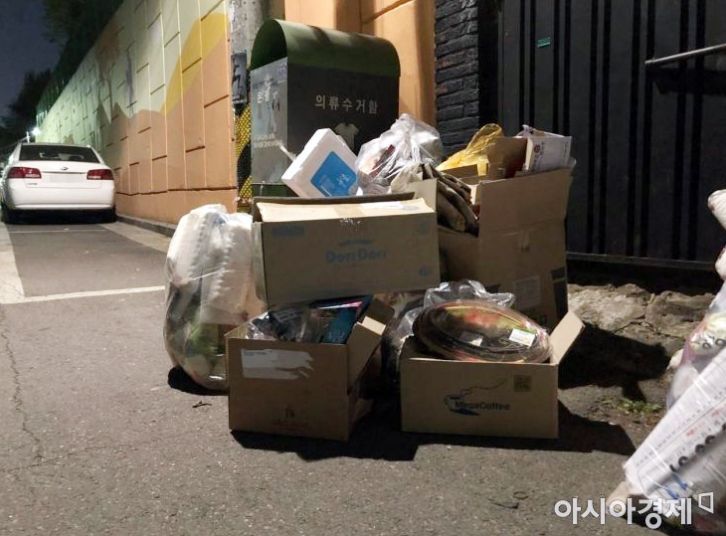 Recyclable waste piled up in front of a residential area in Eunpyeong-gu, Seoul on the 23rd / Photo by Joohee Kang, Intern Reporter kjh818@asiae.co.kr
[Asia Economy Reporter Kim Ga-yeon, Intern Reporter Kang Joo-hee] "Disposing of it is a task in itself."
As the number of online shopping transactions increases, the amount of waste from delivery boxes and packaging materials is also rising. The distribution industry is making efforts to reduce recyclable waste by introducing 'eco-friendly delivery' for some delivery products.
However, it is insufficient to cope with the rapidly increasing amount of household waste. Experts emphasize the urgent need for a system that allows the widespread use of reusable containers in daily life.
According to the Korea Integrated Logistics Association, the volume of parcel deliveries in February this year was 242.55 million, an increase of about 31.7% compared to 184.23 million in the same period last year.
In particular, with the increase in non-face-to-face consumption following the COVID-19 pandemic, the volume of parcel deliveries has surged even more.
South Korea's largest e-commerce company, Coupang, had about 2.3 million orders per day at the end of last year, but this increased to 3 million orders after the COVID-19 outbreak. Wemakeprice's sales last month increased more than eightfold compared to November last year. Additionally, TMON achieved 160 million KRW in sales last month, marking the first profitable turnaround in the social commerce industry.
The problem lies in the packaging materials for delivery products. Some express concerns that the increasing amount of waste such as vinyl, plastic, and Styrofoam generated during parcel delivery could be a major cause of environmental pollution.
A man in his 30s, identified as A, who lives alone, said, "I ordered about six items by gathering various necessities, but I was surprised to see six boxes stacked at my doorstep the next day, matching the number of items ordered." He added, "Sometimes, very small items the size of a palm are delivered in large boxes. The vinyl packaging and bubble wrap make unpacking each delivery take a long time. Disposing of the waste is also a chore."
He continued, "If I order before midnight, the delivery arrives the next day, so I often use online shopping. But every time I organize the parcels and throw away the waste, I feel guilty."
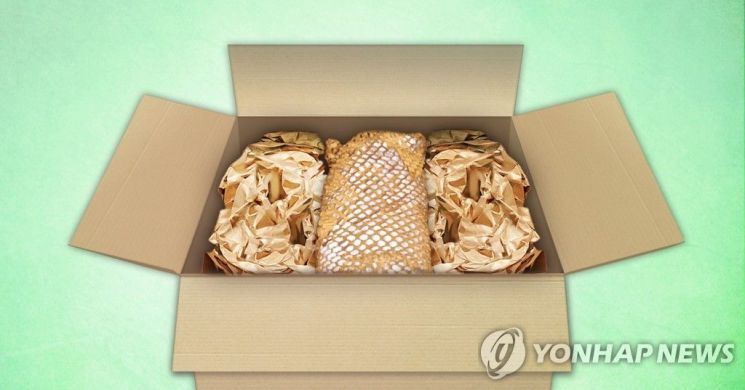
In response, some distribution companies have recently prepared measures to reduce packaging materials by using cooler bags instead of disposable Styrofoam and cardboard boxes for early morning fresh food deliveries.
On the 30th of last month, Coupang announced that it is piloting the 'Rocket Fresh Eco' service in some areas of Seoul, which uses cooler bags instead of packaging materials for fresh food early morning delivery. SSG.com, which entered the early morning delivery market late, has produced an eco-friendly cooler bag called 'Albi Bag' and is providing it free of charge to first-time customers.
However, other general delivery items still use recyclable cardboard boxes and vinyl cushioning materials. Moreover, there are no significant sanctions or measures addressing the issue of excessive packaging.
Experts advise that laws and systems should be established not only to reduce excessive use of disposable products but also to reduce household waste by encouraging the use of recyclable materials and reusable containers.
Kim Dong-hwan, head of the Household Waste Reduction Movement Headquarters at the Green Consumer Network, said, "With the increase in single-person households and special situations like COVID-19, the use of disposable and recyclable products has increased significantly. From the consumer's perspective, it is convenient, and from the company's side, it arose to meet demand, so no one can be held responsible. However, the current excessive use of recyclable materials has exceeded the limit and could lead to a nationwide disaster crisis."
He added, "Although it may be inconvenient, reusable containers should be used as much as possible. Institutional measures such as applying incentives for this are necessary. The government and local governments should also strongly regulate this through laws and systems."
Regarding the issue of excessive packaging in the distribution industry, he said, "This problem occurs because the products ordered by consumers are shipped from different locations. There are issues such as the distribution structure and workforce supplementation within companies, so it is another challenge that companies need to research and solve internally." He advised, "In the future, companies should try to replace plastic and vinyl used in parcel packaging with paper cushioning materials or eco-friendly materials."
Meanwhile, the Ministry of Environment announced on the 8th that it will sign an agreement with the logistics and distribution industry to promote the separate collection and recycling of parcel cardboard boxes and transport packaging materials. Through the agreement, plans include removing foreign substances such as labels and tape attached to parcel cardboard boxes and guiding proper recycling methods such as folding the paper before disposal to facilitate the collection and sorting of distribution packaging materials. Efforts to replace packaging with reusable boxes and containers are also expected to expand.
© The Asia Business Daily(www.asiae.co.kr). All rights reserved.
![User Who Sold Erroneously Deposited Bitcoins to Repay Debt and Fund Entertainment... What Did the Supreme Court Decide in 2021? [Legal Issue Check]](https://cwcontent.asiae.co.kr/asiaresize/183/2026020910431234020_1770601391.png)