App Capable of Measuring Blood Pressure to Launch Domestically in Q3... Preparing for US FDA Approval
Remote Medical Consultation Ban Restricts Use to Doctor's Discretion in Korea
Samsung Seeks Opportunities in US, Operating Cardiac Rehabilitation Program with Local Hospitals
Medical Law Amendment Bill Pending in 20th National Assembly... Possible Reintroduction in Next Assembly
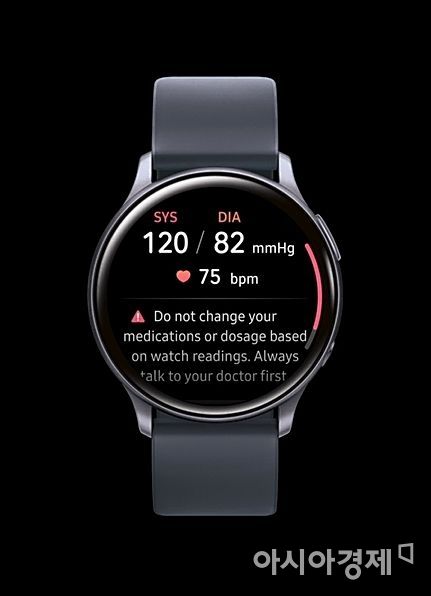
[Asia Economy Reporters Jinju Han and Hyunui Cho] Samsung Electronics has opened the way to measure blood pressure frequently just by wearing its smartwatch. However, remote medical consultations are prohibited in South Korea, so prescriptions or diagnoses cannot be made based on the measurement results. This is also why Samsung Electronics is targeting the U.S. market. Since telemedicine is widely practiced in the U.S., it is seen as a new opportunity.
According to industry sources on the 23rd, Samsung Electronics is preparing to apply for approval from the U.S. Food and Drug Administration (FDA) for the launch of its mobile application 'Samsung Health Monitor' in the U.S. Earlier, Samsung Electronics received approval for 'Samsung Health Monitor' from the Korean Ministry of Food and Drug Safety and plans to release it as a smartphone app in the third quarter domestically. It will also be available on devices such as the Galaxy Watch Active2.
A medical industry official said, "Since blood pressure results can vary depending on the time of measurement, this technology is essential for patients who need to wear a blood pressure monitor for 24 hours," adding, "If the accuracy of the measurements is proven, the use cases will increase."
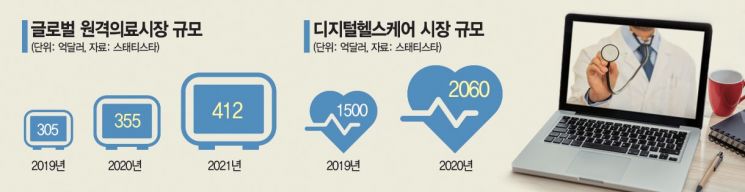
◆ Samsung Seeking Opportunities in the U.S. Instead of Korean Regulations = Even if blood pressure measurement becomes possible, referring to blood pressure data in medical treatment is at the discretion of the doctor. In South Korea, remote medical consultations are prohibited under the Medical Service Act, so doctors cannot provide treatment or prescriptions based on this data. On the other hand, in the U.S., where telemedicine has been permitted since 1997, it is possible to monitor measurements taken by smartwatches or mobile apps at hospitals. Thanks to advances in ICT technology, the U.S. telemedicine market is rapidly growing.
According to IBISWorld, the U.S. telemedicine market size is expected to grow from $2.4 billion (approximately 2.9 trillion KRW) in 2019 to $3 billion (approximately 3.4 trillion KRW) by 2022, expanding at an annual growth rate of 9.8%. An industry insider said, "Although the FDA approval bar is high in the U.S., the telemedicine system is well established, so it could actually be an opportunity for Samsung."
Samsung Electronics collaborated with Kaiser Permanente, a nonprofit organization that operates 36 general hospitals in the U.S., to conduct a 'Home Cardiac Rehabilitation Program.' Patients with heart disease track their daily heart rate and activity at home using the Gear 3 or Galaxy Watch, and the patient's exercise and heart rate data are sent to doctors. This reduces the inconvenience of hospital visits while allowing patients to monitor their condition themselves, lowering readmission rates and increasing the completion rate of the program.
◆ Possibility of Medical Service Act Amendment in the 21st National Assembly = Unlike the U.S., telemedicine is virtually illegal in South Korea except for very limited cases. Attempts to amend the Medical Service Act to introduce telemedicine have been made before. The amendment bill allowing remote medical consultations between doctors and patients was first proposed in the 18th National Assembly and submitted again in the 19th National Assembly, but both were discarded due to opposition from the medical community and political circles. It was reattempted in the 20th National Assembly, but it is unlikely to pass before the end of the term next month.
However, the situation may change in the 21st National Assembly, where the ruling party won a landslide victory. A Ministry of Health and Welfare official said, "If the 2016 amendment bill expires in the May session of the National Assembly, a decision will be made on whether to reintroduce it." Shin Hyun-young, a doctor and proportional representative-elect of the Democratic Party of Korea, also hinted at the possibility of pushing for legal amendments, saying, "In the era of the 4th Industrial Revolution, medical care and ICT technology should be integrated and industrialized."
© The Asia Business Daily(www.asiae.co.kr). All rights reserved.
![Clutching a Stolen Dior Bag, Saying "I Hate Being Poor but Real"... The Grotesque Con of a "Human Knockoff" [Slate]](https://cwcontent.asiae.co.kr/asiaresize/183/2026021902243444107_1771435474.jpg)

















