[Asia Economy Reporter Naju-seok] The hegemonic power, the United States, has begun to face challenges around the world. Amid the COVID-19 pandemic, there are frequent predictions that the Western world, including the U.S., will decline.
On the 19th (local time), the Iranian Revolutionary Guard Corps stated, "If the U.S. makes any mistake in the Persian Gulf area, we will respond decisively." Citing their own sources, they said, "We advise Americans to follow international rules in the Persian Gulf and Gulf areas and to refrain from any form of adventurism." They added, "If foreign forces threaten Iran's security or deliberately make mistakes that cross the red line, the Iranian Revolutionary Guard Navy will deliver decisive punishment."
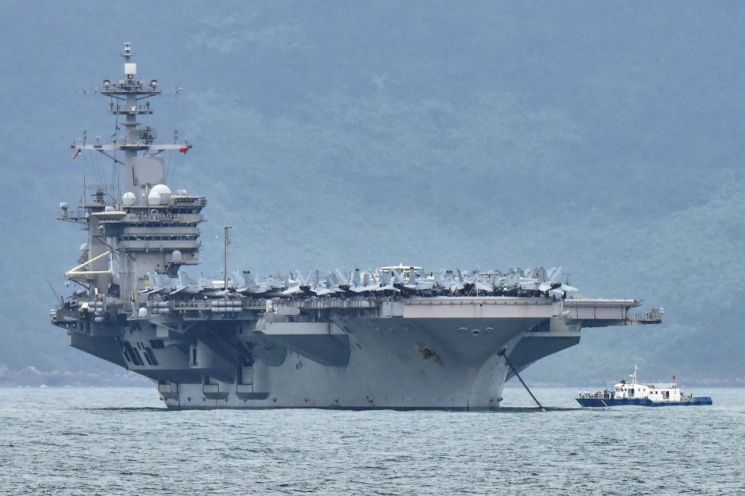
Earlier, on the 15th, the U.S. had announced that 11 Iranian Revolutionary Guard vessels approached U.S. Navy ships closely enough to be considered threatening.
The claim by the Iranian Revolutionary Guard is a warning that the U.S. is deliberately provoking Iran.
China has recently begun expanding its influence in the South China Sea area. According to Hong Kong media, China posted a notice on its internet homepage stating that it will establish Xisha District and Nansha District within Sansha City, Hainan Province. This area was included in Sansha City, an administrative district responsible for major islands and reefs in the South China Sea, despite opposition from Vietnam and the Philippines in 2012. This move is interpreted as an effort to strengthen effective control over these regions.
Additionally, Chinese survey vessels have recently been tracking Malaysian oil exploration ships. In response, the U.S. expressed "concern" over reports of provocative actions by China in disputed territories and stated that "harassing behavior must stop."
This series of events occurred amid a sharp decline in U.S. influence due to COVID-19. According to Johns Hopkins University, there are approximately 760,000 confirmed COVID-19 cases and 40,000 deaths in the U.S. The U.S. military's operational strength has also rapidly weakened recently due to COVID-19, including the cancellation of operations on aircraft carriers. The economy is also rapidly deteriorating due to lockdown measures aimed at preventing the spread of infection. As U.S. influence wanes, voices from countries like Iran and China have grown louder.
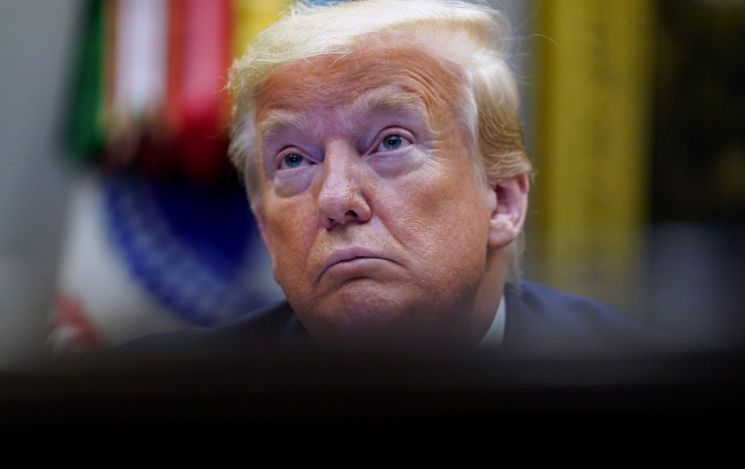
Experts are also pointing out that the U.S. is failing to demonstrate proper leadership. Natalie Tocci, director of the Italian Institute of International Affairs, noted, "The world has been accustomed to U.S. leadership during crises, but in the case of COVID-19, an exceptional situation is unfolding where U.S. leadership is not visible." Furthermore, the U.S. has recently shown signs of conflict with the World Health Organization (WHO) over responsibility for the COVID-19 pandemic.
Some speculate that U.S. hegemony may come to an end due to COVID-19. Kazuto Suzuki, professor of international relations at Hokkaido University, said, "The world order after COVID-19 will be a transitional period," predicting "the decline of U.S. hegemony and the rise of China's role." However, he added, "A new hegemonic order will not be created by China," pointing out that "China can become a superpower surpassing the U.S., but not in terms of soft power."
© The Asia Business Daily(www.asiae.co.kr). All rights reserved.
![User Who Sold Erroneously Deposited Bitcoins to Repay Debt and Fund Entertainment... What Did the Supreme Court Decide in 2021? [Legal Issue Check]](https://cwcontent.asiae.co.kr/asiaresize/183/2026020910431234020_1770601391.png)
















