Do Not Formulate Policies Based on the Assumption That the Spread Will Slow Down in Summer
Coughing and Sneezing Are Not Greatly Affected by Temperature and Humidity
There Are Diseases That Caused Pandemics Even in Summer
[Asia Economy Reporter Naju-seok] A study submitted to the White House has shown that the spread of the novel coronavirus infection (COVID-19) cannot be stopped by midsummer heat or humidity. It warns that policies should not be based on the expectation that, like other respiratory diseases, the spread will enter a lull during summer.
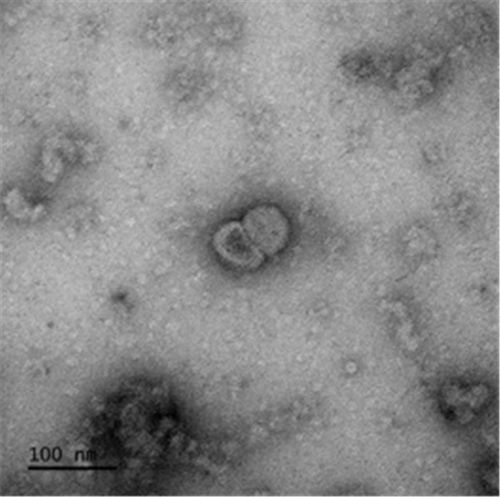
According to the New York Times (NYT) on the 8th (local time), the National Academies of Sciences, Engineering, and Medicine (NASEM), a U.S. academy, submitted a 9-page report to the White House. The report, submitted to the White House Office of Science and Technology Policy, concludes that based on academic research and various cases so far, there is no evidence to suggest that the spread of COVID-19 will be curbed simply because it is summer.
The only ways to stop the spread of COVID-19 are social distancing and other measures; relying on hot weather or humidity is not advisable.
Infectious disease expert Christian Anderson stated, "Based on the data so far, there is no evidence to suggest that the spread of COVID-19 will slow down simply because it is summer," and added, "Policies should not be made based on the expectation that such a thing will happen." He explained, "While we might see a slowdown in the spread when summer begins, caution is needed in attributing this decrease to seasonal changes, as it could be due to other measures."
Dr. David Relman of Stanford University pointed out, "Temperature or humidity does not have a significant effect when the virus is transmitted to a nearby person through coughing or sneezing."
The researchers argued, "In countries like Australia and Iran, which are currently in summer, COVID-19 is spreading rapidly," and "It cannot be assumed that the spread will slow down in other regions just because it becomes hot and humid."
They also noted that seasonal diseases and pandemics spread differently. Of the 10 influenza pandemics that have occurred in the past 250 years, only 2 started in winter, 3 in spring, 2 in summer, and 3 in autumn. Moreover, these diseases reach their peak about six months after their initial appearance, regardless of the season in which they began. This suggests that summer is not necessarily a special season that can stop the spread of infectious diseases.
© The Asia Business Daily(www.asiae.co.kr). All rights reserved.

















