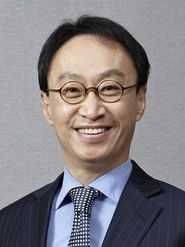
[Asia Economy Reporter Eunmo Koo] Kang Shin-woo, Chairman of the Investment Management Committee of the Securities Market Stabilization Fund (SMSF) (photo), expressed his intention to achieve the goal of stabilizing the stock market by maximizing the autonomy of the fund managers.
In a phone interview with Asia Economy on the 9th, Chairman Kang said, "The Investment Management Committee will provide only the minimum guidelines for fund management and support fund managers to operate as autonomously as possible," adding, "We will create an environment where fund managers can take full responsibility for their operations, and the committee will serve as an advisory body."
The Investment Management Committee is an ad hoc organization established to formulate overall operational guidelines for the SMSF, which will be fully operational starting today. It consists of 11 members: two public interest members, Chairman Kang and Professor Jeong Jae-man of Soongsil University, and nine representatives from financial holding companies and other investors.
Although the committee has not yet finalized guidelines regarding fund disbursement and redemption conditions, it plans to detail these through future extraordinary meetings. Chairman Kang stated, "Since the committee's goal is market stabilization, we are always vigilant," and added, "Regular meetings are scheduled quarterly, but if market conditions become urgent, we will convene as needed to make necessary decisions."
However, he drew a line by stating that valuation judgments will vary depending on circumstances, so the fund will not operate by setting a specific index level to inject funds when the market falls below it and withdraw funds when it rises above. He explained, "Even if the index is at the same 1800 level, it may feel cheap now, but if corporate earnings drop by 20-30% or more in the future, the current index level could be considered high," adding, "Evaluations of the index can change depending on the situation, so we will not fix a specific index level."
Although fund operations began today, it is unlikely that funds will be immediately injected into the market even if capital is raised. This is because the current index level is not at a problematic level, so there is no immediate need to deploy funds. Chairman Kang said, "Since the current market situation is not urgent enough to require immediate fund injection, we will hold the funds as standby capital and decide on the speed and amount of deployment if a market crisis occurs, like in mid-March."
Regarding criticism that the fund size of 10.7 trillion won is small considering the scale of the domestic stock market, he responded that the assessment of whether the funds are sufficient can vary depending on market conditions. Chairman Kang said, "In urgent situations like last month, 10 trillion won may seem small," and added, "If such conditions persist and more funds are needed, the fund size could be increased." He further noted, "However, in situations where the market does not decline significantly, not all raised funds may be used, so the judgment on fund sufficiency is relative."
Chairman Kang emphasized, "The most desirable scenario is to proceed without excessive use of the SMSF," adding, "Since the committee was established with market stabilization as the top priority, we will always remain vigilant and monitor the market, and if a crisis-level situation arises, we will boldly act to achieve our goals."
Born in 1960, Chairman Kang graduated from Seoul National University with a degree in law. He served as Head of Equity Management at Dongbang Peregrine Investment Trust Management, Senior Fund Manager of the Equity Management Team at Hyundai Investment Trust Management, Vice President of Korea Investment Trust Management in 2005, and CEO of Hanwha Asset Management for five years starting in 2011. From 2016 until last year, he was Chief Investment Officer (CIO) of the Korea Investment Corporation (KIC).
© The Asia Business Daily(www.asiae.co.kr). All rights reserved.