[Asia Economy Reporter Naju-seok] Ahead of a video conference among the Organization of the Petroleum Exporting Countries (OPEC) member states and oil-producing countries including Russia, the United States has pressured for production cuts by raising not only tariff issues but also security concerns. Oil-producing countries are demanding that the United States, the world's largest crude oil producer, join the agreement on production cuts, making the path to a production cut agreement appear difficult.
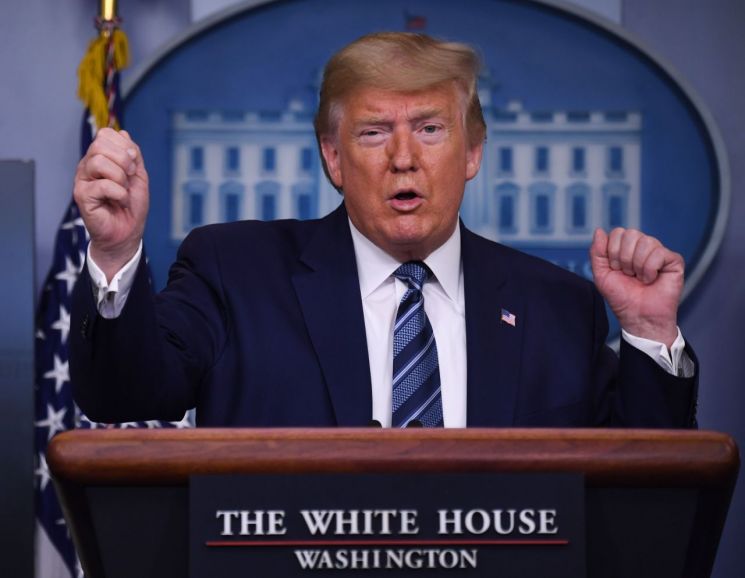
On the 8th (local time), 48 Republican members of the U.S. House of Representatives sent a letter to Crown Prince Mohammed bin Salman of Saudi Arabia, urging market stabilization through production cuts. They warned that if Saudi Arabia does not help stabilize oil prices through production cuts, economic and military cooperation between the two countries could be at risk.
The letter reportedly included statements such as "The United States has maintained stability that guarantees economic prosperity and security for both countries by stationing U.S. troops in the Middle East." In addition, the U.S. is also applying pressure on Saudi Arabia and Russia by bringing up tariff measures. Similar to the trade war with China, the U.S. could impose tariffs on oil-producing countries under the pretext of protecting American industries. Previously, President Trump mentioned in a meeting with U.S. oil company CEOs that "if necessary, tariffs could be used."
Regarding other countries' demands for production cuts, the U.S. argues that domestic oil production has already decreased due to low oil prices, thus it has effectively implemented production cuts. The U.S. Department of Energy claimed the day before that "U.S. domestic oil production has already decreased by 2 million barrels" in response to media reports that OPEC+ (the coalition of OPEC member countries and non-member oil-producing countries) demanded production cuts from the U.S.
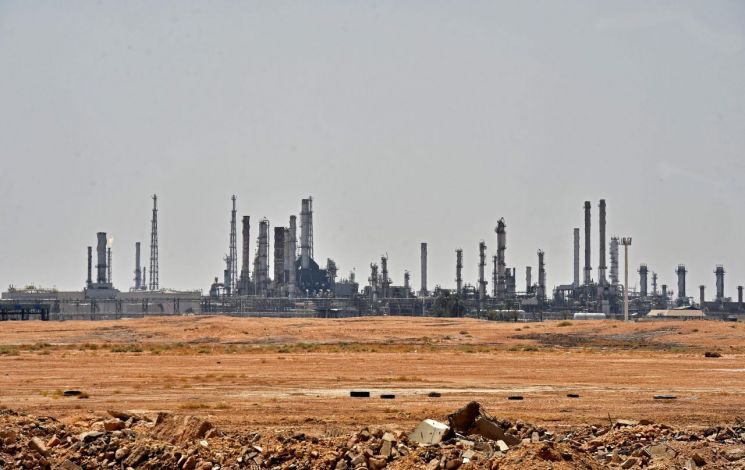
Russia refuted these U.S. claims. Dmitry Peskov, spokesperson for the Russian Presidential Administration, said at a briefing that "reducing production due to decreased demand and cutting production to stabilize the market are completely different matters," criticizing the U.S. claim of production cuts.
Iran also holds the position that the scale of U.S. production cuts must be confirmed before the OPEC+ video conference. Bijan Namdar Zanganeh, Iran’s Oil Minister, stated, "Countries not part of OPEC+, such as the U.S. and Canada, should also participate in discussions on production cuts," indicating that the production cut volumes of oil-producing countries outside OPEC+ need to be discussed.
For now, the market still shows expectations for possible production cuts. Upon news that OPEC+ plans to hold the video conference as scheduled on the 9th, oil prices rose. On the New York Mercantile Exchange (NYMEX), May delivery West Texas Intermediate (WTI) crude oil closed at $25.09 per barrel, up 6.2% ($1.46).
On the London ICE Futures Exchange, June Brent crude also traded up 3.04% ($1.34) at $32.84 per barrel.
In particular, according to Bloomberg News, Mohamed Arkab, Algeria’s Oil Minister and current OPEC chairman, mentioned that OPEC+ could reach an agreement on production cuts of 10 million barrels, fueling the rise in oil prices. Additionally, India’s decision to increase its strategic petroleum reserves following China’s move positively influenced the market.
© The Asia Business Daily(www.asiae.co.kr). All rights reserved.
![Clutching a Stolen Dior Bag, Saying "I Hate Being Poor but Real"... The Grotesque Con of a "Human Knockoff" [Slate]](https://cwcontent.asiae.co.kr/asiaresize/183/2026021902243444107_1771435474.jpg)

















