Interview with Jerome Kim, Director General of the International Vaccine Institute
"Vaccine funding started immediately after the COVID-19 outbreak"
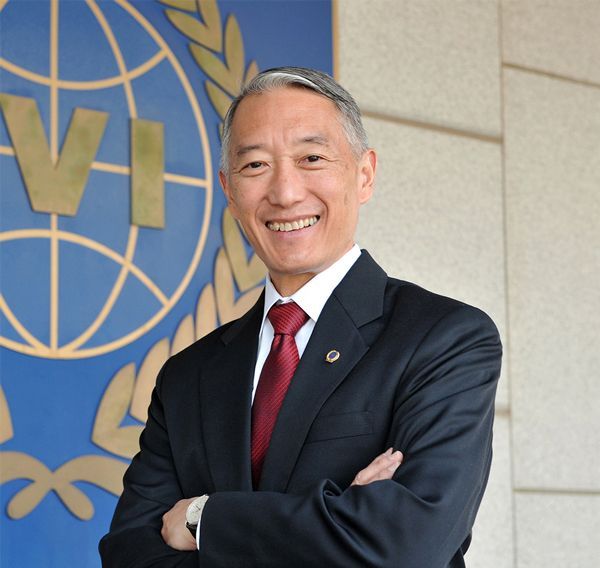
[Asia Economy Reporter Cho Hyun-ui] "The possibility of developing a vaccine for the novel coronavirus infection (COVID-19) is higher than that for Severe Acute Respiratory Syndrome (SARS) and Middle East Respiratory Syndrome (MERS)."
This statement by Jerome Kim, Director General of the International Vaccine Institute (IVI), ironically reveals the deadly risk of COVID-19. While SARS and MERS ended before vaccine development began, the analysis suggests that COVID-19 will persist long enough to allow vaccine development.
In an interview with Asia Economy on the 9th, Director Kim forecasted this and said, "COVID-19 will be given enough time to develop a vaccine. I expect commercialization to take 1 to 2 years." This means we must prepare for the worst-case scenario where COVID-19 does not end until after next year.
He explained, "SARS ended before human trials could even begin," adding, "Once the disease disappeared, funding for vaccine development also vanished." The same applies to MERS. Director Kim mentioned, "Thanks to the Coalition for Epidemic Preparedness Innovations (CEPI), there was funding for MERS vaccine development, but since infections occurred mainly in limited regions and among specific healthcare workers, it was difficult to conduct Phase 3 clinical trials." In contrast, COVID-19 has over 1.5 million confirmed cases across more than 200 countries, providing a large patient pool for clinical trials.
Funding was secured early on. Director Kim said, "Funding support for vaccine development started immediately after the outbreak of COVID-19," and added, "The first vaccine has already begun human clinical trials, and other vaccines will start human trials one after another within this month."
He expressed skepticism about herd immunity, which is the theory that when a majority of society becomes infected and develops antibodies, the entire society gains immunity. Some European countries responded to COVID-19 using this approach but ultimately failed. Director Kim explained, "Herd immunity would require risking the lives of hundreds of thousands of people worldwide, considering the average fatality rate during the process," and added, "Vaccines can achieve the same effect without sacrifices."
There are many hurdles to overcome during the 1 to 2 years of vaccine development. Director Kim stated, "We need to understand whether immunity develops after one infection or if reinfection is possible, and whether antibodies or killer cells play a more important role in virus prevention," and also noted, "It is necessary to evaluate whether the vaccine is safe for humans and effective in animals."
Regarding the South Korean government's response to COVID-19, he evaluated that it has been well managed based on the 2015 MERS outbreak. He analyzed, "They responded based on social consensus and government-led social distancing without lockdown measures," and added, "In other countries, the situation is much more severe because they were not prepared in advance, unlike South Korea."
The International Vaccine Institute, established by the United Nations Development Programme (UNDP) in 1997, is headquartered in South Korea. It is an international organization that develops vaccines and provides them to developing countries. Major supporters of the institute include the Bill & Melinda Gates Foundation, founded by Microsoft (MS) co-founder Bill Gates. An IVI official stated, "The Bill & Melinda Gates Foundation supported $11.2 million last year for the distribution of typhoid vaccines in Africa."
© The Asia Business Daily(www.asiae.co.kr). All rights reserved.

















