Financial Market Trends in March 2020 by Bank of Korea
[Asia Economy Reporter Kim Eun-byeol] Amid the spread of the novel coronavirus infection (COVID-19), bank loans for large corporations, small and medium-sized enterprises (SMEs), individual business owners, and households all surged to record highs last month.
According to the Bank of Korea on the 8th, the outstanding corporate loans in the banking sector at the end of March reached 901.4 trillion won, an increase of 18.7 trillion won compared to the previous month. This is the largest increase since statistics began being compiled in June 2009.
Loans to large corporations increased by 10.7 trillion won, and loans to SMEs rose by 8 trillion won. The SME loan increase includes 3.8 trillion won in loans to individual business owners such as self-employed individuals.
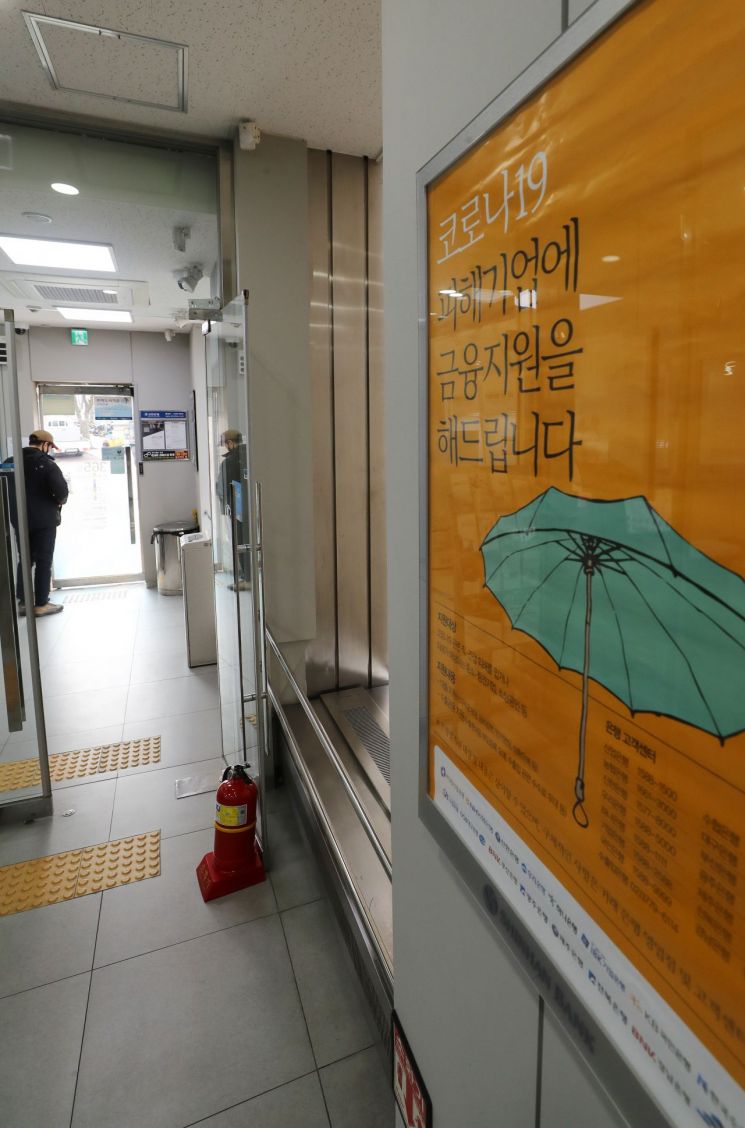
A Bank of Korea official explained, "Due to increased funding demand caused by COVID-19, loans to large corporations, SMEs, and individual business owners all saw the largest increase since statistics began being compiled." He added, "Large corporations secured liquidity as their funding needs grew, and government and bank financial support also influenced the increase in SME loans." Previously, the government provided financial support amounting to 51.6 trillion won for SMEs and self-employed individuals facing crisis due to COVID-19, and decided to supply 48.5 trillion won in liquidity to financial markets including stocks, corporate bonds, and short-term funds.
Household loans in the banking sector also rose by 9.6 trillion won to 910.9 trillion won at the end of March compared to one month earlier. This increase is the largest since statistics began being compiled in 2004. Among this, housing mortgage loans increased by 6.3 trillion won.
This is believed to be largely due to a surge in "last-minute" demand before the tightening of jeonse (long-term deposit lease) loan regulations under the December 16 real estate measures last year. The jeonse loan regulations were implemented at the end of January, but it usually takes 2 to 3 months for housing loan regulations to have an actual impact. At the end of February, additional measures were introduced, including strengthening loan regulations in designated adjustment areas and newly designating Suwon, Anyang, and Uiwang as adjustment areas, which also contributed to increased loan demand centered in the Seoul metropolitan area.
A Bank of Korea official stated, "The government's December 16 measures fundamentally act as a factor to suppress household loans," but added, "As apartment transactions in nearby metropolitan areas continued, the reduction in the growth rate of household loans was not as significant as expected." Apartment sales in Seoul surged from 6,000 units in January to 8,000 units in February, and in Gyeonggi Province from 21,000 units to 32,000 units. The remaining 3.3 trillion won increase was due to other loans, including unsecured loans and overdraft loans.
Meanwhile, bank deposits at the end of March increased by 33.1 trillion won in one month to 1,800.2 trillion won. The Bank of Korea explained that this was the result of domestic companies depositing short-term surplus funds in preparation for dividend payments in April.
© The Asia Business Daily(www.asiae.co.kr). All rights reserved.
![Clutching a Stolen Dior Bag, Saying "I Hate Being Poor but Real"... The Grotesque Con of a "Human Knockoff" [Slate]](https://cwcontent.asiae.co.kr/asiaresize/183/2026021902243444107_1771435474.jpg)
















