Baemin Changes Advertising Fee from 88,000 KRW per Ad to 5.8% per Order
Lee Jae-myung: "Severe Pain for Small Business Owners... Will Develop Public Delivery App"
Baemin: "Fee Reduction Benefits Focused on Small and New Businesses"
Experts: "Causes Market Disruption in Network Economy... Cooperation Needed"
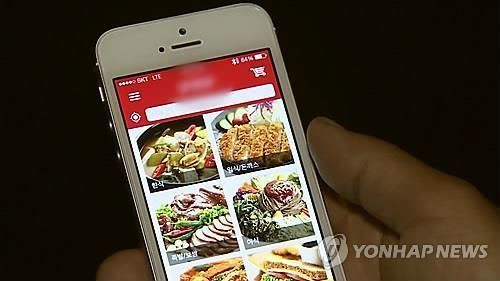 Gyeonggi Province Governor Lee Jae-myung publicly criticized Baedal Minjok (Baemin), the top delivery application (app) company, on the 5th, stating that "monopoly tyranny is beginning," sparking intense controversy over delivery app commissions.
 /Photo by Yonhap News
[Asia Economy Reporter Kim Suwan] Controversy is growing over the delivery commission fees of Baedal Minjok (Baemin), the number one delivery application (app) company. Small business owners are saying that compared to the previous flat-rate system, they are bearing a greater burden, accusing Baemin of unilaterally raising fees by exploiting its monopoly position. Furthermore, with Gyeonggi Province Governor Lee Jae-myung openly criticizing Baemin, the fallout over the commission fee hike is intensifying.
Baemin explained that the measures are intended to support small business owners. Experts analyzed that the monopolistic market structure of delivery apps has resulted in disruption of the network economy market ecosystem.
On the 5th, Governor Lee Jae-myung posted on his Facebook, "At a time when small business owners are suffering greatly, delivery app companies like Baedal Minjok are exploiting their monopoly status to pursue excessive profits through unilateral fee increases, pushing small business owners into ruin," adding, "Gyeonggi Province will start with what it can do immediately."
He continued, "The government's role is to maintain a rational and fair competitive order, and it is an obligation to curb monopolies and abuses of power that disrupt a fair market economy order," emphasizing, "This responsibility lies not only with the Fair Trade Commission but with all government agencies, including local governments."
He added, "While resolving this through legislation is desirable, we will not wait and will begin with what Gyeonggi Province can do immediately, such as developing a public app."
Earlier, on the 4th, Governor Lee shared an article related to Baedal Minjok on his Facebook, stating, "Is it acceptable to cause harm to the powerless majority just because you have gained some power in an already difficult situation?" He criticized, "If monopolies and unfair trade increase inequality and gaps, the market economy ecosystem will eventually collapse, and the company will ultimately suffer losses."
In this regard, on the afternoon of the 6th, Governor Lee plans to hold an emergency meeting with public institutions such as the Gyeonggi Province Market and Commercial Promotion Agency, Gyeonggi Province Corporation, Gyeonggi Content Agency, and related departments to assess the situation and finalize response measures including public app development.
 Baemin recently changed its commission charging method to help small business owners. The previous system, which focused on a fixed monthly advertising fee of 88,000 KRW, was reorganized to charge a 5.8% commission per order. Photo by Yonhap News
Earlier, Baemin recently changed its commission fee structure, claiming to help small business owners. The previous system, centered on a fixed monthly advertising fee of 88,000 KRW, was restructured to charge a 5.8% commission per order. As a result, from this month, Baemin will take 5.8% of the sales amount as commission fees.
However, small business owners argue that Baemin's policy change is not a measure for small operators. According to a statement released by the Small Business Association on the 3rd, the new policy results in lower fees only for stores with monthly sales below 1.55 million KRW.
The Small Business Association stated, "Compared to the fixed-rate system with a capped amount, the percentage-based system, where fees increase exponentially with sales volume, will be a heavy burden for small business owners," urging, "The Fair Trade Commission must conduct a detailed investigation into this deceptive price increase."
A netizen who identified themselves as a small business owner lamented on an online community, "The commission fee structure of delivery apps was never designed to support small business owners," adding, "Delivery apps account for half of sales in the delivery industry, so it is impossible to continue business without the app. However, if the commission system continues like this, many delivery businesses will have to close."
Some have voiced concerns about Baemin's policy. A 27-year-old office worker A, who identified as a Baemin app user, said, "Delivery food prices and delivery fees are already rising," adding, "Now, charging a commission per order seems like an attempt to impose an even greater burden on small business owners."
He continued, "The commission fee increase will ultimately harm consumers," and stated, "I fully agree with the recent calls for more platforms to emerge. Currently, Baemin practically has no competitors, which leads to excessive profit-taking."
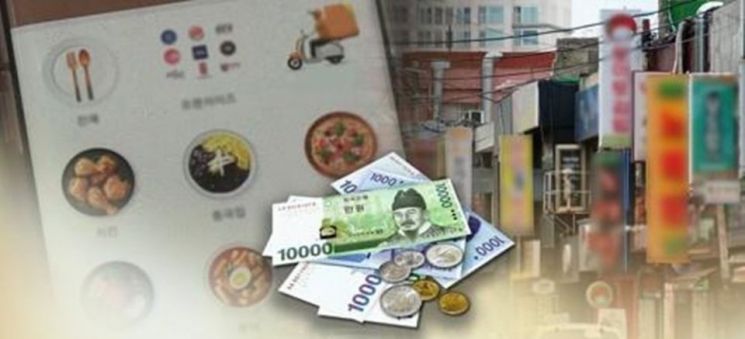 Small business owners say Baemin's policy change is not a measure for small-scale operators. Photo by Yonhap News
Especially regarding Governor Lee, who criticized Baemin's monopolistic abuse and announced plans to develop a delivery app himself, there were many positive responses. Citizens expressed support with comments like, "This is an opportunity to legally regulate delivery app abuses," "Governor Lee's remarks are refreshing," and "I will boycott Baemin."
B, a college student in their 20s, said, "Most young people these days order food through delivery apps. But food prices and delivery fees keep rising," adding, "If this continues, both businesses and consumers might abandon delivery apps." They also stated, "I believe the government should intervene to stop such delivery app abuses."

Amid ongoing criticism of the commission fee increase, Baemin issued a press release explaining that the restructuring of the open service (intermediary commission) fee system is intended to "improve the so-called 'flag planting' practice, where financially strong merchants monopolize orders by paying more to increase app screen exposure frequency, and to ensure that commission reductions benefit mainly small and new merchants." They added, "As a result of piloting this method, 52.8% of registered merchants experienced a reduction in commission fee burdens."
Woowa Brothers plans to expand exposure of the commission-based open service area through this restructuring and limit Ultra Call to three or fewer, lowering the placement area to resolve the flag planting issue.
Experts suggest that coexistence is essential in the network economy. Professor Lee Eun-hee of Inha University's Department of Consumer Studies told Asia Economy, "Baemin claims that the open service policy addresses the 'flag planting' problem inherent in the previous flat-rate system, but it is not a good alternative," pointing out, "Charging a commission per order is a burden for business owners."
She added, "Monopolizing a platform in a network economy and arbitrarily raising or lowering usage fees only disrupts the market ecosystem," noting, "This negatively affects the development of the network economy."
She further explained, "The network economy requires creating an environment where more platform operators can enter and compete within the ecosystem. Rather than focusing on immediate profits, the focus should be on ultimately enhancing the platform's value." She analyzed, "If other platform operators emerge offering more favorable conditions to small business owners, these issues might be resolved."
© The Asia Business Daily(www.asiae.co.kr). All rights reserved.
![Clutching a Stolen Dior Bag, Saying "I Hate Being Poor but Real"... The Grotesque Con of a "Human Knockoff" [Slate]](https://cwcontent.asiae.co.kr/asiaresize/183/2026021902243444107_1771435474.jpg)













