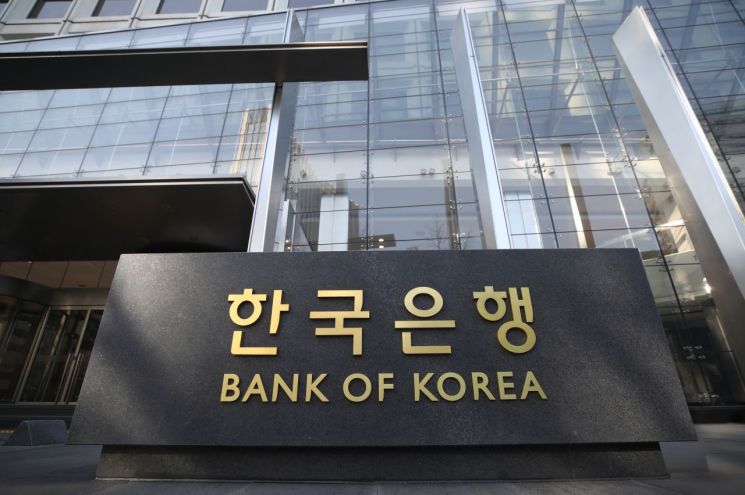
[Asia Economy Reporter Kim Eunbyeol] As the Bank of Korea (BOK) announced that it could introduce a non-bank financial institution loan program if the funding market instability caused by the novel coronavirus disease (COVID-19) continues, attention is also focused on overseas cases. As COVID-19 spreads globally, financial institutions and for-profit companies struggling to secure liquidity are emerging one after another, and opinions differ on the extent to which central banks should play a role.
According to the BOK on the 5th, the BOK stated that it can lend to non-bank financial institutions, such as securities companies, by applying Article 80 (Loans to For-Profit Companies) of the Bank of Korea Act. Article 80 of the Bank of Korea Act stipulates that when credit provision by financial institutions is significantly contracted or when there is a high possibility of serious difficulties in raising funds from financial institutions, the BOK may provide loans to for-profit companies other than financial institutions with the resolution of the Monetary Policy Committee.
On the 2nd, BOK Governor Lee Ju-yeol said at an executive meeting, "We need to prepare safeguards to be ready for emergency situations," and added, "If the situation worsens, we can also consider lending to non-bank financial institutions under Article 80 of the Bank of Korea Act to stabilize the corporate bond market." When lending to non-bank financial institutions under Article 80, the BOK can take corporate commercial papers (CP) and corporate bonds as collateral without burdening credit ratings. Although the BOK does not directly purchase CPs or corporate bonds, by taking as collateral the portions not absorbed by the market, it can indirectly support the funding market.
The only time the BOK directly lent to financial institutions other than banks was during the 1997 foreign exchange crisis. The loan funds were supplied to securities companies and comprehensive financial companies facing liquidity shortages through Korea Securities Finance Corporation (KRW 2 trillion) and the Credit Management Fund (KRW 1 trillion). At that time, comprehensive financial companies faced business suspensions and the call market was constricted, necessitating liquidity support measures. There have been no other cases of applying Article 80 of the Bank of Korea Act to support specific companies.
In the United States, during the past global financial crisis, emergency loans were provided to Bear Stearns, AIG, Citigroup, and others. Since the crisis began with large financial institutions, this was to prevent the risk of contagion to the entire financial system. However, after the Dodd-Frank Act was enacted in July 2010, lending to specific financial institutions began to be restricted. The Dodd-Frank Act aimed to reduce moral hazard among financial institutions and protect taxpayers.
The Fed limits funding support to "exceptional and emergency liquidity provision to the financial system while protecting taxpayers from losses."
To quell market instability caused by COVID-19, the Fed supports funds to Special Purpose Vehicles (SPVs), which can purchase CPs and corporate bonds. The U.S. Treasury provides $10 billion in capital contributions (credit guarantees) to the SPVs, which then lend and purchase CPs and corporate bonds to support the short-term financial market. This method allows support through SPVs in accordance with laws prohibiting bond purchases not guaranteed by government agencies.
Similarly, the Bank of England (BOE) announced a similar policy on the 17th of last month. The BOE introduced a CP purchase scheme with a caveat that the Treasury provides credit guarantees. The intention is to directly buy CPs of companies thirsty for short-term funds to alleviate liquidity shortages. However, government credit guarantees were also mobilized in the BOE's case.
The European Central Bank (ECB) and the Bank of Japan (BOJ) do not have provisions regarding loans to for-profit companies. The ECB has stated that it can purchase CPs through the Pandemic Emergency Purchase Programme (PEPP). However, neither the ECB nor the BOJ has ever supported loans to specific companies.
© The Asia Business Daily(www.asiae.co.kr). All rights reserved.

















