After Trump's Hopeful Remarks on Production Cuts, Saudi Arabia-Russia Oil War Nears End
However, Potential Noise from Companies Aiming for Market Restructuring
Concerns Remain over Prolonged Negotiations on Cut Volumes and Demand Shrinkage Due to COVID-19
[Asia Economy Reporter Minwoo Lee] The situation is rapidly changing just one day after U.S. President Donald Trump made remarks anticipating the end of the 'oil war' between Saudi Arabia and Russia that caused the oil price crash. Immediately following his comments, oil-producing countries agreed to continue negotiations on production cuts, and Russia presented a concrete production cut plan. Although oil prices surged on these expectations, concerns have been raised that premature conclusions should be avoided. The negotiation process could be prolonged due to disputes over corporate participation, and it is pointed out that the impact of the novel coronavirus disease (COVID-19) on oil demand, which differs from before, must also be considered.
◆Trump-driven production cut talks gain momentum= On the 3rd (local time), May delivery West Texas Intermediate (WTI) crude oil on the New York Mercantile Exchange (NYMEX) closed at $28.34 per barrel, soaring 11.9% ($3.02) from the previous trading day. It had surged 24.67% the day before, marking a weekly increase of about 32%, the highest weekly rise on record. This contrasts sharply with the early-year WTI price in the $60 range, which fell to as low as $19.92 intraday on the 29th of last month (local time) due to the oil war between Saudi Arabia and Russia. The drop to the $10 range was the first in 18 years.
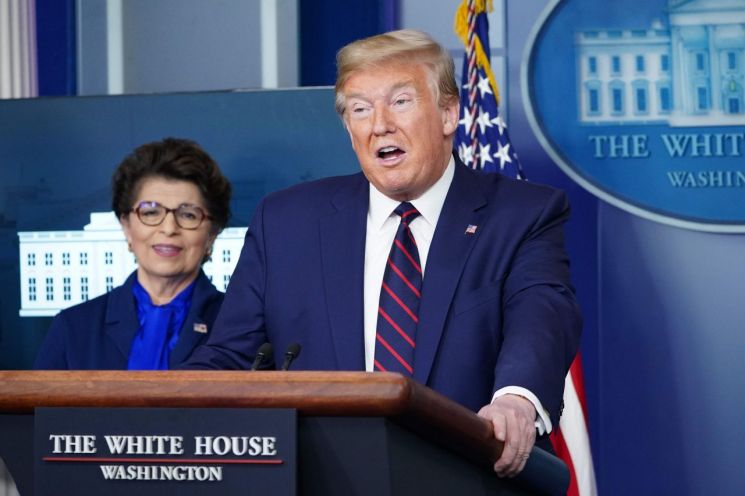
This surge was triggered by President Trump's remarks anticipating production cuts. On the 2nd (local time), President Trump tweeted, "I just spoke with my friend Crown Prince Mohammed bin Salman of Saudi Arabia, who I spoke to after speaking with Vladimir Putin, President of Russia. I expect and hope they will cut oil production by about 10 million barrels. The cut could be as much as 15 million barrels." Immediately after this statement, OPEC and 10 non-OPEC oil-producing countries, collectively known as OPEC+, agreed to resume production cut negotiations. On the following day, the 3rd (local time), President Putin publicly proposed a production cut of 10 million barrels per day.
◆Concerns remain over prolonged negotiations and COVID-19 amid oil companies' intentions= However, several steps remain before finalizing the production cuts. First is whether major companies will participate in the cuts. On the 3rd (local time), President Trump held a meeting with CEOs of seven major oil companies, including ExxonMobil, Chevron, Occidental Petroleum, Devon Energy, Phillips 66, Energy Transfer Partners, and Continental Resources, and plans to hold a meeting with shale companies on the 4th (local time). However, since the American Petroleum Institute (API) representative previously stated that market forces should determine production rather than coordinated cuts, some discord may arise. For some companies, as was the case from 2014 to 2016, the current situation could be an opportunity to reshape the market.
There are also concerns that the negotiation process itself could be prolonged. Jinyoung Choi, a researcher at Ebest Investment & Securities, said, "Although Saudi Arabia, leading OPEC, requested an emergency meeting with oil-producing countries, it was conveyed that more time is needed to decide the specific production cut volume, and the meeting schedule is still being coordinated." He added, "Considering that Saudi Arabia emphasized the need for participation from all oil-producing countries, including U.S. energy companies, Canada, Mexico, and Brazil, the time required for agreement could be lengthy."
The ongoing COVID-19 pandemic remains a variable. While some forecasts suggest that the spread of COVID-19 in the U.S. and Europe may peak as early as the end of this month, certainty is lacking. Factors such as ▲lack of diagnostic capacity ▲lukewarm response from local authorities ▲additional spread due to asymptomatic carriers ▲possibility of resurgence from external inflows create significant uncertainty, potentially prolonging the crisis. In this case, already weakened oil demand could decrease further, and the effect of production cuts may not easily translate into rising oil prices. Researcher Choi advised, "Although behind-the-scenes work for global coordinated production cuts is progressing faster than initially expected, it is still too early to make definitive judgments."
© The Asia Business Daily(www.asiae.co.kr). All rights reserved.

















