[Kim Min-wook, Editor-in-Chief of Monthly Defense and Technology] The Korean defense industry, which officially started in 1970, has reached a significant turning point this year as it celebrates 50 years in defense. In human terms, the age of 50 is metaphorically referred to as 'Jicheonmyeong,' derived from Confucius knowing the mandate of heaven at the age of fifty. Likewise, our defense industry has achieved remarkable and groundbreaking development over the past 50 years, leading technological advancements in related industries. In terms of business structure, it has diversified and expanded its scope from the initial OEM production model to include technology localization and overseas exports.
The dazzling growth and technological progress over the past 50 years were made possible by the passion and efforts of countless stakeholders dedicated to promoting the defense industry. Looking back at the journey, there was never a time when our defense industry was free from hardship. Every time geopolitical importance, confrontation with North Korea, and the subtle and complex international political relations involving global powers triggered a series of problems, we were challenged to adapt and change.
The massive wave of change represented by the Fourth Industrial Revolution, characterized by hyperconnectivity and superintelligence based on the digital revolution mentioned by Klaus Schwab at the 2016 Davos Forum, has signaled a new beginning of challenges for all humanity. We no longer consider robots equipped with AI, laser weapons fired without bullets, hypersonic missiles, and unmanned stealth weapon systems operating in the air, land, and sea as mere imagination. Regardless of individual thoughts, philosophies, or ideologies, whether one accepts these changes or not, the great transformation has already begun, and the future is rapidly approaching.
The enormous wave of change that has already started is not something that can be reversed by opposition or rejection. We must comply and adapt. Therefore, for the next 50 years, it is time to revisit the efforts made so far to achieve development, seek innovative transformations, and prepare concrete implementation plans.
To design a concrete future full of uncertainties and explore a better path for the defense industry, we intend to look back on the past of Korean defense and check what needs to be prepared for the future.
▲The Past 50 Years of Breathless Progress for Defense Industry Growth= The inception of the Korean defense industry began in 1970. The decisive factor was the 1969 Nixon Doctrine declaration by U.S. President Nixon, stating that "Asian countries must handle their own crises." At that time, voices supporting the withdrawal of U.S. forces from Korea were growing within the United States, making the development of an autonomous Korean defense industry not a choice but a necessity.
With a national gross domestic product of less than 10 billion dollars annually, the only way to foster the defense industry was to aim for synergy effects alongside economic development. Accordingly, in the initial phase, efforts focused on producing basic weapons for arming reserve forces and on research and development projects.
The era of defense industry development can be divided in various ways, but this article follows the four categories defined by Professor Seo Woo-duk of Korea University. First, the 1970s under President Park Chung-hee is the 'Emergence and Foundation Period'; the 1980s under President Chun Doo-hwan is the 'Period of Trials and Challenges'; from the 1990s under President Roh Tae-woo through the early 2000s under President Kim Dae-jung is the 'Period of Stability and Growth'; and from the mid-2000s under President Roh Moo-hyun to the present is the 'Period of Competition and Leap.'
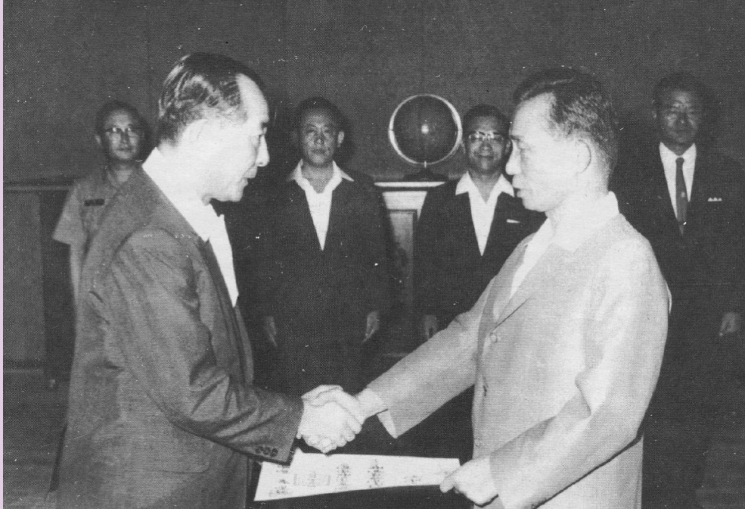
▲Emergence and Foundation Period (1970s)= The roots of Korea’s defense industry were planted when President Park Chung-hee held a New Year press conference on January 9, 1970, emphasizing self-reliant economy and self-defense as national policy goals, and during his inspection of the Ministry of National Defense on January 19, where he stressed the urgency of fostering the defense industry and defense science technology research. On February 2, he ordered the establishment of a 'Dedicated Department for Defense Industry Promotion' within the Ministry of National Defense, leading to the creation of the Defense Industry Promotion Office under the Director of Military Supplies, which began studying basic policies for defense industry promotion and support.
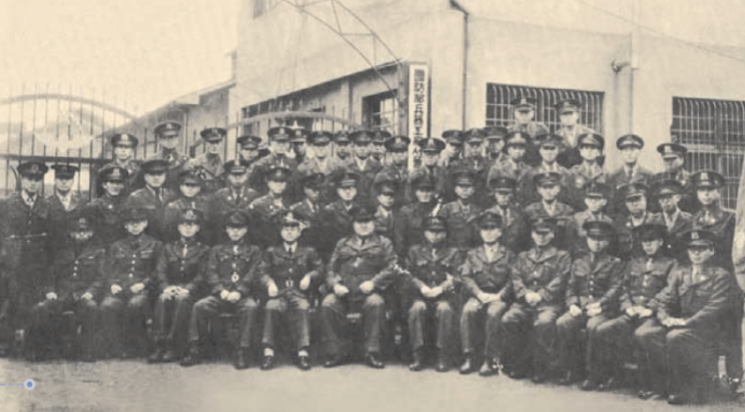
Before the full-scale start of the Korean defense industry in 1970, the establishment of the Army, Navy, and Air Force and changes in the external environment played a role in sowing the seeds of the defense industry, such as the founding of the Army Ordnance Factory and the Science and Technology Research Institute. After liberation from Japan’s illegal occupation in 1945, the Korean military began with the establishment of the National Defense Guard in January 1946, modeled after the U.S. National Guard system, setting up one regiment per province for a total of nine regiments. With the establishment of the Republic of Korea government and the enforcement of the Military Organization Act, the Army was formally established. Alongside the Army, the Coast Guard, which had been primarily responsible for preventing smuggling and rescuing shipwrecks, was officially established as the Navy. In October 1949, the Air Force was founded with a total strength of 1,600 personnel, completing the formation of the Army, Navy, and Air Force.
By around 1949, when the Korean military was just beginning to take shape, the Cold War tensions between the U.S. and the Soviet Union were already affecting the Korean Peninsula. The peninsula, where both North and South had established ideologically opposed independent governments, was in a hostile standoff, on the brink of conflict. South Korea’s weak defense capability, which relied heavily on the U.S. for most supplies and infrastructure and did not even possess a single tank (while North Korea had 242), made the threat even more severe.
The military support gap between North and South Korea was widening. North Korea had secured promises from the Soviet Union to strengthen its air force and signed a defense treaty with China, while the U.S. was considering a complete withdrawal from the Korean Peninsula.
Despite the lack of technical and systemic foundations, this external environment compelled the government to actively pursue the establishment of a self-production system for military supplies and defense equipment. To improve the poor equipment system relative to security threats, production facilities and technology development were urgent priorities. Accordingly, on December 15, 1948, the Army Ordnance Factory was established under a special army unit. The main focus at that time was to acquire production capabilities for personal firearms and ammunition.
Although there was a former Japanese military arsenal inherited from the U.S. military, it was in a damaged state and had been neglected for a long time, making restoration impossible. Therefore, the Ministry of National Defense took over the Yuhwan Sanggong Co., Ltd.’s Yongsan factory and the Chosun Oil Co., Ltd.’s Incheon factory on January 15, 1949, designating them as the first and second factories, respectively. After acquisition, the two factories underwent facility improvements and machinery maintenance, then began producing parts for the Japanese Type 99 rifle and hand grenades.
At that time, the U.S. was proceeding with a full withdrawal of its forces, leaving only 500 military advisors and support personnel in Korea, based on the 'Joint Strategic Survey Report.' Along with the U.S. withdrawal, military supplies were transferred, but most were outdated equipment used during the Pacific War and Japanese Type 99 rifles, which were the main equipment. Considering the equipment, it was more like leaving unusable gear rather than genuine military aid.
During this period, the Korean government obtained information that North Korea possessed more than 20 YAK fighter jets and requested aircraft aid, including bombers, from the U.S. However, General MacArthur rejected the request, fearing a "conflict between North and South." When the Korean government requested the delivery of 30 soon-to-be-retired B-26 light bombers as an alternative, the U.S. destroyed all 30 with axes and sold them as scrap metal. While the U.S. took an ambiguous stance, neither actively cooperating nor neglecting, North Korea’s equipment was steadily increasing with Soviet support.
© The Asia Business Daily(www.asiae.co.kr). All rights reserved.


















