Repurchase Agreement (RP) Purchase Bidding
Banks and Securities Firms Bid 5.25 Trillion Won, Fully Subscribed
BOK: "RP Purchase Rate Cannot Be Lowered Below Base Rate... Concerns Over Negative Spread"
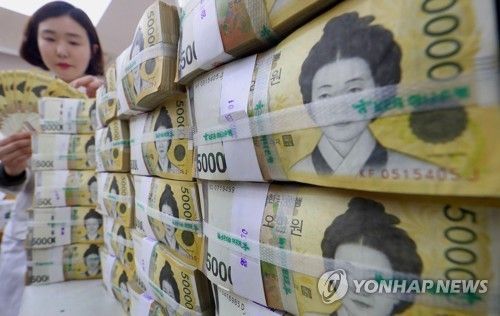
[Asia Economy Reporters Eunbyeol Kim and Gangwook Cho] On the first day of the Bank of Korea's 'unlimited money supply' initiative, it supplied 5.25 trillion KRW to the financial sector. As unlimited funds will be supplied weekly to the financial sector starting today, attention is focused on whether the financial market can stabilize.
On the 2nd, the Bank of Korea announced that it conducted a repurchase agreement (RP) purchase auction targeting banks and securities firms, receiving bids totaling 5.25 trillion KRW, and decided to supply the full amount. An RP refers to a bond sold with the condition that it will be repurchased by the buyer after a certain period. The Bank of Korea uses RP transactions when injecting or withdrawing money from the market. When the Bank of Korea buys RPs from financial companies, it effectively injects cash into the market. In return, financial companies must provide collateral bonds to the Bank of Korea. It is easy to understand this as banks or securities firms depositing bonds with the Bank of Korea and borrowing money. The RP maturity purchased by the Bank of Korea on this day was 91 days, and the interest rate was set at 0.78% per annum, 0.03 percentage points higher than the base rate (annual 0.75%).
◆More fund requests than expected... trend to be monitored= Initially, the Bank of Korea expected about 3 trillion KRW to be bid for RP purchases on this day, but it ended up supplying more funds to the financial sector than anticipated. The amount supplied this day exceeded the RP purchases on the 19th of last month (1 trillion KRW) and the 24th of last month (2.5 trillion KRW). A Bank of Korea official said, "Since 3 trillion KRW of capital calls paid into the bond stabilization fund established by the government the day before will be injected through corporate bond purchases today, we expected bids to exceed 3 trillion KRW," adding, "Besides the bond stabilization fund injection, some financial companies appear to have requested funds for internal reasons." However, the official added, "Since RP purchases will continue weekly, it is difficult to predict whether fund requests will consistently exceed expectations." It was reported that among the 5.25 trillion KRW supplied, a larger portion was supplied to securities firms.
According to financial authorities on this day, the first capital call of 3 trillion KRW paid in after the bond stabilization fund was established the day before will be used for corporate bond purchases today. A Financial Services Commission official said, "The bond stabilization fund received the first phase target of 3 trillion KRW from contributing institutions by the 1st and will begin corporate bond purchases from the 2nd."
The funds are expected to be mainly used in the secondary market. This is because there is insufficient demand to absorb the bonds currently on the market. The bond stabilization fund's money will be injected into asset management companies, which will purchase bond inventories. IBK Asset Management is in charge of managing the integrated fund, while eight private asset management companies, including Korea Investment & Securities and Samsung Asset Management, manage sub-funds. Financial authorities plan to determine the specific purchase scale, targets, and methods for corporate bonds, commercial papers (CP), and others depending on market conditions. In the market, Lotte Foods is expected to be the first beneficiary of the bond stabilization fund. Lotte Foods is conducting a pre-subscription on the 6th ahead of a 200 billion KRW refinancing issuance. If supported by the bond stabilization fund, it will be able to secure up to 100 billion KRW in funds stably.
Experts view the bond stabilization fund positively, noting that it can reduce concerns about temporary liquidity shortages for companies and that liquidity supply measures can help stabilize the short-term funding market. However, they point out that for the bond stabilization fund to play a catalytic role beyond resolving credit crunches for liquidity supply, it needs to expand investment size and further relax inclusion criteria. If the fund's purchase targets are limited to high-quality companies as in the past, it will be impossible to avoid an increase in defaults among lower-quality companies with poor liquidity.
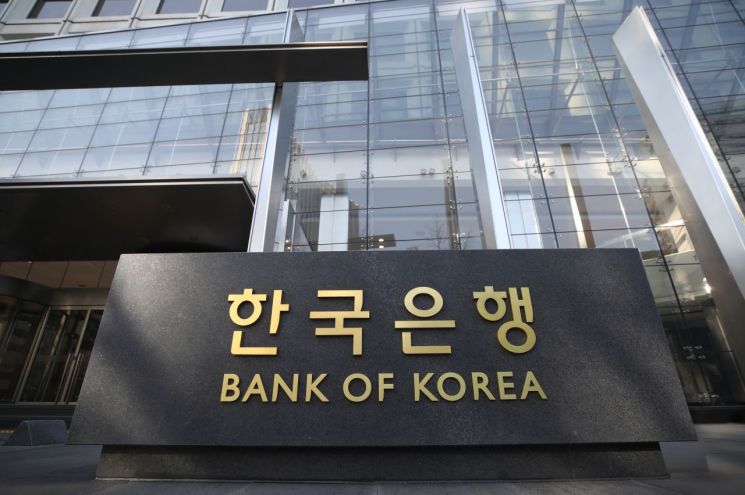
◆Bank of Korea: "RP purchase rate cannot be set below base rate... concerns over negative spread"= The Bank of Korea's unlimited liquidity supply measure was decided at the Monetary Policy Committee meeting on the 26th of last month. This measure, which was not implemented even during the 1997 foreign exchange crisis or the 2008 financial crisis, will be carried out for the next three months. Since it is not significantly different from quantitative easing (QE) conducted by major central banks such as the U.S., it has been dubbed the 'Korean-style quantitative easing.'
The main reason for implementing 'Korean-style quantitative easing' was to ensure the smooth operation of the bond stabilization fund established by the government to stabilize the corporate bond market. For the bond stabilization fund to purchase bonds on the market, cooperation from the financial sector is essential. However, due to low interest rates and loan demand caused by the novel coronavirus disease (COVID-19), the financial sector is reluctant to supply funds, fearing deteriorating profitability. For the money loosened by interest rate cuts to actually flow to customers, loans from commercial banks are essential, so this measure also aims to ease the burden on banks.
When implementing the RP purchase measure on this day, the Bank of Korea made it clear that it cannot lower the interest rate further. A Bank of Korea official stated, "There are criticisms from the financial sector that the RP purchase bidding rate is high, but if the RP purchase rate (loan interest rate nature) is set lower than the selling rate (borrowing interest rate nature), the Bank of Korea would incur a negative spread." For RP sales and purchases within 7 days, the base rate is used as a fixed rate, but considering the term premium, it was judged inappropriate for the 91-day RP purchase rate to be lower than the 7-day RP sales rate (base rate). A Bank of Korea official said, "Just as commercial banks do not lend at a loss, it does not make sense for the central bank to lend to commercial banks at a loss."
The Bank of Korea also expressed concerns that if the RP purchase rate is set lower than the RP sales rate, the bid size could become excessively large. The unlimited liquidity supply was decided to overcome the crisis caused by COVID-19, but there is a risk that financial institutions might focus solely on arbitrage by borrowing at low rates and purchasing other bonds. Initially, the Bank of Korea decided to supply unlimited liquidity to encourage the financial sector to participate in the government's COVID-19 measures.
A Bank of Korea official also said, "If RP purchases are made below the base rate, the market might misinterpret it as a signal of a base rate cut," adding, "During the 2008 financial crisis, when the bond market stabilization fund was supported, the minimum bidding rate was the base rate at that time."
© The Asia Business Daily(www.asiae.co.kr). All rights reserved.


















