Favorable Weather Conditions and the Impact of COVID-19
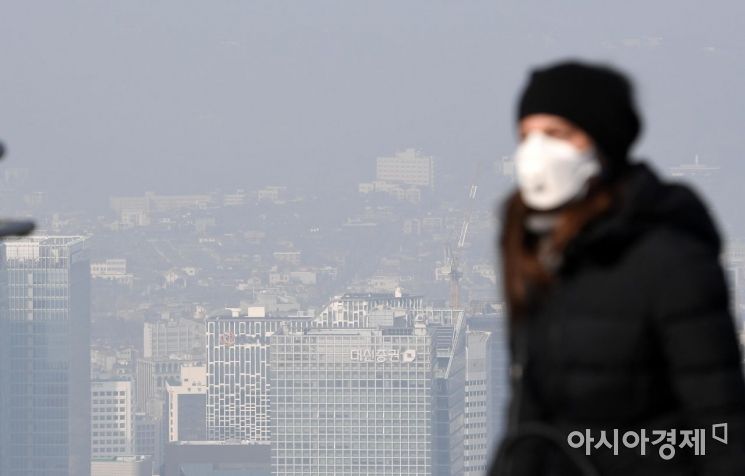 On the 14th of last month, when fine dust was rampant, the cityscape viewed from Namsan in Seoul appeared hazy. Photo by Hyunmin Kim kimhyun81@
[Asia Economy Reporter Jo In-kyung] Seoul City announced on the 1st that the average concentration of ultrafine dust in the Seoul area decreased by 20%, from 35㎍/㎥ to 28㎍/㎥, from December last year to the end of March this year, when the seasonal fine dust management system was implemented.
The ultrafine dust concentration was 28㎍/㎥ in December last year, higher than 24㎍/㎥ in the previous year, but from January to March this year, it recorded lower levels than last year.
Also, during the seasonal management period, the number of days with "good" fine dust increased from 11 days in the previous year to 21 days, and the number of high concentration days exceeding the emergency reduction measure issuance standard of 50㎍/㎥ decreased from 21 days to 7 days.
The city interpreted this as being due to favorable weather conditions such as wind and precipitation during this period, as well as various causes including reduced industrial activity due to the novel coronavirus infection (COVID-19) and the implementation of the seasonal fine dust management system.
In particular, major meteorological variables affecting fine dust concentration generally became favorable, with the average wind speed increasing from 1.9 m/s to 2.3 m/s compared to the same period last year, and precipitation also more than doubling from 67 mm to 152.5 mm. On the other hand, the number of stagnant air days decreased from 71 days to 51 days.
Earlier, Seoul City implemented the seasonal fine dust management system for the first time from December to March, when high fine dust concentration periods persist, and has been promoting strong reduction measures to lower fine dust concentration.
In the transportation sector, measures included restrictions on the operation of grade 5 vehicles, a two-day vehicle operation system for administrative and public institutions, and surcharge measures for parking fees at city-operated parking lots. In addition, in the heating sector, which accounts for the largest share (39%) among ultrafine dust emission sources, measures such as focused distribution of eco-friendly boilers and strengthened heating management for large buildings were established, and for business sites, comprehensive inspections of air pollutant emission sites and dust-generating construction sites have been conducted.
The city plans to conduct a thorough evaluation and analysis of the policy effects of this first seasonal fine dust management system together with the Seoul Institute and the Korea Environment Institute, and aims to make the seasonal management system to be implemented in December this year more effective and strengthened with preventive measures.
Furthermore, the city plans to support the development of new technologies for fine dust reduction, strengthen international cooperation with cities in East Asian countries, and jointly implement restrictions on grade 5 vehicle operations in the metropolitan area, preparing the next season's seasonal management system without any setbacks.
Jung Soo-yong, head of Seoul City's Climate and Environment Headquarters, said, "Although weather conditions were favorable during the first implementation period of the seasonal fine dust management system, it was successfully promoted thanks to the active participation of citizens," and added, "We will do our best to prepare the second seasonal management system, starting this December, more thoroughly to make Seoul safe from fine dust."
© The Asia Business Daily(www.asiae.co.kr). All rights reserved.

















