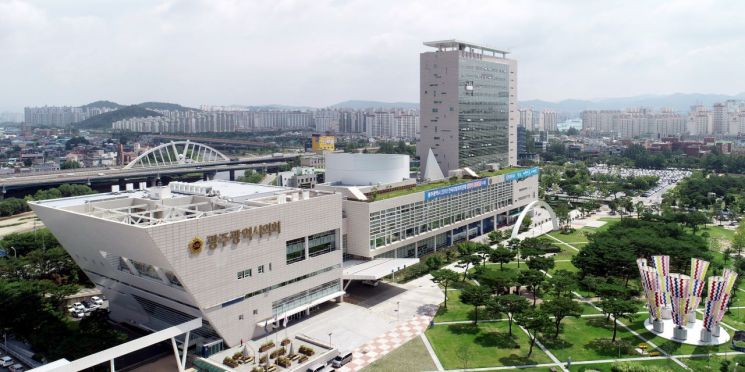
[Asia Economy Honam Reporting Headquarters Reporter Park Seon-gang] Gwangju Metropolitan City announced on the 31st that it completed the qualification review of the successful bidder for the Gwangju Municipal Arboretum, which is being promoted with the purpose of providing a natural experience learning site for youth and an urban relaxation space for citizens through the conservation and exhibition of plant genetic resources, on the 27th and will begin construction early next month.
The Gwangju Municipal Arboretum will be established by next year on a scale of 247,000㎡ around the Yanggye-dong Regional Sanitary Landfill in Nam-gu, with an investment of 3 billion KRW from the national government and 40 billion KRW from the city.
The project will proceed in two phases: Phase 1 involves the construction of infrastructure such as roads and walking trails, and Phase 2 involves buildings and landscaping.
In particular, it will be divided into ▲Welcome Forest ▲Mudeungsan Four Seasons Forest and Namdo Forest ▲Future Health Forest, and then opened to the public.
The Welcome Forest, which visitors encounter first, will include a visitor center, exhibition greenhouse, and traditional garden to facilitate meetings among visitors and showcase the charm of Namdo.
The Mudeungsan Four Seasons Forest and Namdo Forest will feature lawns shaped like Cheonwangbong, Jiwangbong, and Inwangbong, which symbolize Mudeungsan, and a Namdo-themed garden, creating sightseeing and experiential spaces of Namdo. Additionally, fragrant, native, and medicinal plant gardens will be introduced to provide a space for healing tired bodies and minds.
The Future Health Forest will house a biodiversity research institute, gene cultivation center, and seedling nursery to protect plant genes affected by climate change. Furthermore, it will be used as an educational site to study the ecological value of local tree genes and convey the significance of biodiversity.
Gwangju City expects that once the municipal arboretum is established, it will have various effects such as ▲partially dispersing and alleviating the excessive environmental and ecological burden concentrated on Mudeungsan National Park ▲serving as an excellent natural learning site for citizens and youth to explore the local ecological environment ▲providing a training site to enhance the practical skills of forestry professionals and forest interpreters.
Jung Dae-kyung, head of the city's Parks and Greenery Division, said, “Like the arboretums in Washington or Canberra, we hope the municipal arboretum will be used as a space for citizens' rest and healing,” adding, “It will be an opportunity to expand the region’s insufficient green spaces and promote forest resource development through the preservation and management of local tree genetic resources.”
© The Asia Business Daily(www.asiae.co.kr). All rights reserved.

















