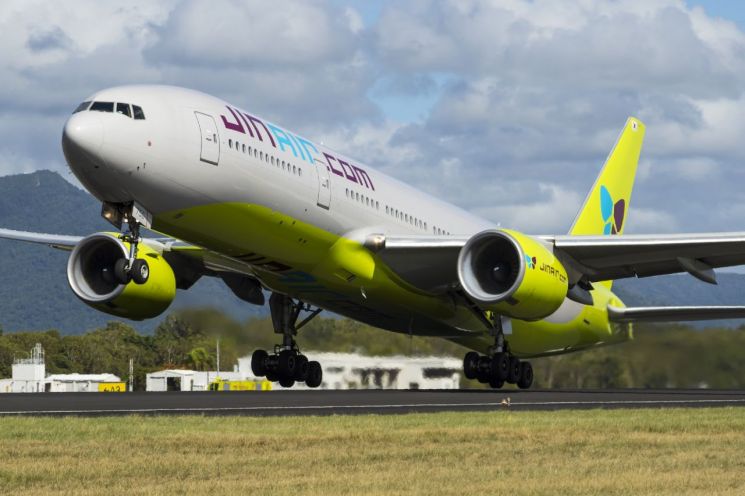
[Asia Economy Reporter Lee Chun-hee] The government stated on the 31st regarding the lifting of sanctions on low-cost carrier (LCC) Jin Air, announced on the same day, that "this is not the end but the beginning," and added, "We plan to closely monitor whether the newly reorganized structure is being implemented as intended."
Kim Sang-do, Director of the Aviation Policy Office at the Ministry of Land, Infrastructure and Transport (MOLIT), explained the background of lifting the sanctions during an online briefing, saying, "The original self-rescue plan proposed by Jin Air was to expand the number of outside directors to a majority and operate independently, and this part was evaluated as fulfilled." He also mentioned that considering the aviation industry's recent downturn due to the novel coronavirus disease (COVID-19), Jin Air's double hardship was taken into account.
On the morning of the same day, MOLIT held a licensing advisory committee meeting and lifted administrative sanctions on Jin Air. Jin Air had been under management sanctions since August 2018, including denial of new route rights, restrictions on aircraft registration, and prohibition of non-scheduled flights, after it was revealed that former Vice President Cho Hyun-min (currently Executive Director at Hanjin KAL), a foreign national, was serving as a registered executive. At that time, MOLIT set improvement of management culture as a condition for lifting sanctions, and on the 25th, a governance improvement plan that significantly strengthened the authority of outside directors was passed at Jin Air’s shareholders' meeting, leading to the lifting of sanctions.
Director Kim explained, "The biggest problem Jin Air had was the difficulty of independent management and being under group influence," and said that improvement measures to ensure board-centered management were prepared through consultations with Jin Air.
Since the fact that a foreign national was serving as a registered executive was confirmed only years later, questions arose regarding MOLIT’s supervisory responsibility. Kim responded, "Approval authority has been elevated, and procedures that allow sufficient checks have been established," adding, "We will keep a close watch on executive reshuffles at airlines and strive to prevent recurrence."
Kim also urged not only Jin Air but other LCCs to refer to Jin Air’s strengthened board functions and to introduce and operate related systems accordingly.
The following is a Q&A with Kim Sang-do, Director of the Aviation Policy Office at MOLIT.
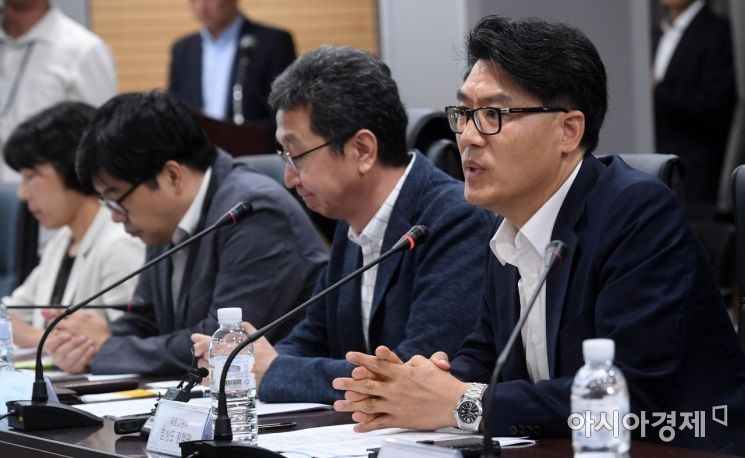
▲ Was this measure taken also considering Jin Air’s poor management situation due to the COVID-19 crisis?
- Jin Air has expressed double difficulties: the overall hardship in the aviation industry and the sanctions imposed on them. We took that into account, but fundamentally, the key criterion for lifting sanctions was whether Jin Air’s self-rescue plan was fulfilled.
▲ Jin Air’s parent company, Korean Air, still maintains its governance structure. Although Jin Air’s self-rescue plan to check management has been prepared, do you think it will work effectively in reality?
- The government basically evaluated that the system is prepared to some extent so that the board’s functions are strengthened and checks and balances on management can operate. There are many concerns about whether it will actually work well and operate as a fully independent company, and it is a matter of future implementation. Jin Air CEO Choi Jung-ho has expressed his intention several times to operate independently in line with the strengthened board functions. The government will also consider that and closely monitor whether Jin Air operates according to the newly reorganized structure.
▲ Previously, MOLIT said it would monitor whether the self-rescue plan was properly implemented after it was prepared, but this time the lifting was decided just because the supplementary plan was prepared. Do you believe Jin Air’s self-rescue plan will be steadily implemented in the future? Is there a possibility of additional measures if implementation is inadequate?
- The institutional improvements have been made, but it is difficult to set a fixed period such as 6 months, 1 year, or 5 years to observe the implementation process. It would be excessive to decide on sanctions based on results observed only after such a period. The original self-rescue plan proposed by Jin Air was to expand the number of outside directors to a majority and operate independently, and this part was evaluated as fulfilled. Jin Air will make efforts in actual operation, and the government will also monitor.
▲ If the self-rescue plan is not faithfully implemented in the future, does MOLIT plan to supervise or inspect it?
- It is difficult to predict. The difference in how Jin Air’s board operates now compared to before is that outside directors independently exceed the majority and have been replaced by figures unrelated to the Hanjin Group. If outside directors perform their roles properly, the board can play a role in checking management. Also, previously, the CEO concurrently served as the board chair, but going forward, an outside director will serve as chair. This is judged to increase the possibility of more independent functioning.
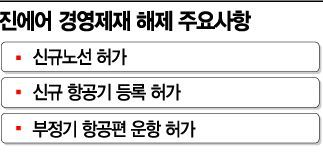
▲ When is the new route allocation scheduled, and from when can Jin Air receive new routes after the lifting of sanctions?
- The regular allocation of new routes was already completed on the 27th of last month. Currently, the government allocates remaining or additionally secured route rights on an ad hoc basis, and Jin Air can participate in the allocation at that time. Also, non-scheduled flights were prohibited, but going forward, Jin Air can operate non-scheduled flights anytime if there is new demand. Although operations are difficult due to COVID-19, this will help Jin Air prepare business plans in advance for market development efforts or when the pandemic subsides and air travel demand recovers.
▲ Since the sanctions on Jin Air were imposed after the late confirmation of foreign national Emily Cho’s status as a registered executive, MOLIT’s supervisory responsibility cannot be denied. Are there any improvements or strengthening of MOLIT’s supervisory functions?
- Approval authority has been elevated compared to before, and internally, procedures that allow sufficient checks have been established. We will continue to monitor executive reshuffles at airlines and make every effort to prevent recurrence of the same issues.
▲ Do you have any requests to the aviation industry regarding the sanctions and lifting on Jin Air?
- The Jin Air sanctions incident was a great pain for the aviation industry. Such a situation should never have occurred. I would like to make a few requests based on this sanction and lifting. I have already conveyed to Jin Air’s CEO that the lifting of sanctions is not the end but the beginning. What is truly important is that the system operates as intended. I asked them to make use of the purpose of strengthening board functions to ensure board-centered corporate management.
Meanwhile, I ask all airlines, especially LCCs, to take note. The strengthened board functions newly established by Jin Air should be introduced to other LCCs in the future. Some LCCs started on a small scale, so management centered on owners or CEOs is common, and many management disputes occur. Airlines are directly linked to safety and provide convenience to many consumers, so strong social responsibility is required. I believe a posture that fully realizes social responsibility is necessary more than in other industries. I ask other LCCs to refer to Jin Air’s strengthened board functions and strive to introduce and operate such systems going forward.
© The Asia Business Daily(www.asiae.co.kr). All rights reserved.
![User Who Sold Erroneously Deposited Bitcoins to Repay Debt and Fund Entertainment... What Did the Supreme Court Decide in 2021? [Legal Issue Check]](https://cwcontent.asiae.co.kr/asiaresize/183/2026020910431234020_1770601391.png)

















