Gyeyang-gu Hyoseong-dong, Dong-gu Hwasu and Hwapyeong-dong Designated
Installation of Fine Dust Avoidance Facilities and Fine Dust Traffic Lights
Inspection of Fine Dust Emission Sites and Strengthened Enforcement Against Vehicle Idling
Comprehensive Air Quality Improvement Plan with 180 Billion KRW Investment
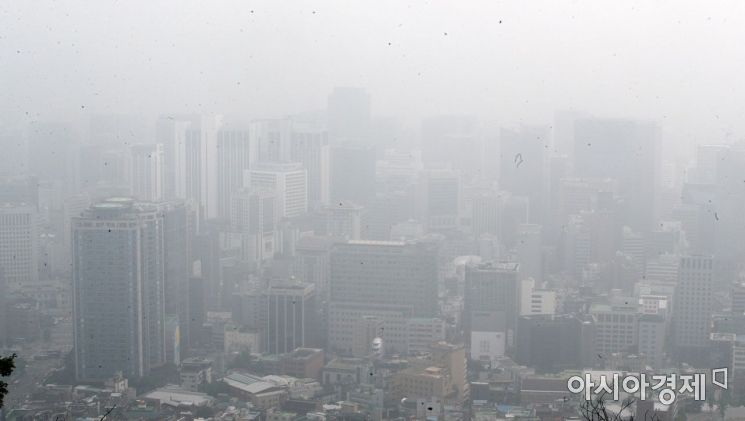
[Asia Economy Reporter Park Hyesook] Incheon City has designated two areas?Hyo-seong-dong in Gyeyang-gu and Hwasu and Hwapyeong-dong in Dong-gu?as "Fine Dust Intensive Management Zones," marking the first such designation within the region.
Fine Dust Intensive Management Zones refer to safe zones designated to prevent health damage, where the annual average concentration of fine dust or ultrafine dust exceeds environmental standards, and facilities frequently used by vulnerable groups such as children and the elderly are concentrated.
After conducting a demand survey targeting 10 districts and counties, and undergoing written and on-site evaluations by an expert advisory group, the city announced on the 30th that it selected two areas?Hyo-seong-dong (0.54㎢) and Hwasu and Hwapyeong-dong (0.38㎢)?as Fine Dust Intensive Management Zones. These areas are densely populated with air pollution emission sources such as factories.
The city plans to minimize fine dust exposure for vulnerable groups by installing fine dust avoidance facilities, fine dust absorption mats, smart air showers, and fine dust traffic lights in these areas.
Additionally, the city will intensively manage these zones through strengthened guidance and inspections of fine dust-emitting businesses, support for installing prevention facilities at air emission sites, crackdowns on vehicle emissions and idling, and operation of road water spraying trucks.
After consultation with the Ministry of Environment, the city plans to complete the official designation notice of the Fine Dust Intensive Management Zones by early next month and will establish detailed implementation plans for customized support and management in cooperation with the relevant autonomous districts.
Fine Dust Intensive Management Zones can be designated by the governors of metropolitan cities and provinces, as well as mayors, county governors, and district heads, according to Article 22 of the Special Act on the Reduction and Management of Fine Dust. Seoul City first designated parts of Geumcheon, Yeongdeungpo, and Dongjak districts in January, and the initiative is now spreading nationwide.
An Incheon City official stated, "We will implement customized installation, management, and support of fine dust reduction facilities in the Fine Dust Intensive Management Zones and prepare effective measures that residents can feel. We plan to further expand these zones to safely protect vulnerable groups such as children and the elderly from high concentrations of fine dust."
Meanwhile, Incheon City has set this year's fine dust reduction targets (PM2.5 at 20㎍/㎥, PM10 at 39㎍/㎥) and is investing a budget of 181.4 billion KRW to achieve them. In addition to designating Fine Dust Intensive Management Zones, the city will implement seasonal management systems, vehicle emission reduction projects, and emission source management.
First, the Incheon Clean Corporation Council, composed of four national public corporations in the Incheon area, plans to actively promote environmental improvements through the second phase (2020?2024) of projects focused on reducing emissions from aircraft, ships, and port equipment. The council previously reduced 1,543 tons of air pollutants during the first phase (2016?2019).
Furthermore, with a secured budget of 30.4 billion KRW, the city will support small and medium-sized enterprises in installing air pollution prevention facilities and expand the household low-NOx boiler installation support project to 15,500 units, an increase of 12,494 units from last year. The fine dust intensive management roads will operate in 19 locations (63.5 km), and rest areas will expand from 57 to 100 locations.
To reduce vehicle emissions, the city will promote low-emission projects targeting approximately 54,230 vehicles, an increase of 10,560 from last year. Utilizing the vehicle operation restriction system for 5th-grade emission vehicles established last year (22 locations, 44 surveillance cameras), enforcement of operation restrictions will be intensified starting this year.
© The Asia Business Daily(www.asiae.co.kr). All rights reserved.

















