"Environmental Costs 2.6 Trillion This Year, Increasing by 0.7 Trillion Annually Until 2024... KEPCO Unable to Cope"
Electricity Rate Reform Discussions 'All Stop'... Criticism of Unrealistic Claims
President Moon Orders "Swift Implementation of Electricity Fee Deferral or Exemption System"
KEPCO States "Rates Must Rise and Fall to Ensure Financial Stability"
Ministry of Economy and Finance Says "Competition Must Be Introduced in Wholesale Electricity Prices... Significant Impact on National Inflation"
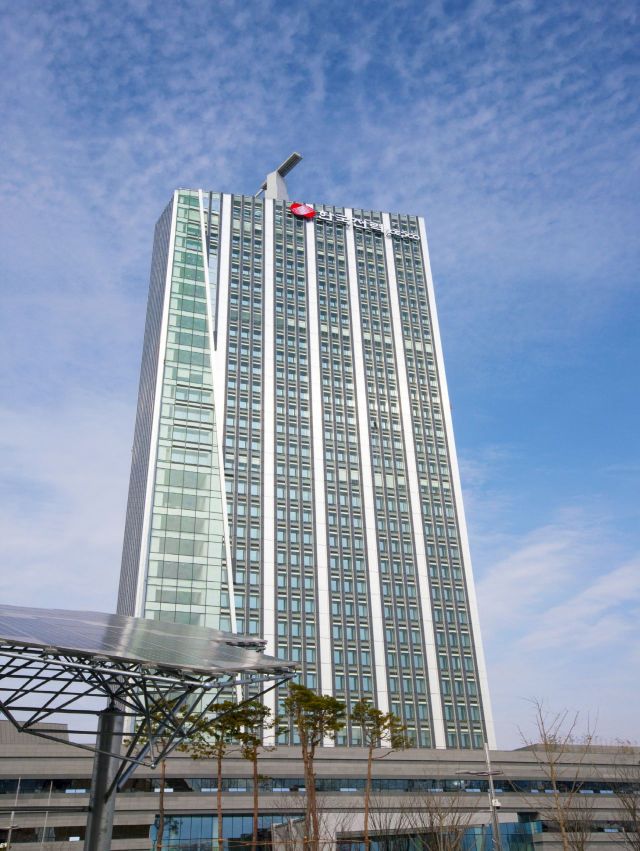
[Asia Economy Reporter Moon Chaeseok] Amid claims from the securities sector that now is the right time to introduce a power purchase cost linkage system for Korea Electric Power Corporation (KEPCO), there are also counterarguments that the idea lacks feasibility, sparking controversy. Critics point out that with President Moon Jae-in instructing to defer or waive electricity charges, causing the government's discussions on KEPCO's electricity rate reform to fizzle out, it is questionable whether proper discussions can be held on a system that allows electricity rates to be freely adjusted according to power purchase costs.
On the 27th, NH Investment & Securities argued that the plunge in oil prices presents an opportunity to implement the power purchase cost linkage system for KEPCO. While lowering the target stock price from 32,000 won to 26,000 won citing the possibility of electricity discounts due to COVID-19, they maintained that it is the right time to introduce the linkage system. On the previous trading day, the 27th, KEPCO's closing price was 18,550 won.
Researcher Lee Min-jae of NH Investment & Securities estimated that environmental costs this year amount to 2.6 trillion won. This includes 900 billion won for greenhouse gas emission permits and 1.7 trillion won for the Renewable Portfolio Standard (RPS) costs. Next year, the paid allocation rate for greenhouse gas emission permits is expected to rise from 3% to 10%, and the RPS ratio is also likely to surge sharply from 2024. Environmental costs are projected to increase by more than 700 billion won annually until 2024.
Lee said, "KEPCO will not be able to fully bear these environmental costs, so reforming the electricity rate system, including the power purchase cost linkage system, is necessary to respond to this," adding, "The oil price crash this year makes it the right time to implement the power purchase cost linkage system."
KEPCO regards the introduction of the linkage system as a "long-cherished project." A KEPCO official said, "To overcome KEPCO's financial situation, power purchase costs and raw material import prices are important, so ultimately a cost linkage system must be implemented," adding, "If rates can be raised when necessary and lowered when appropriate to create a stable financial structure, the company's sustainability will not be compromised even if subsidiary policies like special electricity rate discounts are implemented."
According to KEPCO, power purchase costs consist of generation costs including fuel costs, operating expenses of each power plant, and facility investment costs. Fuel costs account for about 80-90%.
The problem is the low feasibility of such discussions. Given that discussions on electricity rate hikes have stalled due to President Moon's instructions, it is doubtful whether the linkage system can be introduced to freely raise and lower rates. Earlier, on the 24th, President Moon said at the 2nd Emergency Economic Meeting held at the Blue House, "Prompt measures are needed for the deferral or exemption of public charges such as the four major social insurance premiums and electricity charges."
There is also a perspective that the precedent of the Ministry of Strategy and Finance, the budget-related authority, showing a lukewarm response to the linkage system proposals from the Ministry of Trade, Industry and Energy and KEPCO should be taken into account. The Ministry of Strategy and Finance has stated that since electricity rates directly affect the cost of living for the public, discussions on system reform should be approached cautiously.
The Ministry of Strategy and Finance rather prioritizes introducing competitive elements into the wholesale electricity price (SMP) that KEPCO monopolistically purchases. Since the wholesale electricity price lacks market elements, transparency in power purchase costs is low, so discussions on electricity rate reform should start with improving this aspect.
Attempts to reform the electricity rate system have been ongoing, including during the 2014 oil price crash, but have repeatedly been blocked due to concerns over inflation.
The government is reportedly set to announce early next week a plan to defer electricity charges for small business owners in special disaster areas. Large corporations and manufacturing plants are excluded. The plan under strong consideration is to defer electricity bill payment deadlines by more than two months.
The government will invest 73 billion won in supplementary budgets to support 50% of electricity charges for small business owners in Daegu and the Gyeongsangbuk-do regions of Gyeongsan, Bonghwa, and Cheongdo, which have been designated as special disaster areas. The rate reduction will apply from April usage through September.
© The Asia Business Daily(www.asiae.co.kr). All rights reserved.

















