Discussion on Industry-Specific Inspections and Financial Support Plans for SanGyeongJang
SanEun and SuEun Inject 1 Trillion Won into Doosan Heavy Industries
Industry: "Also for Core Industries like Aviation, Refining, and Shipbuilding"
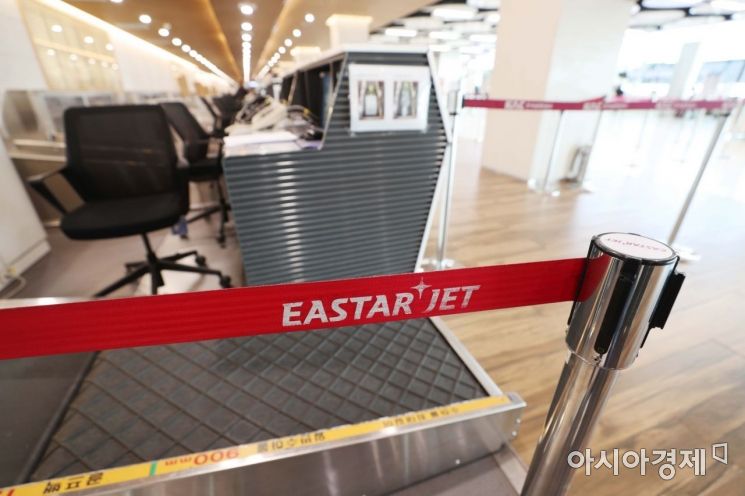 On the 24th, Eastar Jet decided to suspend all domestic flights following the suspension of international flights due to the spread of COVID-19. It is the first shutdown among South Korean airlines. On the same day, the Eastar Jet ticket counter at the domestic terminal of Gimpo Airport in Gangseo-gu, Seoul, was quiet. Photo by Moon Honam munonam@
[Asia Economy Reporter Moon Chaeseok] "The pipeline (support channel) for financial assistance is not functioning properly, and the blocked parts need to be cleared." (Park Yongman, Chairman of the Korea Chamber of Commerce and Industry)
"To overcome this unprecedented crisis, speed and decisiveness are necessary, and the government will do its best to ensure that related policies are intensively promoted so that corporate difficulties can be resolved in a timely manner without missing the golden time." (Prime Minister Chung Sye-kyun)
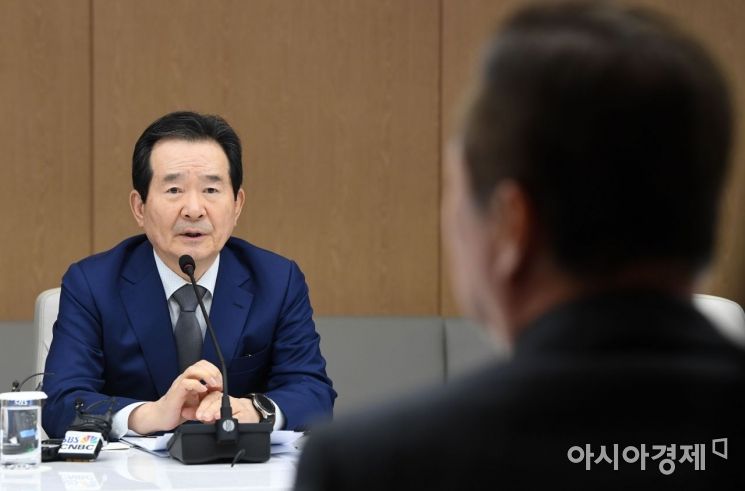 Prime Minister Chung Sye-kyun is delivering opening remarks at the meeting of economic organizations to overcome COVID-19 held at the Korea Chamber of Commerce and Industry in Seoul on the 26th. Attending the meeting were Prime Minister Chung, Park Yong-man, Chairman of the Korea Chamber of Commerce and Industry, Kim Ki-moon, Chairman of the Korea Federation of Small and Medium Business, Sohn Kyung-shik, Chairman of the Korea Employers Federation, Kim Young-joo, Chairman of the Korea International Trade Association, and Kang Ho-gap, Chairman of the Korea Federation of Medium-sized Enterprises. Photo by Kang Jin-hyung aymsdream@
As the government decided to lend 1 trillion won to Doosan Heavy Industries through policy banks amid its financial difficulties, the industrial sector unanimously voices the urgent need for support for national foundational industries such as aviation, refining, and shipbuilding. The government repeatedly conveyed a message that it empathizes with the industry's intentions.
Earlier on the 26th, Prime Minister Chung diagnosed at a meeting with economic organizations, "Given the economic difficulties caused by the spread of the novel coronavirus infection (COVID-19), the situation is by no means optimistic."
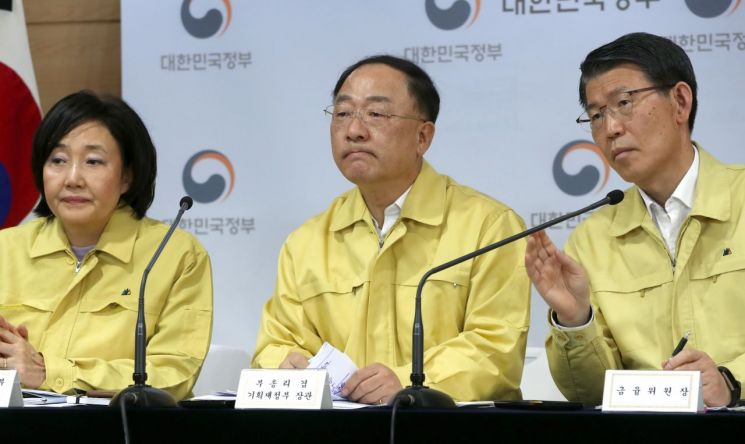 From the left, Park Young-sun, Minister of SMEs and Startups, Hong Nam-ki, Deputy Prime Minister and Minister of Economy and Finance, Eun Sung-soo, Chairman of the Financial Services Commission. (Photo by Yonhap News)
On the 27th, at the 'Ministerial Meeting on Strengthening Industrial Competitiveness (Sang-gyeong-jang)' attended by Deputy Prime Minister and Minister of Economy and Finance Hong Nam-ki, Minister of Trade, Industry and Energy Sung Yun-mo, and Financial Services Commission Chairman Eun Sung-soo, it was confirmed that 1 trillion won would be lent to Doosan Heavy Industries through KDB Industrial Bank and the Export-Import Bank of Korea.
During the meeting held from 7:30 a.m. to 8:30 a.m. that day, the Doosan Heavy Industries support agenda was the second item. The first item was a status check on major industries such as manufacturing.
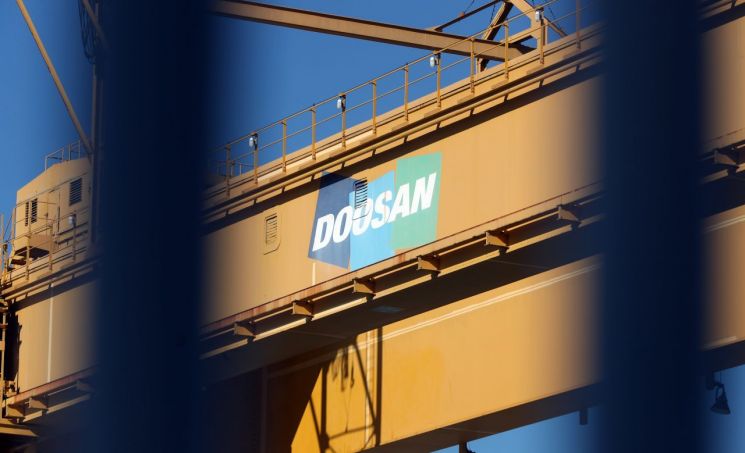 A large crane installed within Doosan Heavy Industries in Seongsan-gu, Changwon-si, Gyeongnam, on the afternoon of the 11th. (Photo by Yonhap News)
The industrial sector unanimously calls for urgent support not only for Doosan Heavy Industries but also for foundational industries such as aviation, refining, shipbuilding, shipping, and construction.
The aviation industry is in crisis as global air routes are blocked, preventing the creation of growth momentum. Large-scale restructuring is inevitable not only for low-cost carriers (LCCs) but also for major airlines such as Korean Air and Asiana Airlines.
Despite this situation, support plans for major aviation companies like Korean Air were not discussed at the Sang-gyeong-jang meeting the previous day.
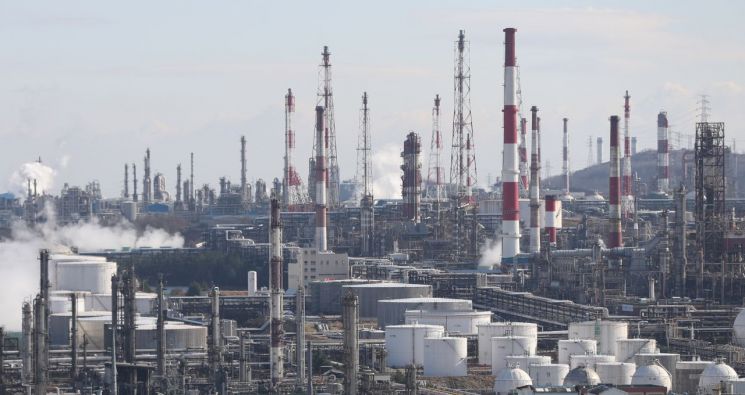
The refining industry is also deteriorating due to the combined effects of falling oil prices and consumption stagnation. Large-scale deficits are expected. On the 27th (local time), West Texas Intermediate (WTI) crude oil for May delivery on the New York Mercantile Exchange (NYMEX) closed at $21.51 per barrel, down 4.8% ($1.09) from the previous day. Although prices rose for three consecutive days ahead of the passage of the U.S. economic stimulus bill in Congress, all gains were given back.
While consumption stagnation due to COVID-19 is problematic, the more serious issue is the 'political chicken game' among oil-producing countries, which can cause oil price crashes to recur at any time.
Our companies still have to pay import duties of 16 won per liter on crude oil and petroleum products purchased from the Middle East. Among OECD member countries, only three impose tariffs on imported crude oil: Korea (3%), the United States (0.1?0.2%), and Chile (6%). Korea is the only non-oil-producing country among them.
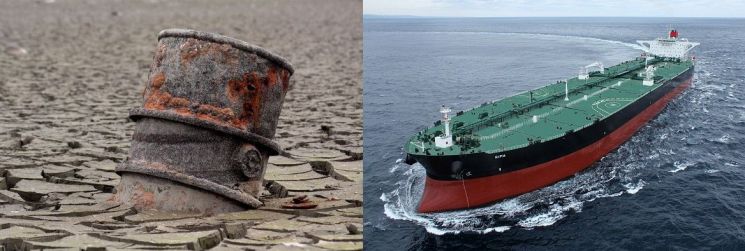
The shipbuilding industry fears a decline in order volumes despite painful restructuring because the recovery of ship prices is not clear. Small and medium-sized equipment suppliers are already facing a critical situation and are appealing for urgent relief funds.
An industry official said, "At the very least, it is important to include national key industries in the government's large-scale liquidity support targets and provide emergency funding."
© The Asia Business Daily(www.asiae.co.kr). All rights reserved.