[Monthly Aviation Editor-in-Chief Kim Jae-han] This year’s defense budget is well known for being the largest ever at 50 trillion won, with the most attention focused on the aviation projects. Among the 16.6915 trillion won allocated for defense capability enhancement to strengthen military power, aviation projects account for the largest share at 6.3804 trillion won. This is more than twice the size of the second largest share, the naval shipbuilding projects. This indicates that there are many significant projects underway. In particular, this year, these major aviation projects are expected to face important decision-making points, which is a key point to watch.
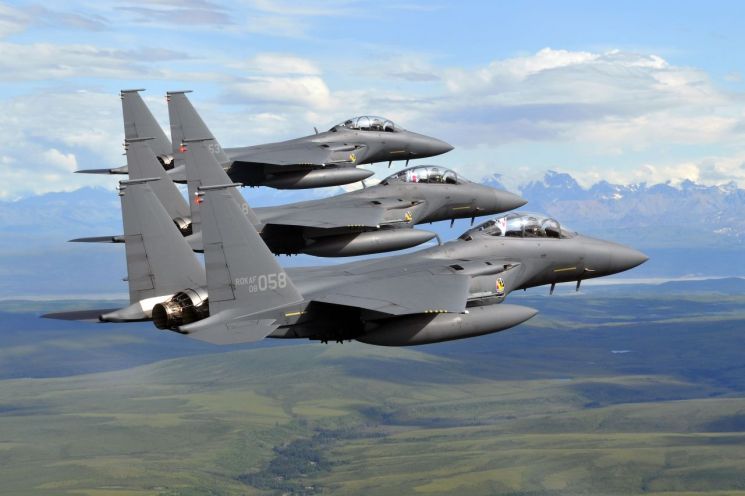
The F-15K performance upgrade project is also being pursued. Starting in 2022, the Air Force’s F-15K performance upgrade project is expected to commence, with preliminary research for determining the project direction likely to be conducted within this year. The F-15K performance upgrade project was included in last year’s "2020-24 Defense Mid-term Plan." Since its introduction in 2005, it has been in operation for 15 years this year, and performance improvements are necessary to respond to future battlefield environments.
The specifications that can currently be considered as an upgraded version of the F-15K are those of the Advanced F-15. This is the latest specification of the F-15E, which is based on the F-15K. According to Boeing, the manufacturer of the F-15K, the Advanced F-15, which has evolved through a stable production program, possesses superior weapon load, performance, and endurance compared to other models, and is a cost-effective and low-risk multipurpose fighter solution.
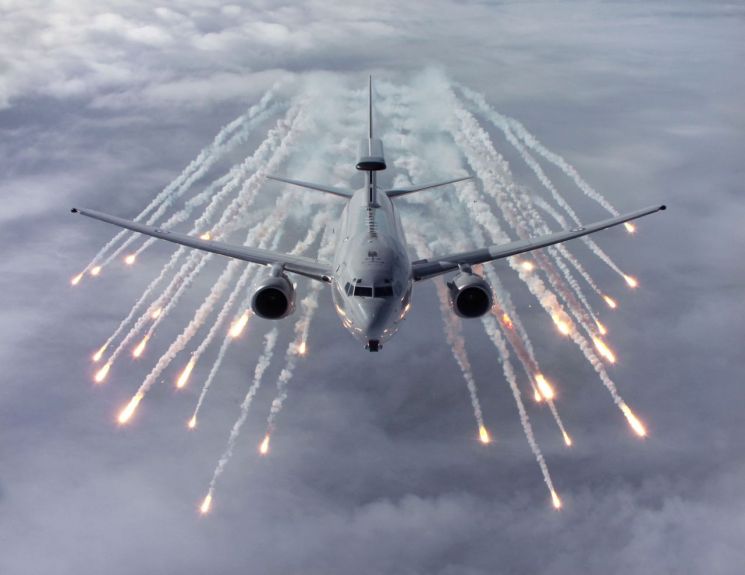
The E-737 performance upgrade contract and additional procurement project are also expected to proceed. Among the Air Force’s core assets, the E-737 airborne control and warning aircraft is expected to sign contracts this year for Identification Friend or Foe (IFF) and tactical data link (Link-16) performance upgrades, as well as conduct feasibility studies for additional procurement projects. The project to procure two additional airborne control and warning aircraft is expected to begin in 2021, with feasibility studies for budget allocation conducted this year. This project was included in the 2016 long-term requirements plan (to be pursued five years later) due to increased missions following the expansion of the Korean Air Defense Identification Zone (KADIZ) and the growing importance of intelligence collection missions in response to North Korea’s enhanced nuclear and missile capabilities.
The key issue in this additional procurement project is whether to acquire the same model or select a model through competitive bidding. Regarding this, the Defense Acquisition Program Administration (DAPA), which is currently promoting the additional procurement project, reportedly received model data from Boeing, Saab, and IAI early last year, indicating the possibility of competitive bidding. However, most experts anticipate the additional procurement of the same E-737 model. Maintaining a single model rather than operating six aircraft of different types offers advantages in parts procurement, personnel management, and training. If the project proceeds via competitive bidding, participation from Saab and Elta, as in the first project, is expected.
Meanwhile, if the additional procurement project is decided to be for the E-737, it is highly likely that the project, like the IFF and Link-16 performance upgrades, will be conducted domestically. This would be similar to the first project, where KAI assembled three out of four aircraft domestically. Currently, KAI, which handled the E-737 system assembly, is the most likely candidate, but Daehang Aviation, which has experience in heavy maintenance of Boeing 737 airframes, cannot be completely ruled out.
© The Asia Business Daily(www.asiae.co.kr). All rights reserved.


















