Controversy Over Drivers Using Navigation to Bypass School Zones and Avoid 'Minsik Law'
Expert: "Minsik Law Imposes Excessive Burden on Drivers"
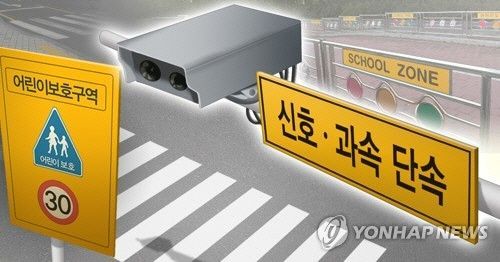
[Asia Economy Intern Reporter Kim Seul-gi] The so-called 'Min-sik Law,' which strengthens safety measures in 'Children Protection Zones (School Zones)' to reduce child traffic accidents, came into effect on the 25th. However, some drivers feel the penalties are too harsh and find driving in school zones burdensome.
As a result, navigation systems with a 'school zone detour' guidance feature have been introduced. These systems provide warnings to avoid entering school zones. However, there is growing criticism that this is not about complying with the law but rather evading it or using a kind of loophole.
According to the amended law, under Article 5-13 of the Act on Aggravated Punishment of Specific Crimes, if a child dies in a traffic accident within a school zone, the driver faces life imprisonment or a prison term of three years or more.
In cases of injury, the driver faces imprisonment from one year to 15 years or a fine ranging from 5 million to 30 million won. When the law passed the National Assembly last December, it was already criticized for 'excessive punishment.'
Amid growing controversy over excessive penalties, petitions requesting the revision of the Min-sik Law were consecutively posted on the Blue House's public petition board on the 24th.
Petitioners argued that "the amendment to the Act on Aggravated Punishment of Specific Crimes imposed on drivers is excessive. It is unfair to hold drivers fully responsible for accidents they cannot avoid."
One petitioner appealed, "Among the causes of child traffic accidents, violations of pedestrian crossings account for 20.5%, more than twice that of adults. Expecting drivers to always prevent and be extremely cautious of such sudden actions by children is unrealistic and unfair."
They added, "All responsibility for child traffic accidents is placed on drivers. Consequently, public opinion is growing that school zones should be avoided altogether. This is one of the worst laws causing extreme tension and stress for drivers who must pass through school zones."
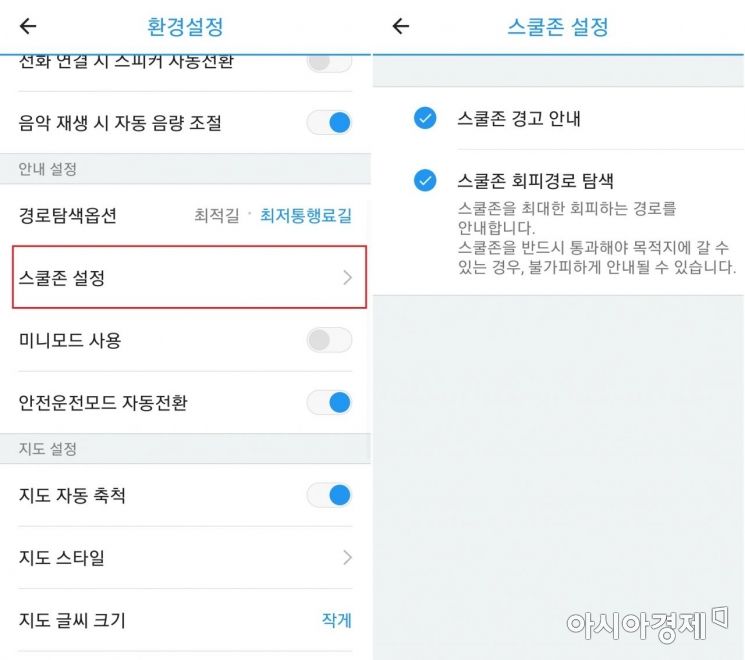 The photo is a screenshot of a navigation software specialized company adding a 'School Zone Avoidance Route Setting' feature considering the Min-sik Act / Photo by Asia Economy
Given this situation, navigation systems that alert drivers when entering school zones have emerged.
A navigation software specialist company added a 'school zone detour route setting' feature considering the Min-sik Law. This feature provides alternative routes that avoid school zones when they are on the way to the destination.
When it is unavoidable to enter a school zone, the system enhances warnings and guidance to support the driver. A school zone alert appears 300 meters before entering, and if the speed exceeds 30 km/h, the navigation screen flashes red and emits a warning sound.
Drivers' reactions are mixed. One driver welcomed this feature, saying, "As a beginner driver, I may be inexperienced, but although the law's intent is good, it seems poorly designed."
A female driver in her 20s, Ms. A, said, "No matter how carefully I drive, if children suddenly run out in a school zone, won't I be punished? If the navigation offers a 'school zone detour route' service, I would actively use it to avoid school zones as much as possible."
She added, "It's unclear what kind of punishment I might face for even slight negligence in a school zone, and I think some people might abuse this law."
Some drivers criticize navigation companies for providing 'route detour' functions, calling it a "loophole by drivers and companies trying not to comply with the law."
A male driver in his 50s, Mr. B, who works near a school zone and frequently passes through it, said, "I think the Min-sik Law is necessary for drivers. Drivers can follow safety rules while protecting children."
Mr. B added, "Following the law is each driver's responsibility, but I don't think it's good for navigation companies to offer such features. Taking unnecessary detours increases fuel costs and environmental pollution. People get angry when taxis take longer routes to charge more, but I wonder why they don't get angry when drivers avoid school zones to protect children."
Amid this controversy, the company explained, "This feature was developed to help drivers follow safety rules and can be set as an option at the driver's discretion. It reduces vehicle entry into children protection zones, further safeguarding children's safety." They denied that it was a 'loophole' as some drivers claimed.
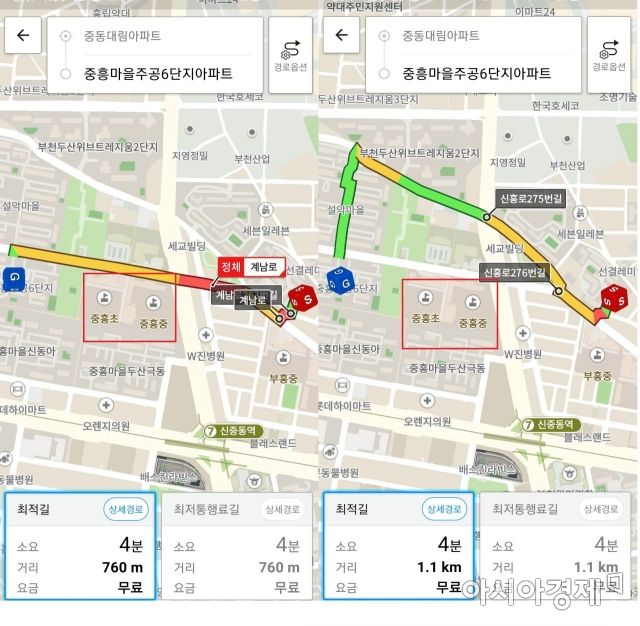 The photo is a screenshot from the app comparing the 'School Zone Avoidance Route Search' settings. Before setting the School Zone Avoidance Route Search (left) After setting the School Zone Avoidance Route Search (right) / Photo by Asia Economy
While controversy surrounds navigation systems with school zone detour functions, experts have pointed out that the Min-sik Law is excessive.
Traffic accident specialist lawyer Han Moon-chul argued, "The degree of fault between victim and perpetrator should be considered. If the victim's fault is significant, even in fatal accidents, options such as probation or fines should be available."
He explained, "Accidents can happen in school zones no matter how carefully one drives. It seems various side effects and fairness issues were not considered. The 'Yoon Chang-ho Law' imposes a prison term of three years or more or life imprisonment for deaths caused by drunk driving while intoxicated, but imposing a minimum of three years for child accidents in school zones is too harsh."
Regarding navigation systems, he added, "I think it's a service that informs drivers to avoid dangerous places. It could be a good option for drivers."
© The Asia Business Daily(www.asiae.co.kr). All rights reserved.



















