Plan to apply for project implementation approval after the cooperative general meeting as early as June due to COVID-19 impact
Slow progress in the project due to low profitability caused by Bukhansan landscape preservation issues... Only up to 4 floors possible
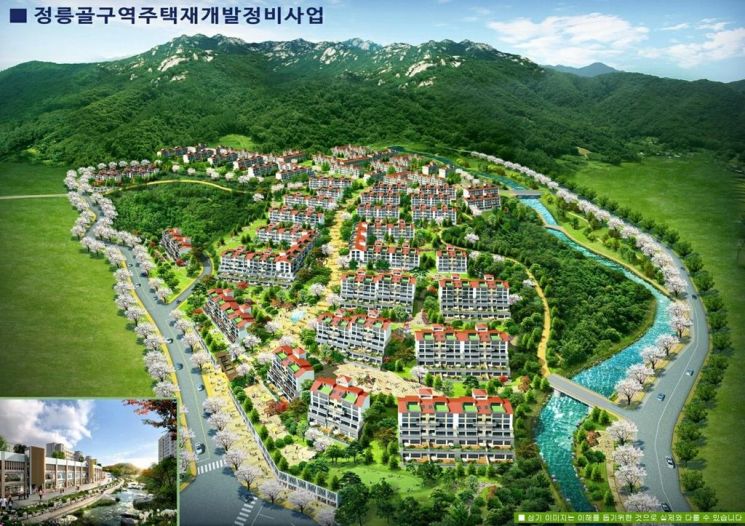
[Asia Economy Reporter Onyu Lim] Jeongneunggol, located in Jeongneung-dong, Seongbuk-gu, one of Seoul's last hillside neighborhoods, will be redeveloped into a low-rise townhouse complex with approximately 1,400 households.
According to the maintenance industry on the 26th, the Seoul Metropolitan Government's Architectural Committee has passed the final review of the Jeongneunggol redevelopment project containing these details. Accordingly, on a site of 203,965㎡ in the Jeongneunggol area, townhouses with a floor area ratio of 109%, a building coverage ratio of 41%, and a height of up to 4 floors will be constructed, totaling 1,400 units.
Jeongneunggol is a residential area that emerged during the forced relocation of demolition victims displaced by urban development from the 1960s to the 1970s. It is located along the mountain slope ascending from Bukhansan Bogukmun Station on the Seoul Light Rail Ui-Sinseol Line, following Jeongneungcheon Stream toward Cheongsu Waterfall. Most of the houses are old and substandard, and infrastructure such as roads is poor. Along with Baeksamaeul in Junggye-dong, Nowon-gu, and Gaemi Village in Hongje-dong, Seodaemun-gu, it is considered one of the last representative hillside neighborhoods in Seoul. To the right of the area, large-scale apartment complexes such as Gireum New Town, a Seoul pilot new town, have been formed.
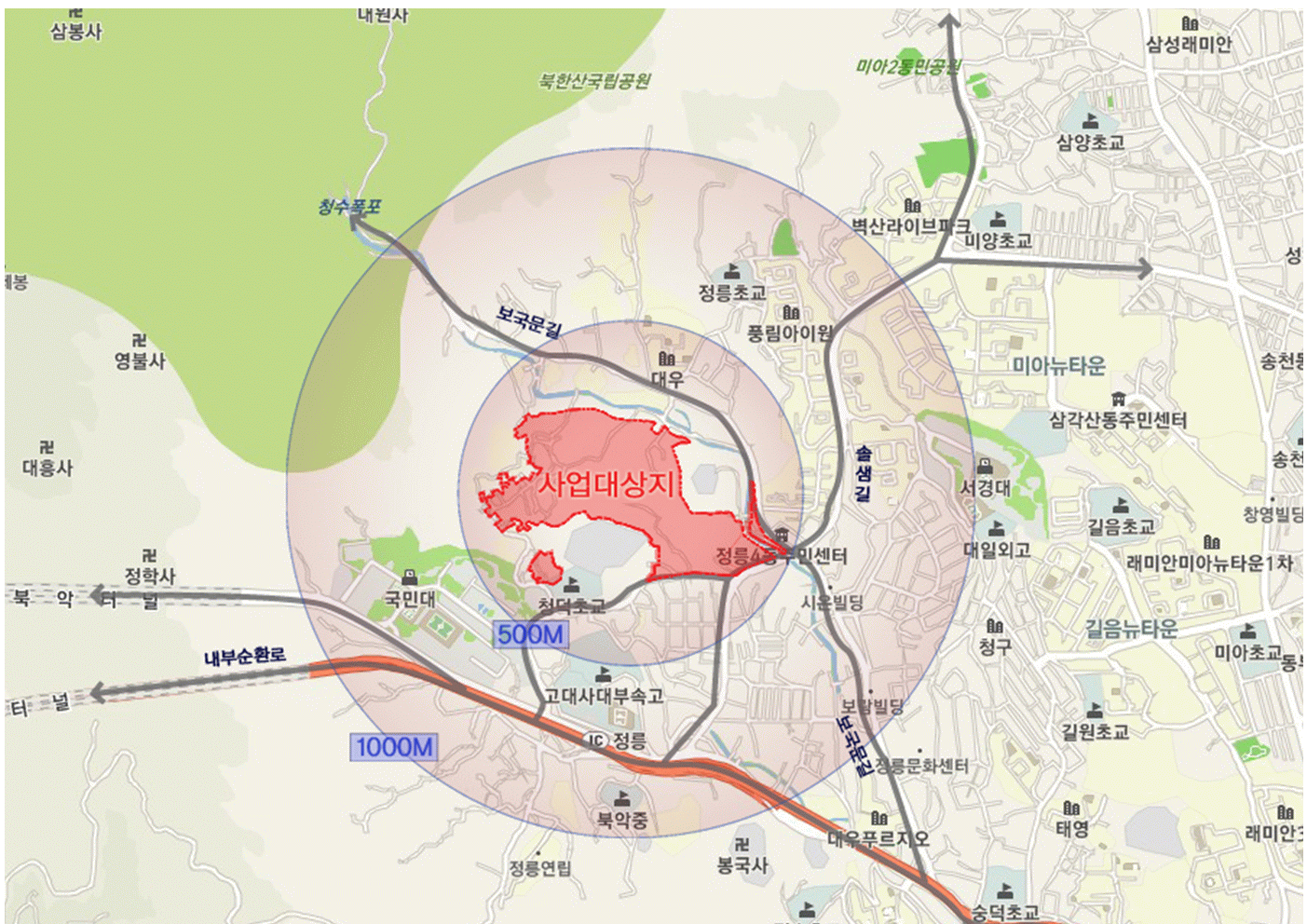
Jeongneunggol began seeking change after being released from the Greenbelt in 2003. In 2008, it was designated as a pilot project area for special landscape management, and a plan for apartment development was proposed but failed. Residents wanted high-rise apartments, but the city restricted building heights to four floors or less to preserve the natural landscape. Although it was designated as a redevelopment zone in 2012, progress was slow due to the same issue of low profitability. After the establishment of the promotion committee in 2014, approval for the establishment of the association was obtained in 2017. Even after the redevelopment zone designation, delays in the project led to concerns about slumification.
With the approval of the architectural review this time, the Jeongneunggol redevelopment association plans to hold a general meeting of members as early as June and apply for project implementation approval from Seongbuk-gu Office. A representative of the association said, "Due to the COVID-19 pandemic, it is currently difficult to hold a general meeting," adding, "Once the situation is resolved, we will proceed with the procedures to apply for project implementation approval." Earlier, the Seoul Metropolitan Government sent a notice to autonomous districts prohibiting redevelopment and reconstruction association general meetings until May 18 to prevent the spread of COVID-19 in the community.
Meanwhile, Baeksamaeul is also awaiting architectural review to apply for project implementation approval. The Baeksamaeul redevelopment project involves constructing a total of 2,698 households on a site of 186,965㎡, including 2,000 general sale apartments up to 20 floors and 698 rental housing units up to 4 floors.
© The Asia Business Daily(www.asiae.co.kr). All rights reserved.


















