House of Representatives Election Possibly Held Alongside July Tokyo Governor Election
Support Rates Increased but... Financial Burden from Olympic Postponement and COVID-19 Challenges
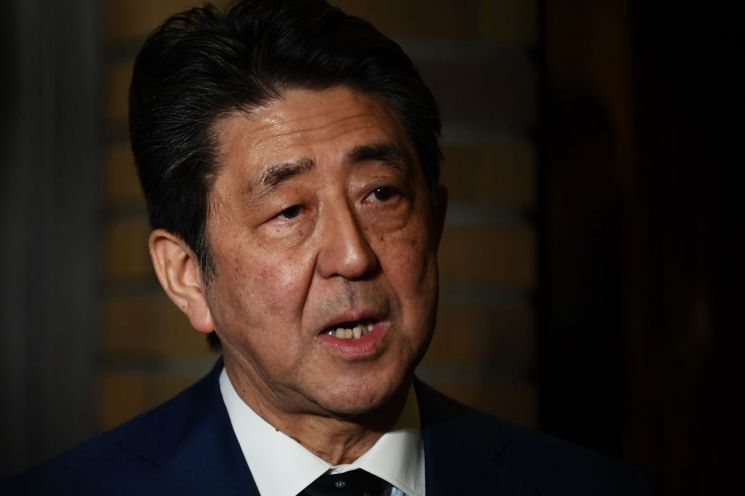
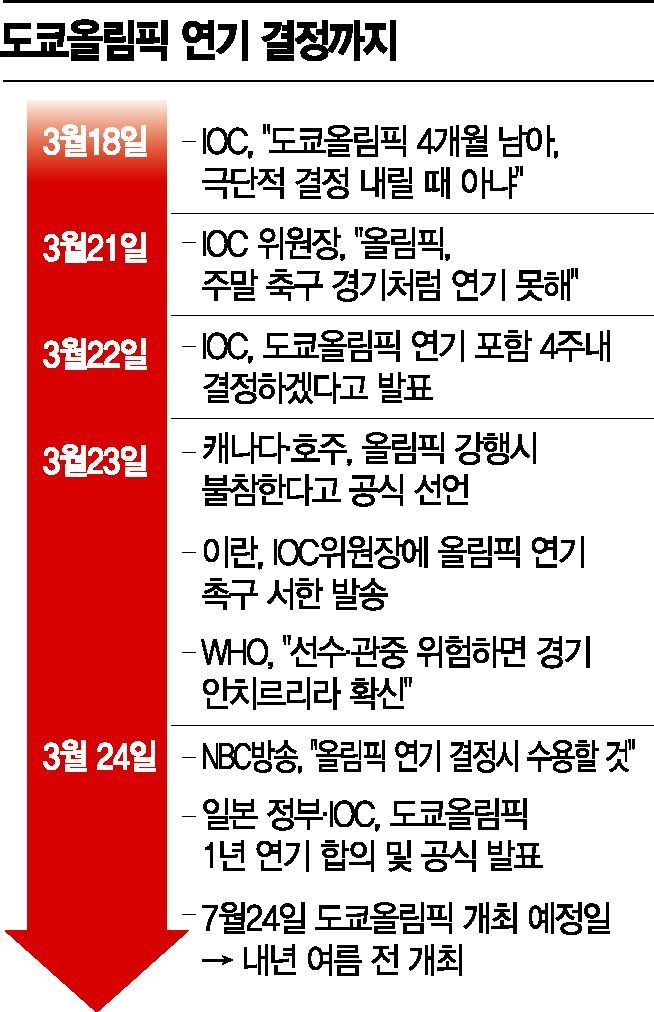
[Asia Economy Reporter Hyunwoo Lee] The Tokyo Olympics, originally scheduled for July, have been postponed by one year, complicating the political calculations of Japanese Prime Minister Shinzo Abe and the ruling Liberal Democratic Party (LDP). Previously, it was widely expected that the House of Representatives would be dissolved after the conclusion of the Tokyo Olympics and Paralympics in September this year for a direct political breakthrough, but the postponement of the Olympics has made all political schedules uncertain.
On the 25th, local media such as NHK and Jiji Press reported, citing LDP officials, that the House of Representatives election might be held earlier than the originally expected September, possibly on July 5th, coinciding with the Tokyo gubernatorial election. This reflects the intention to advance the timing of the confidence vote and seize control of the political situation now that the favorable factor of the Olympics has disappeared.
Initially, Prime Minister Abe had high hopes for the Tokyo Olympics. Facing political setbacks due to the Moritomo Gakuen scandal, he planned to revive the economy through hosting the Olympics and thereby boost approval ratings. In his policy speech at the regular Diet session in January, the word "Olympics" appeared 11 times, and recently, there were reports from inside and outside the Prime Minister's Office that "the atmosphere is not right to even mention postponing the Olympics," indirectly confirming Abe's determination. In Japanese political circles, it was widely anticipated that Abe would use the dissolution of the House of Representatives as a card based on his confidence in successfully hosting the Olympics.
The possibility of an earlier dissolution of the House of Representatives after the decision to postpone the Olympics is increasing because the Abe Cabinet's approval ratings are performing well despite scandals. According to a monthly survey conducted by Sankei Shimbun from the 21st to 22nd of March, the Abe Cabinet's approval rating rose by 5.1 percentage points to 41.3% compared to the previous survey. Those who positively evaluated the Abe Cabinet's response to COVID-19 also increased significantly to 51.4% from 36% last month.
However, concerns are emerging that the enormous financial burden caused by the postponement of the Tokyo Olympics could shake "Abenomics," which is considered the political foundation of the Abe administration, thereby narrowing its political standing. According to NHK, Katsuhiro Miyamoto, an emeritus professor at Kansai University, estimated the economic loss from the postponement of the Tokyo Olympics at 640.8 billion yen (approximately 7.1396 trillion won). This figure includes maintenance and management costs of Olympic venues and the athletes' village, as well as rental fees, and is expected to increase further when losses from ticket sales, sponsorships, broadcasting rights, and media advertising are considered. If the economic shock intensifies, there is speculation that the responsibility for the Olympic postponement could backfire politically.
Additionally, the global spread of the COVID-19 pandemic is also feared to be a major negative factor for Abenomics. The Daiwa Institute of Research in Japan projected that if the impact of COVID-19 continues throughout the year, Japan's real Gross Domestic Product (GDP) could fall by as much as -3.4%, and even if the spread is contained within three months, it is expected to decline by -1.1%. Eiichi Kodama, chief research fellow at Meiji Yasuda Life Insurance, stated, "The economic impact of COVID-19 is likely to be greater than the global financial crisis," adding, "With no clear prospect of when COVID-19 will end, the postponement of the Tokyo Olympics will have a negative effect on the economy, especially causing a significant psychological shock." An LDP executive told Jiji Press in an interview, "If the economic recession caused by COVID-19 worsens, it will create a headwind against the administration, and if approval ratings drop sharply, it may become difficult to hold the House of Representatives election this year."
Some speculate that with the decision to postpone the Tokyo Olympics, Prime Minister Abe may complete his remaining term until the end of September next year. After that, it is expected that he will forgo a fourth term, and Fumio Kishida, the LDP Policy Research Council Chairman known as the 'post-Abe' within the party, will become the next prime minister.
© The Asia Business Daily(www.asiae.co.kr). All rights reserved.


















