Lessons from the Global Financial Crisis
Preparing for the Onset of a Dollar Shortage
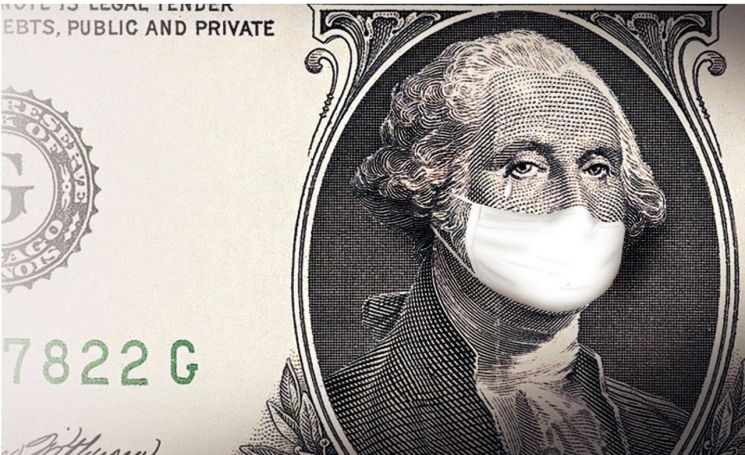
[Asia Economy Reporter Eunbyeol Kim] There is growing support for the opinion that South Korea and the U.S. central banks should reestablish a currency swap agreement. This is due to the global "dollar drought" phenomenon caused by fears surrounding the COVID-19 pandemic. Although a full-scale dollar liquidity crisis has not yet occurred, preparations must be made for the worst-case scenario.
According to officials on the 19th, the Bank of Korea and the Ministry of Economy and Finance are internally preparing for a Korea-U.S. currency swap. Typically, when a currency swap agreement is made, government and Bank of Korea officials visit the U.S. to meet with Federal Reserve (Fed) officials to finalize the contract. However, due to the COVID-19 situation, face-to-face contact is difficult, and they are considering the best way to conduct discussions. A Bank of Korea official stated, "We cannot specify concrete steps," but acknowledged that the Korea-U.S. currency swap has the effect of calming the market.
Earlier, on the 16th, Bank of Korea Governor Lee Ju-yeol also said at a press conference, "The Korea-U.S. currency swap during the 2008 global financial crisis greatly contributed to market stability," calling it a "safety net that calms anxious markets." Deputy Prime Minister and Minister of Economy and Finance Hong Nam-ki also mentioned on the 17th at the National Assembly that "we are making behind-the-scenes efforts to resume the Korea-U.S. currency swap."
The fortunate thing is that Korea and the U.S. already have experience with currency swaps. In 2008, the Bank of Korea and the Fed signed a $30 billion currency swap agreement, and the Bank of Korea used the procured dollars to supply the market, calming market anxiety. Therefore, if both countries agree, it is widely believed that reviving the system, which ended in 2010, will not take long.
There are also calls within the U.S. to establish currency swaps. If emerging countries experience financial market instability due to dollar outflows, the boomerang effect could eventually return to the U.S. The Wall Street Journal (WSJ) recently argued in two articles that currency swaps with countries like South Korea and Brazil, which have significant trade volumes with the U.S., should be revived. In its "Heard on the Street" column on the 17th (local time), WSJ stated, "The Fed has eased currency swap terms with five major central banks, which is a good start," adding, "It is necessary to expand the target countries to prevent market risks. Emerging markets appear vulnerable."
Due to fears of the pandemic, the value of the dollar is soaring, making dollar liquidity crucial for emerging countries including South Korea. In times of crisis, global investors strongly tend to hold cash (dollars) rather than investments. Moreover, since the dollar is used in various transactions, South Korea, which has a high dependence on foreign trade, must secure it even more.
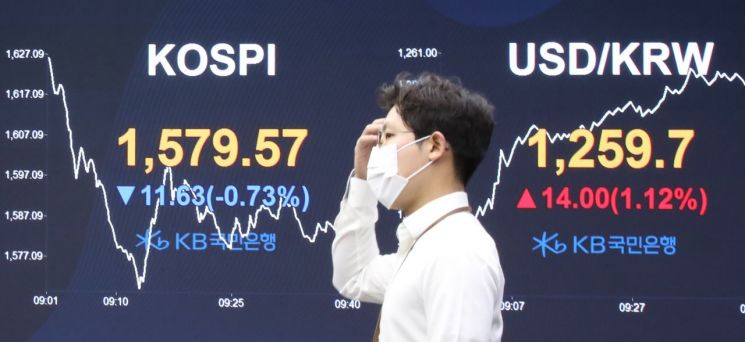
In fact, the Korean financial market has recently shown signs of instability. The Korean won has depreciated by 8% over the past two months. The exchange rate, which was 1,158.8 won per dollar on January 20, has now risen to around 1,260 won. At 10:25 a.m. in the Seoul foreign exchange market on that day, the won-dollar exchange rate traded at 1,267.9 won, up 22.2 won from the previous day's closing price. The exchange rate rose due to complex factors such as foreign investors withdrawing from the stock market, creating demand for currency exchange. There are concerns that if the situation prolongs, companies could eventually become insolvent. Kim Yong-beom, the first vice minister of the Ministry of Economy and Finance, said at the macroeconomic and financial monitoring meeting that "if necessary, market stabilization measures such as the bond market stabilization fund and expansion of the corporate bond issuance support program (P-CBO) will be promptly and timely implemented to ensure companies have no difficulties in raising funds," adding, "We plan to provide maximum support so that domestic companies and financial institutions can smoothly procure the foreign currency funds they need."
Meanwhile, as announced, the Bank of Korea also supplied liquidity by purchasing repurchase agreements (RP). The Bank of Korea conducted a competitive RP purchase auction worth 1 trillion won starting at 10 a.m. that day. This RP purchase is for a 14-day term, with the purchase date on March 19 and the repurchase date on April 2. The auction participants are non-bank RP counterparties among all contracted institutions, including Mirae Asset Daewoo, Samsung Securities, Shin Young Securities, NH Investment & Securities, and Korea Securities Finance. RP transactions are a representative tool for the Bank of Korea's open market operations to manage liquidity. While RP transactions are conducted regularly, the Bank of Korea usually absorbs market liquidity by selling RPs. Conversely, RP purchases mean supplying liquidity. Previously, the Bank of Korea announced it would conduct RP purchases targeting non-banks in March.
© The Asia Business Daily(www.asiae.co.kr). All rights reserved.


















