Currently Overlapping with Basic Income System... Will Only Add Another Welfare Program
Significant Increase in Deficit Bond Issuance... 933.8 Trillion Won in 2023
Cost of 50 Trillion Won if 1 Million Won Paid per Person... Government Budget in 2020 Was 512.3 Trillion Won
[Asia Economy Reporter Wondara] Although discussions on disaster basic income related to the novel coronavirus infection (COVID-19) are spreading in the political sphere, the National Assembly's think tank, the Legislative Research Office, pointed out that "a significant portion of the disaster basic income currently being discussed overlaps with existing welfare programs" and emphasized that "funding plans need to be sufficiently discussed."
In the report titled 'Discussion and Key Issues of Disaster Basic Income' published on the 19th, the National Assembly Legislative Research Office stated, "Discussions on disaster basic income are expanding into the political sphere," and added, "It is necessary to clearly and transparently disclose the funding securing plans."
It also noted, "In Switzerland, a referendum was held in 2016 to decide whether to provide basic income to all citizens, but it was rejected with 76.7% voting against it," adding, "The reason Swiss citizens opposed it was that they would have to pay at least two to three times more taxes than now, and a significant portion of the current social welfare system would disappear."
Furthermore, it said, "Since it is difficult to exclude the possibility of similar diseases occurring in the future after COVID-19, discussions on how to secure funding for disaster basic income must be sufficiently supported." According to the report, Finland, the Netherlands, and Canada conducted social security reform experiments providing basic income ranging from approximately 700,000 to 1,220,000 KRW to about 200 to 4,000 people, but these did not lead to disaster basic income policies.
The report also analyzed that the disaster basic income being discussed in the political sphere largely overlaps with current welfare programs. The Legislative Research Office said, "Disaster basic income paid to certain groups or specific classes can be seen as a low-quality partial basic income considering practicality, rather than a basic income for all citizens in principle."
It expressed concern, saying, "Such low-quality basic income systems are already in place," and warned, "This could result in just another welfare program being added rather than a thorough discussion of the basic income system." Examples of currently implemented basic income programs include ▲ Seoul City's Youth Allowance ▲ Gyeonggi Province's Youth Job-Seeking Support Fund ▲ Seongnam City's Youth Dividend. It also advised, "Administrative costs involved in distinguishing recipients based on income, property level, occupation, and filtering overlaps with other welfare benefits should also be carefully considered."
Earlier, in the report 'Deterioration of Fiscal Efficiency and Soundness Due to Increased Issuance of Deficit Bonds' published on the 13th, the Legislative Research Office forecasted, "The issuance of deficit bonds has significantly increased due to the COVID-19 supplementary budget, reaching 933.8 trillion KRW in 2023." It added, "As most of the resources for active fiscal policy are secured through deficit bond issuance, national debt is increasing," and pointed out, "Considering the high external dependence of our economy, the introduction of fiscal rules should be considered for sustainable finance."
Meanwhile, the government plans to first implement disaster basic income policies through local governments. Lee Nak-yeon, Chair of the COVID-19 National Crisis Overcoming Committee of the Democratic Party of Korea, said after the 'COVID-19 Response Party-Government-Civil Meeting' held at the National Assembly the previous day, "There were discussions based on the premise of the second supplementary budget for COVID-19 today," and added, "Some local governments are implementing emergency support policies close to disaster income," and "If local governments provide support in such ways or incur related burdens, we will also consider compensating for them in the next supplementary budget."
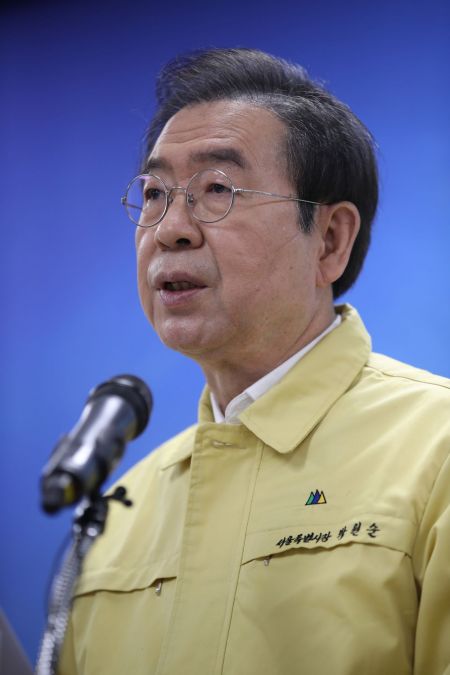
Seoul City decided to provide emergency support of 300,000 to 500,000 KRW to approximately 1.177 million households that do not receive government supplementary budget support (730,000 households) among 1.91 million households with median income below 100%. Seoul City will invest 327.1 billion KRW from its budget for this support. On the 13th, the Jeonju City Council in Jeollabuk-do approved an emergency supplementary budget increase of 55.65 billion KRW to provide 'Jeonju-type Emergency Living Stabilization Disaster Basic Income Support' amounting to 26.35 billion KRW to about 50,000 vulnerable people. The amount per person is approximately 527,000 KRW.
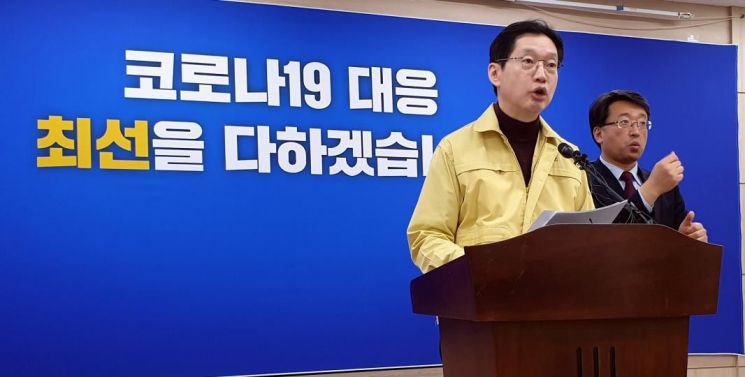
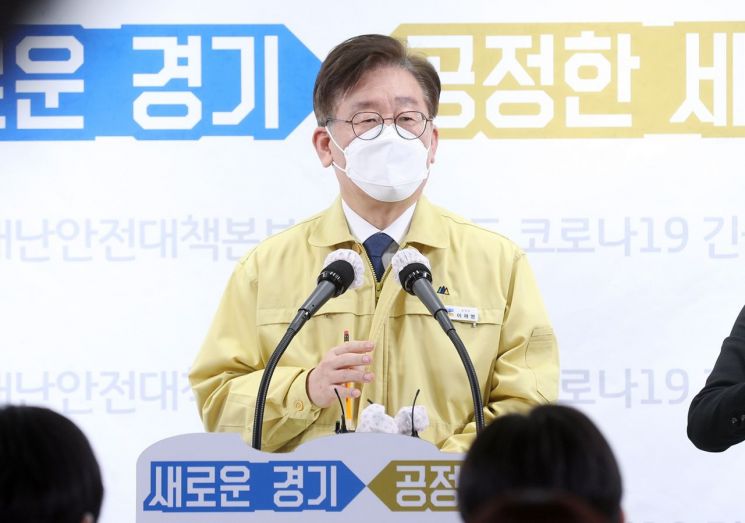
Gyeonggi Province Governor Lee Jae-myung, who proposed providing disaster basic income of 1 million KRW per person to all citizens including high-income earners, has started drafting an ordinance. Gyeongsangnam-do Governor Kim Kyung-soo also advocates, "Let's provide disaster basic income of 1 million KRW per person to all citizens." If 1 million KRW is paid to all citizens, a total budget of about 50 trillion KRW is expected to be required. This year's government budget is approximately 512.3 trillion KRW.
© The Asia Business Daily(www.asiae.co.kr). All rights reserved.



















