Factory eaves and awnings excluded from building coverage ratio calculation
Small libraries allowed inside single-family homes
Procedures for installing roofs on underground parking ramps also eased
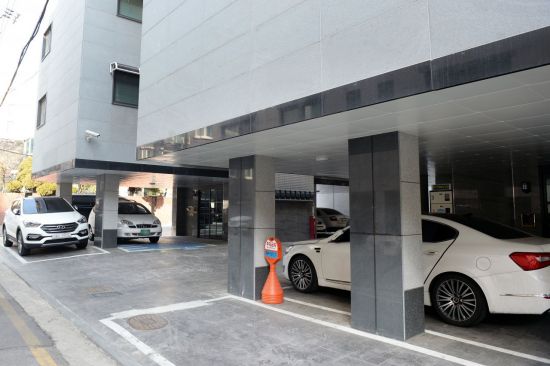 Pilotis structure building appearance (Photo by Asia Economy DB)
[Asia Economy Reporter Moon Jiwon] From now on, if the first floor of a multi-family house is designed as a pilotis parking lot, it will be excluded from the number of floors of the house.
The Ministry of Land, Infrastructure and Transport held a Regulatory Innovation Committee meeting on the 17th and decided to improve excessive administrative regulations that have caused inconvenience to the public.
A multi-family house is a residential building with a total floor area of 330㎡ or less and up to three floors. Currently, unlike multi-unit houses, multi-family houses calculate the number of parking spaces based on total floor area rather than the number of households, and even if the first floor is used as a pilotis parking lot, that floor has been included in the number of floors of the house. Because of this, there have been many criticisms that there is insufficient incentive to install parking lots in multi-family houses.
The Ministry of Land plans to amend the Enforcement Decree of the Building Act to exclude the floor used as a pilotis parking lot from the number of floors in multi-family houses as well.
At the meeting, it was also decided to exclude eaves and canopies of factories from the calculation of building coverage ratio. Factories need eaves for outdoor work and loading/unloading of products and materials, but installing them was difficult because they were included in the building coverage ratio.
The Ministry of Land plans to amend the Enforcement Decree of the Building Act to partially relax the application of building coverage ratio calculation when installing eaves and canopies to improve factory work efficiency and working environment.
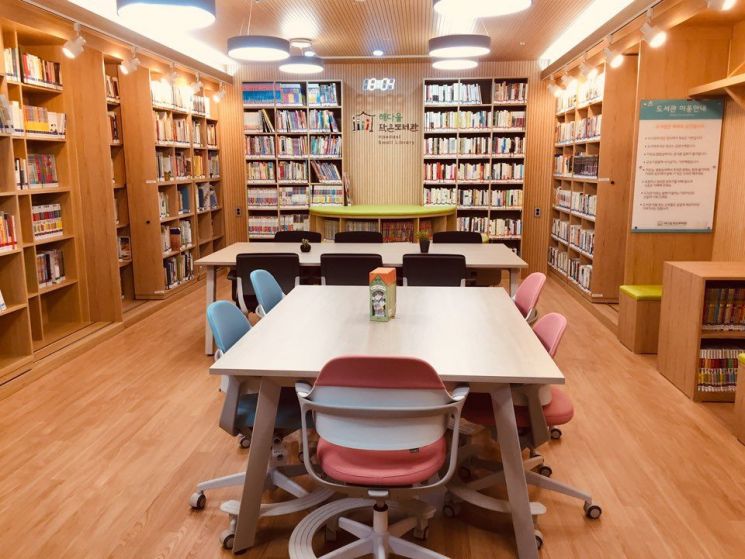
Installation of 'small libraries' in detached houses will also be allowed.
'Small libraries' are public libraries operated on a small scale at the village level. However, currently, all public libraries can only be installed in Type 1 neighborhood living facilities, making it difficult to promote small libraries in detached house areas.
The Ministry of Land plans to recognize detached houses that have a form of a detached house and partially use it as a small library as a detached house use to resolve this issue.
Installation of communal childcare sharing centers in apartment complexes will also be allowed.
Recently, due to nuclear families and dual-income households, the demand for communal childcare sharing centers for neighborly child care exchange activities has increased, but unlike daycare centers and local children's centers, there were no installation regulations within apartment complexes, making activation difficult.
The Ministry of Land plans to improve regulations so that if the usage form of communal childcare sharing centers is confirmed to have the form of housing, they will be included in the use of detached and multi-family housing.
The procedure for installing roofs on underground parking lot ramps will also be eased.
Until now, installing a roof on an underground parking lot ramp was included in the floor area and required a separate report, causing inconvenience in terms of time and cost.
The Ministry of Land plans to prepare measures to exclude roofs installed on underground parking lot ramps from the floor area calculation to simplify the procedure.
In addition, excessive administrative regulations such as penalties for failure to register changes in logistics warehouse business will also be improved.
Currently, logistics warehouse operators must register changes if there are changes in name, location, or area, and violating this can result in imprisonment for up to one year or a fine of up to 10 million won.
However, there have been criticisms that such penalties are excessive even when failure to register changes is due to simple negligence or lack of knowledge of related laws. In the future, failure to register changes in logistics warehouse business will be punished with fines instead of criminal penalties.
The Ministry of Land explained, "We will actively promote regulatory innovation by identifying inconveniences faced by the public and businesses, and continuously monitor improved cases so that more people can benefit."
© The Asia Business Daily(www.asiae.co.kr). All rights reserved.

















