Government Intensifies Efforts to Prevent COVID-19 Cluster Infections in Densely Populated Workplaces Like Call Centers
[Asia Economy Reporter Han Seung-gon] A cluster infection of the novel coronavirus disease (COVID-19) that occurred at an insurance company call center in Sindorim-dong, Guro-gu, Seoul, is spreading to Incheon, Gyeonggi, and other areas in the metropolitan area. There are concerns that COVID-19, which is more contagious than existing respiratory viruses, may rapidly spread to the local community.
Call centers, PC rooms, karaoke rooms, and other places where people inevitably gather closely in one space are being pointed out as hidden triggers for the spread of COVID-19.
Experts warned that if there is a confirmed case in a confined space, the spread of COVID-19 could escalate into a cluster infection. The government announced that it will prepare and implement countermeasures as soon as possible.
According to Seoul City on the 13th, the scale of the COVID-19 cluster infection at the Guro-gu call center reached 109 people. By region, there are 74 in Seoul, 18 in Gyeonggi, and 17 in Incheon. Most of the newly added patients are family members or acquaintances of the call center employees.
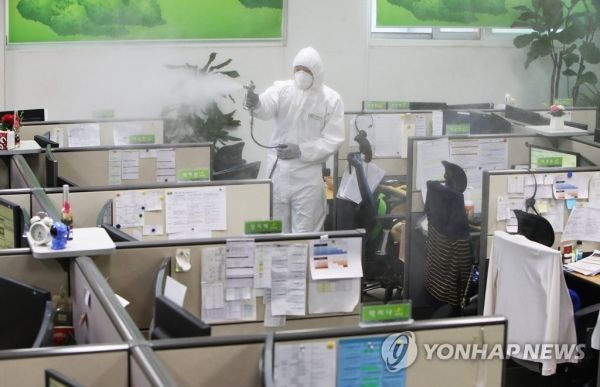 On the afternoon of the 11th, an official is disinfecting at the Gyeonggi-do Call Center 120 in Gyeonggi Provincial Government Office, Suwon-si, Gyeonggi-do to prevent COVID-19. [Image source=Yonhap News]
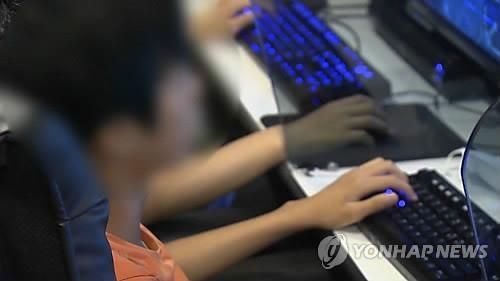
The problem is that there are more confined spaces like these call centers. On the 11th, four COVID-19 confirmed cases were reported at a PC room in Hwikyung-dong, Dongdaemun-gu, Seoul. They were brothers and acquaintances who visited the PC room together.
Given the situation, opinions are emerging that confined spaces should be avoided. A 30-year-old office worker, Mr. A, said, "I think we should avoid places where many people gather, such as PC rooms, for the time being."
Another office worker in her late 20s, Ms. B, said, "PC rooms are places I often visit with friends, but because of COVID-19, we decided to enjoy games at home separately," emphasizing, "Not only PC rooms, but I plan not to go to any places where people gather."
Clusters of COVID-19 cases caused by confined spaces where people gather closely also appeared in Sejong City. Zumba dance, an exercise performed together in a confined space, is suspected to be the cause of the spread.
Zumba dance is an exercise that combines aerobic movements with Latin dance. However, since dozens of people exercise vigorously at 1?2 meter intervals in a cramped space, sweat and saliva can be directly transmitted to the person next to them, raising concerns about infection.
According to Sejong City, after the first confirmed case appeared on the 22nd of last month, there were no additional confirmed cases for a while. However, starting from the second confirmed case on the 6th, a Zumba dance instructor, the infection has been spreading rapidly.
The third confirmed case, a Ministry of Health and Welfare official, participated in the Zumba dance class of the second confirmed case. The seventh confirmed case received violin lessons from the fourth confirmed case (a violin instructor), who was also a Zumba dance student. The husband of the seventh confirmed case (the tenth case) also tested positive for COVID-19.
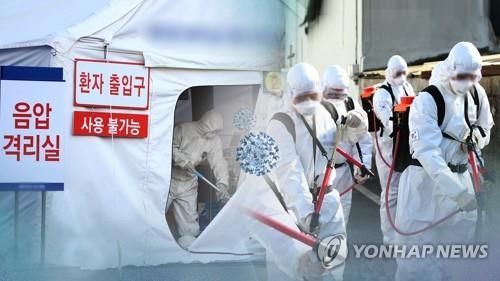
Experts warned that close contact can rapidly accelerate the spread of COVID-19.
Professor Kim Woo-joo, an infectious disease specialist at Korea University Guro Hospital, pointed out, "If you keep a distance of 1?2 meters and avoid direct contact, the risk of infection can be reduced, but if a confirmed case is in the same space, the risk of cluster infection increases."
He added, "There have been many cases of secondary infections occurring while dining with COVID-19 confirmed patients. It is equally risky for many people to gather and spend time in pubs or restaurants."
Meanwhile, the government plans to present the 'Common Infection Control Guidelines for High-Risk Workplaces' to prevent cluster infections of COVID-19 in densely populated workplaces such as call centers.
The Central Disaster and Safety Countermeasure Headquarters (CDSCH) presented these high-risk workplace cluster infection management measures at a briefing held at the Government Sejong Complex on the 10th.
According to the CDSCH, the government recommends through the guidelines that dense workplaces prepare work plans utilizing telecommuting, flexible hours, and online work. It also plans to emphasize measures to reduce workplace density, such as adjusting commuting and lunch hours and spacing office seats.
Yoon Tae-ho, head of the Central Disaster and Safety Countermeasures Headquarters' quarantine team, said, "With the cluster outbreak of COVID-19 at the call center in Guro-gu, Seoul, managing workplaces vulnerable to infection due to their working environment has become an urgent task."
© The Asia Business Daily(www.asiae.co.kr). All rights reserved.