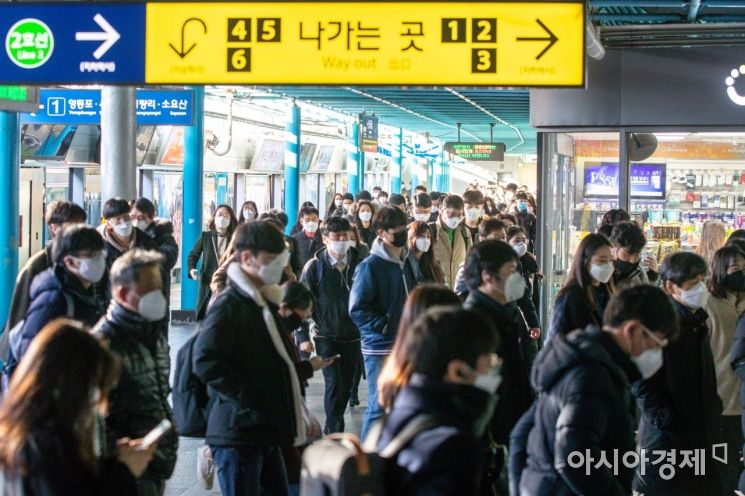
 On the 11th, as confirmed COVID-19 cases increased due to a cluster infection at a call center on the 11th floor of the Korea Building in Sindorim-dong, citizens wearing masks are using the subway at Sindorim Station in Guro-gu, Seoul. Photo by Kang Jin-hyung aymsdream@
[Asia Economy Reporters Choi Dae-yeol and Kim Heung-soon] The novel coronavirus infection (COVID-19), which had a cluster outbreak centered around the Shincheonji Church of Jesus in Daegu and Cheongdo Daenam Hospital in Daegu and Gyeongbuk, is moving northward to the Seoul metropolitan area, where 26 million people are concentrated, causing a resurgence. While quarantine authorities are focusing all efforts on preventing the spread of the virus among Shincheonji believers and their contacts, new confirmed cases are emerging in clusters that have no direct connection to these areas. Cases where infected individuals emerge among those who have never been to Daegu or Gyeongbuk or have no relation to Shincheonji, and who neglect diagnostic testing or self-quarantine despite suspicious symptoms, and then transmit the virus to an unspecified large number of people, are representative examples. This is the so-called 'paradox of Shincheonji.'
Guro Call Center with High Foot Traffic
Risk of Transmitting Virus to Unspecified Many
Limitations in Expanding Testing Scope
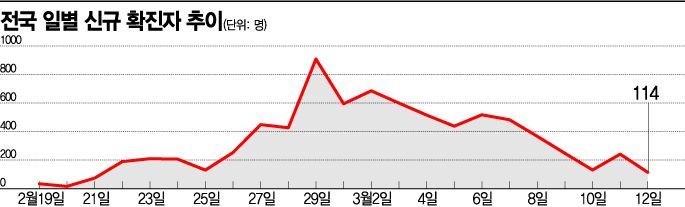
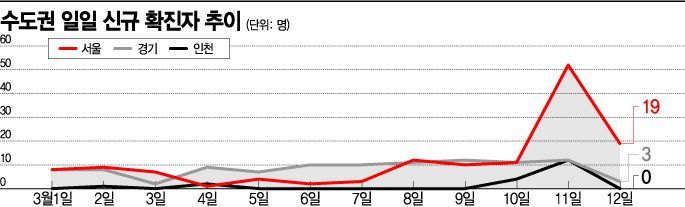
According to the Central Disaster and Safety Countermeasure Headquarters for COVID-19, as of midnight on the 12th, the number of new confirmed COVID-19 cases nationwide increased by 114 compared to midnight the previous day. Among them, 22 cases (19.3%) were new patients in the Seoul metropolitan area, including Seoul, Gyeonggi, and Incheon. The daily number of new confirmed cases in the metropolitan area increased nearly fivefold in ten days, from 16 on the 1st (Seoul 8, Gyeonggi 8, Incheon 0) to 76 on the 11th (Seoul 52, Gyeonggi 12, Incheon 12). During this period, the cumulative number of confirmed cases also increased about threefold, from 172 to 393. This is because most of the confirmed cases related to the Guro-gu Sindorim-dong call center in Seoul, where patients have surged in the past 2-3 days, reside in the metropolitan area.
Since quarantine authorities and local governments are focusing diagnostic testing on members who shared the same space with confirmed patients, as well as those who entered the same building, family members, acquaintances, and other contacts, additional patients related to this place are expected to emerge in the coming days. However, the call center is located in the bustling center of Seoul with high foot traffic, and most confirmed patients commute using public transportation such as subways, coming into contact with unspecified many people, making it difficult to determine how far to expand the testing scope, which is a limitation.
Although the number of new patients in the metropolitan area decreased compared to the previous day, if additional patients with unknown infection routes emerge among the crowds who had contact with call center confirmed cases, the spread within the metropolitan area could accelerate rapidly. In Daegu, where the cluster infection of Shincheonji Daegu Church believers occurred, the daily number of new patients was relatively calm at 10 on the 19th and 23 on the 20th of last month, but surged to 148 four days later, causing COVID-19 to spread uncontrollably. Jung Eun-kyung, head of the Central Disaster and Safety Countermeasure Headquarters, said, "There are limits to fully revealing where and how exposure occurred on public transportation through epidemiological investigations, and it is difficult to objectively assess the exact exposure level or risk."
If Not Related to Daegu or Shincheonji,
Neglect of Measures Despite Suspicious Symptoms
Each time cluster infection cases increase, quarantine authorities and local governments focus on finding connections to Shincheonji, which creates gaps in the quarantine network and raises concerns. According to epidemiological investigations by the Seoul Metropolitan Government and district offices where confirmed cases occurred, some employees related to the Guro call center had suspicious symptoms such as sore throat and fever from late last month and early this month. They received treatment at local clinics and continued commuting for nearly ten days. Since they had no history of overseas travel or visits to Daegu and no relation to Shincheonji, neither they nor medical institutions suspected COVID-19 or took active measures. Among other confirmed cases in the call center, two traveled to Jeju Island last weekend just before undergoing diagnostic testing. They likely did not recognize their infection because they had no fever or cough or their symptoms were mild.
At the Zumba dance studio in Cheonan, Chungnam, where 107 related patients had been confirmed by the 11th, one confirmed patient unknowingly traveled to Pyeongchang and Gangneung in Gangwon Province and was classified as a contact of a patient, underwent diagnostic testing, and tested positive. Facilities and communities they visited during that time have been put on high alert due to concerns about additional infections. Recently, confirmed patients without links to Shincheonji or Daegu have also appeared in hospitals, nursing homes, and multi-use facilities where cluster infections occurred, causing quarantine authorities difficulties in epidemiological investigations.
As of the previous day, among the 7,755 cumulative confirmed cases in Korea, 1,542 patients (19.9%) are still being investigated for their connection. A medical institution official said, "The government and local governments controlled the situation by contacting Shincheonji believers individually and enforcing diagnostic testing, but suspicious patients unrelated to this are sometimes unable to receive timely treatment or testing at local clinics or screening centers and wander around," adding, "If such confusion is not prevented and the response is left to the field, additional patients with unknown infection routes will inevitably emerge."
© The Asia Business Daily(www.asiae.co.kr). All rights reserved.



















