[Hidden Business Story] Tony Fernandes Acquires Perpetually Deficit AirAsia and Achieves IPO in 4 Years
Breaking High Entry Barriers of 'Airplane' for New Consumers by Emphasizing 'Price Competitiveness'
'Employees Before Customers' Philosophy Enables 'Union-Free Airline'
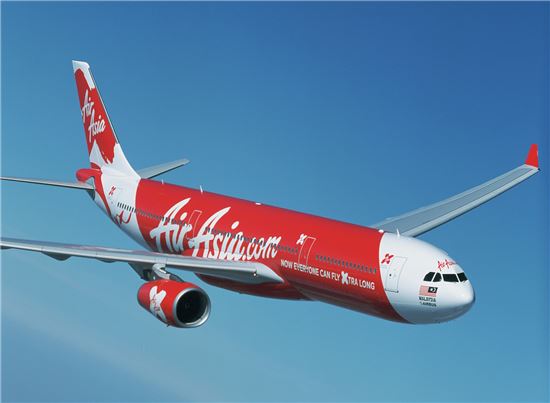 AirAsia passenger plane
[Asia Economy Reporter Yoon Shin-won] Nineteen years ago, a Malaysian airline that had been in the red for years was sold for just 1 ringgit (about 280 won). However, the airline's recent corporate value exceeds 3.3 billion dollars (about 4 trillion won). This is the story of AirAsia, Asia's largest low-cost carrier (LCC). The person who revived AirAsia is Tony Fernandes. How did he manage to bring AirAsia to the top position in Asia in just over a decade?
Tony Fernandes worked as the Vice President of Warner Music Southeast Asia in the 1990s. In 2001, he quit his job to start the LCC he had dreamed of since childhood and established the Tune Group with his retirement money. However, it was difficult to obtain a civil aviation business license from the Malaysian government, and the government proposed acquiring AirAsia, a subsidiary of the state-owned company DRB-Hicom. Fernandes acquired AirAsia, including two Boeing 737-300 passenger planes, for 1 ringgit. However, he took on a debt of 40 million ringgit (about 11.4 billion won). Tune Group thus became the holding company of AirAsia.
With years of losses, 11.4 billion won in debt, and a business model focused solely on prices that had never been introduced in Asia, plus the aviation industry shrinking due to the 9/11 terrorist attacks in the U.S., AirAsia was a company that was difficult to acquire even if someone offered money. But Fernandes thought differently. He saw the growth potential of AirAsia and began to nurture it with what he calls the foundation of his success: "patience and perseverance."

He invested not only his retirement money but also all his savings, even taking out loans against his house to invest in AirAsia. In fact, the downturn in the aviation industry was an opportunity for him. At that time, except for some LCCs, airlines focused on "service" and targeted passengers in business class or higher, charging high prices for many services. However, in Asia, especially Malaysia, only a single-digit percentage of people had ever flown. For them, flying was a high barrier to entry.
AirAsia hired laid-off workers from the aviation industry at low wages and competed on "price competitiveness." Instead of providing in-flight meals or free baggage services, it competed on price. This was an excellent strategy to break down the entry barriers for new customers flying for the first time. Also, because it operated only short-haul flights under four hours, this approach was feasible. Basic airline services were made "optional," and passengers who wanted them paid extra.
The business sailed smoothly, and Fernandes paid off the 40 million ringgit debt within a year of acquiring AirAsia and succeeded in listing the company on the Malaysian stock exchange in 2004, four years later.
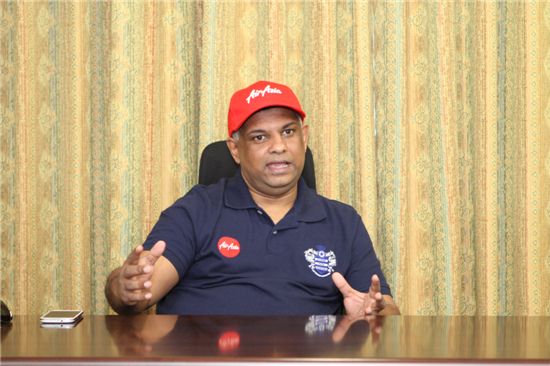
Behind this management strategy was Fernandes' management philosophy. He always managed with the philosophy that "employees come before customers." As the CEO, he still does not have a personal office. He pursues a horizontal relationship with employees and ensures open communication at all times. His signature red cap and casual fashion carry a message that he wants employees to treat him informally.
For this reason, AirAsia does not have a labor union. There are no employees who want to join one. To AirAsia employees, Fernandes is not a difficult boss but a colleague they can always talk to. One AirAsia pilot once said that when asked why pilots at other airlines do not join unions, he replied, "Why bother? You can just call Fernandes and talk to him." In fact, Fernandes reportedly receives hundreds of messages from employees every day. About this philosophy, he says, "Sitting at a desk reading documents does not mean you know the company. You have to listen to the employees."
Thanks to his excellent management strategy and philosophy, AirAsia enjoys the glory of being "the best in the world." The airline rating site Skytrax has named AirAsia the "World's Best LCC" for 11 consecutive years. The U.S. Southwest Airlines, the pioneer of the LCC industry, holds the title of "world's largest," but the title of "world's best" belongs to AirAsia.
© The Asia Business Daily(www.asiae.co.kr). All rights reserved.

















