Concerns Grow Over Raw Material Supply Shortages for Antibiotics, Diabetes, and Hypertension Drugs
Protective Clothing Production Tight Following Masks
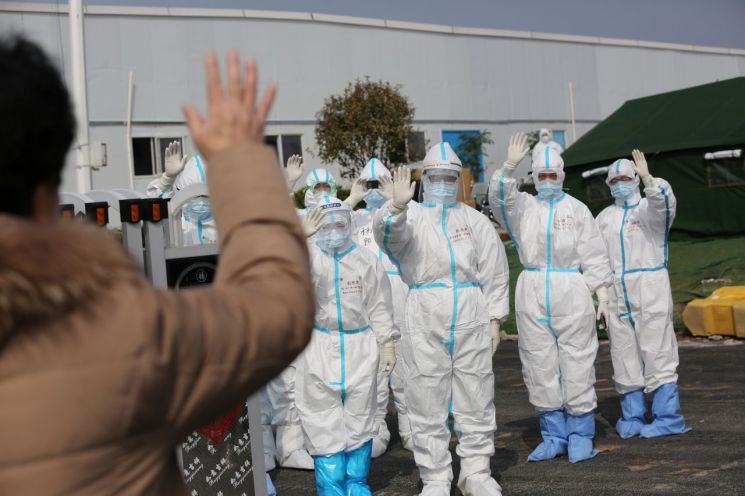
[Asia Economy Beijing=Correspondent Sunmi Park, Reporter Hyunwoo Lee] Concerns over global shortages of pharmaceuticals and medical supplies have intensified due to the spread of the novel coronavirus infection (COVID-19). This is because not only masks and protective suits but also various therapeutic drugs are facing threats of production suspension.
On the 5th, Hong Kong's South China Morning Post (SCMP) reported that as China halted factory operations and restricted personnel movement to curb the spread of COVID-19, there is a high possibility of supply problems for active pharmaceutical ingredients (APIs) used in antibiotics, diabetes medications, blood pressure drugs, headache medicines, antipyretics, and human immunodeficiency virus (HIV) treatments. It added that this threatens global public health.
China is the world's largest producer of active pharmaceutical ingredients. According to the latest statistics from 2018, China's API export volume exceeded $30 billion at that time. The United States imports about 80% of its APIs, with a significant portion coming from China and India. According to the U.S. Food and Drug Administration (FDA), the U.S. currently relies entirely on China for the raw materials of about 20 drugs. Last year, the U.S. imported 95% of ibuprofen, 91% of hydrocortisone, 70% of paracetamol, 45% of penicillin, and 40% of heparin from China.
Signs of drug shortages are gradually becoming a reality. The U.S. FDA announced last week that although it did not specify the drug names or manufacturers, "due to COVID-19, the production of APIs has been affected, causing a shortage of one type of drug." Stephan Hahn, FDA Director, said, "We are closely monitoring the supply chain, keeping open the possibility that the spread of COVID-19 could disrupt the supply of key drugs in the U.S."
Europe is also maintaining vigilance and closely monitoring the situation. The European Medicines Agency (EMA) of the European Union (EU) stated last week, "So far, no shortages of APIs have been detected, but we are analyzing the situation due to concerns about the impact of COVID-19 on the medical and pharmaceutical supply chain."
China, fearing the spread of COVID-19, extended the Spring Festival (Chinese New Year) holiday at the end of January and suspended operations of companies and factories except for essential goods, while also restricting interregional population movement. As a result, China's manufacturing Purchasing Managers' Index (PMI) for February recorded 35.7, the lowest ever. China's state-run Xinhua News Agency reported that although the government excluded pharmaceuticals from the list of industries required to suspend factory operations, pharmaceutical manufacturing has also contracted in reality.
COVID-19 prevention activities are also in emergency mode. As China imports large quantities of personal protective equipment (PPE) such as medical masks, protective suits, and gloves to meet domestic demand, the global medical supplies market is already facing shortages.
According to data from the General Administration of Customs of China released on the 5th of last month, from January 24 to February 4, China imported 328 million masks, 3.85 million protective suits, and 620,000 medical goggles over ten days. For example, in the case of medical protective suits, demand surged as about one million personnel involved in epidemic prevention in China used two suits daily after the COVID-19 outbreak. The Ministry of Industry and Information Technology of China announced that domestic production of medical protective suits increased from about 30,000 to 200,000 per day, but the supply remains grossly insufficient. Eventually, China imported more than 7.4 million protective suits from abroad in January, including 500,000 from South Korea.
In the United States, where COVID-19 spread has become serious, securing medical supplies has become a key issue. On the same day, the U.S. Department of Health and Human Services (HHS) announced that if COVID-19 becomes a pandemic, the estimated annual need for medical masks in the U.S. could reach up to 3.5 billion, but the current domestic stockpile is only about 42 million masks, approximately 1.2% of the demand. The U.S. government is even considering invoking the Defense Production Act to expand production of protective equipment. This law grants the president authority to order companies to increase production of essential goods for national security reasons.
Earlier, on the 3rd, Tedros Adhanom Ghebreyesus, Director-General of the World Health Organization (WHO), warned that medical facilities are facing equipment shortages, pointing out that "mask prices have increased sixfold, and prices of protective suits and goggles have more than doubled, which is undermining countries' response capabilities."
© The Asia Business Daily(www.asiae.co.kr). All rights reserved.
![Clutching a Stolen Dior Bag, Saying "I Hate Being Poor but Real"... The Grotesque Con of a "Human Knockoff" [Slate]](https://cwcontent.asiae.co.kr/asiaresize/183/2026021902243444107_1771435474.jpg)
















