KDI, North Korea Economic Review
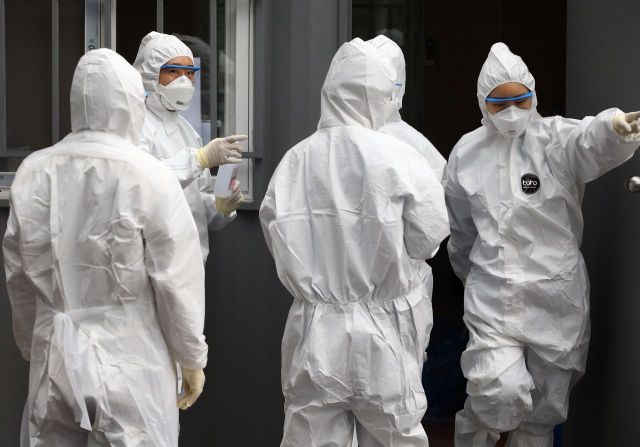
[Sejong=Asia Economy Reporter Joo Sang-don] There is a strong analysis that confirmed cases of the novel coronavirus infection (COVID-19) have likely occurred in North Korea as well. North Korea's claim of having 'no confirmed cases' is because they lack diagnostic reagents to identify confirmed cases.
On the 28th, the Korea Development Institute (KDI) published the discussion content from the North Korean Economic Research Council meeting held on the 13th in the 'North Korean Economic Review February issue.'
At the meeting, Professor Choi Jeong-hoon of Korea University pointed out, "Recently, North Korea requested diagnostic reagents and protective suits from the World Health Organization (WHO) and the International Federation of Red Cross and Red Crescent Societies (IFRC) and received supplies, which means that until recently, North Korea had not secured diagnostic reagents." He added, "This indicates that they are still unable to identify confirmed cases, so North Korea's claim of having no confirmed cases lacks credibility."
Professor Shin Young-jeon of Hanyang University also said, "Recently, North Korea redefined the incubation period as 24 days and accordingly extended the quarantine period to 30 days," adding, "This means they are taking the current situation more seriously."
Experts believe that large-scale quarantines are underway in North Korea. Professor Shin said, "Since they cannot detect patients, they have no choice but to broadly quarantine people with similar symptoms," and added, "Also, the quarantine period inevitably becomes longer compared to South Korea." Although patients can be discharged after testing negative, North Korea lacks the tools to conduct tests and confirm negative results.
The February issue also included suggestions regarding post-COVID-19 relations between South Korea and China. Professor Hwang Jae-ho of Hankuk University of Foreign Studies explained, "The government's pro-China stance is understood as an effort to achieve both humanitarian goals and national interests," and added, "We can expect expansion of our companies' investment and trade, improvement of the business environment in China, and promotion of human exchanges including tourism." He continued, "Although unavoidable, the issue of expanding entry bans to all of China must be decided by comprehensively considering domestic quarantine conditions, the Chinese government's measures, WHO and international community responses, and the actions of neighboring countries," emphasizing, "Maintaining stable relations between South Korea and China amid international political issues related to quarantine has become a more important diplomatic task than ever."
© The Asia Business Daily(www.asiae.co.kr). All rights reserved.

















