Ministry of Land, Infrastructure and Transport Reports to Blue House
Plan to Supply 210,000 Public Housing Units This Year
Targeting Top 10 OECD Ranking by 2025
Reforming Subscription System Focused on Actual Demand
Strengthening Tenant Protection...Higher Taxes on High-Value Housing
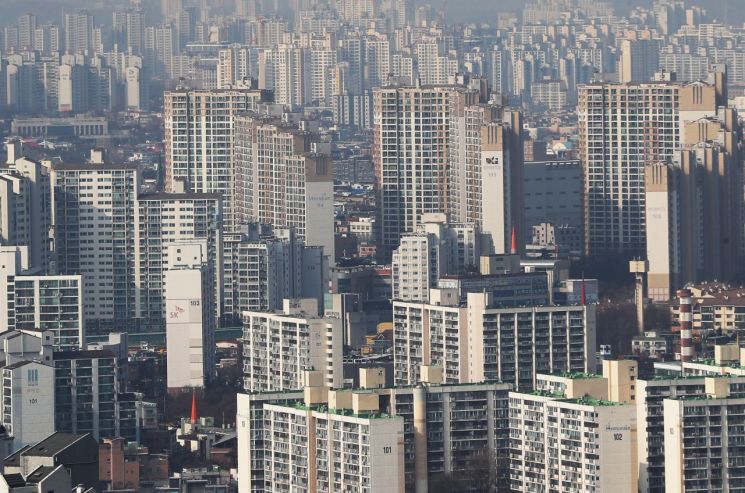
[Asia Economy Reporter Moon Jiwon] The government is rolling up its sleeves to expand the supply of 'public rental housing' this year. Amid rising housing prices, the aim is to increase the number of public rental housing units, which are key to stabilizing housing for low-income households, to the level of advanced countries. Additionally, the government plans to integrate the various types of public rental housing, which have differed under each administration, into a single category to manage supply from a more long-term perspective.
Furthermore, the government intends to devote considerable effort to policies for genuine demanders in the subscription market, where competition has intensified recently due to expectations of 'lottery-style sales,' by applying regulations such as a 'mandatory residence period.'
On the 27th, the Ministry of Land, Infrastructure and Transport reported this 'housing welfare network expansion' plan to the Blue House. One of the key points of this report is the expansion of public rental housing supply, which can directly impact the housing stability of low-income households.
The government plans to supply 210,000 public housing units this year to achieve an 8% stock rate of long-term public rental housing, which is the average level among the Organization for Economic Cooperation and Development (OECD) countries. Although 139,000 public rental housing units were supplied based on last year's completions, the supply volume remains insufficient compared to advanced overseas countries.
The Ministry of Land, Infrastructure and Transport expects that under the current policy direction, expanding the number of public rental housing units could achieve a 10% stock rate by 2025, placing Korea among the top 10 OECD countries. Given the frequent complaints about supply shortages in the market, the government plans to drastically reform the public rental housing supply system.
Along with this, the government will integrate public rental housing types?whose names, eligibility criteria, and rents have changed with each administration?into a single category. The integration targets include the permanent rental housing from the Roh Tae-woo administration, the national rental housing from the Roh Moo-hyun administration, and the Happy Housing from the Park Geun-hye administration.
Initially, rents are expected to be differentiated based on income, adopting an 'income-linked' model. Through this, the Ministry of Land, Infrastructure and Transport anticipates a significant reduction in housing cost burdens for low-income households. The exact name of the integrated type, eligibility criteria, and management methods will be finalized and announced after inter-agency consultations as early as next month.
Public rental housing will be further subdivided to align with the latest housing trends. To this end, guidelines for shared housing will be prepared by June. The focus of these guidelines is expected to be on expanding small-sized housing for one to two persons and increasing supply for young adults and university students.
Additionally, to overcome the low birthrate, a total of 52,000 units will be supplied to newlyweds this year. The Newlywed Hope Town will receive approval for 30,000 new units, and an additional 2,000 units will be supplied in national and Happy Housing complexes specialized for newlyweds. Furthermore, 2,000 rental housing units with two or more rooms for multi-child families will be supplied for the first time next month.
General housing for genuine demanders will also be supplied in a timely manner to reduce market instability. In the metropolitan area, district plans will be established for 154,000 units in the first and second designated districts, and the third district, comprising 100,000 units, will be designated within this year. Housing supply will begin next year, with a total of 300,000 units planned. The 40,000 units planned for supply in downtown Seoul will have their procedures expedited, with 1,000 residents recruited this year.
The subscription system will also be improved by November. To curb excessive competition in the subscription market, which has recently become problematic, the government plans to impose a mandatory residence period. This is expected to lead to a mass withdrawal of speculative investors seeking short-term profits, thereby restructuring the subscription market to focus on genuine demanders. A Ministry of Land, Infrastructure and Transport official explained, "We are currently discussing imposing a mandatory residence period even on winners of special supply."
Measures to protect tenants will be strengthened while increasing tax burdens on landlords to better protect low-income households. To protect tenants, a rental reporting system will be introduced, post-management of registered rental housing will be strengthened, and tenant information accessibility will be improved.
Blind spots in the jeonse deposit return guarantee subscription for tenants of single-family and multi-family houses will be addressed to prevent tenant damages caused by gap investments in advance. Additionally, the guarantee fee rate system will be rationally improved by June to reduce tenant burdens.
On the other hand, a roadmap to realize the official housing price will be prepared to strengthen landlords' social responsibility for housing ownership. In particular, when calculating this year's official housing prices, the reflection rate of market prices for houses valued at 900 million KRW or more will be focused on increasing, drastically reducing the gap between official prices and market prices by price range. This is expected to significantly increase the tax burden on owners of high-priced houses.
© The Asia Business Daily(www.asiae.co.kr). All rights reserved.

















