Health Authorities: "COVID-19 Patients Should Be Isolated and Treated in Negative Pressure Rooms or Dedicated Hospitals" Principle
Need to Assess Severity to Focus Treatment on Severe Patients Amid Rising Cases
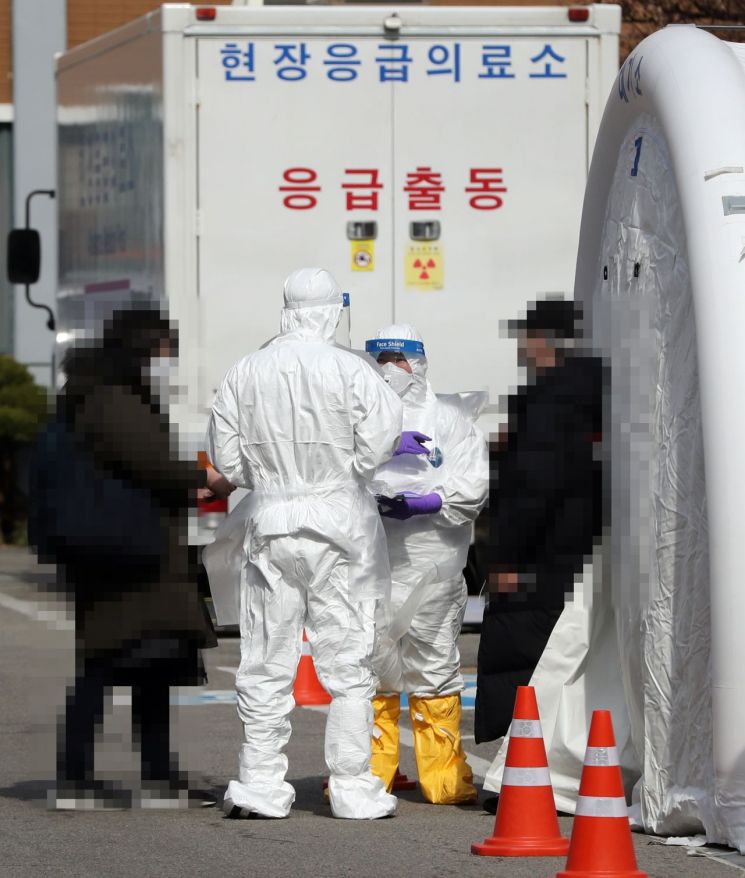 Medical staff are assisting citizens who visited the COVID-19 screening clinic at Seoul National Medical Center.<이미지:Yonhap News>
[Asia Economy Reporters Choi Daeyeol, Kim Heungsun, Jo Hyunui] Health authorities have begun considering a plan to treat confirmed mild cases of the novel coronavirus infection (COVID-19) through self-quarantine. Currently, patients are hospitalized and treated in isolation facilities such as negative pressure rooms or specially designated dedicated hospitals, but the number of patients is rapidly increasing in a short period, especially in specific regions like Daegu and Gyeongbuk.
As a result, the possibility that severely ill patients requiring intensive care may not receive timely treatment has increased, prompting discussions within and outside the government about 'self-quarantine treatment for mild patients' as one of the ways to use medical resources such as facilities and personnel more efficiently.
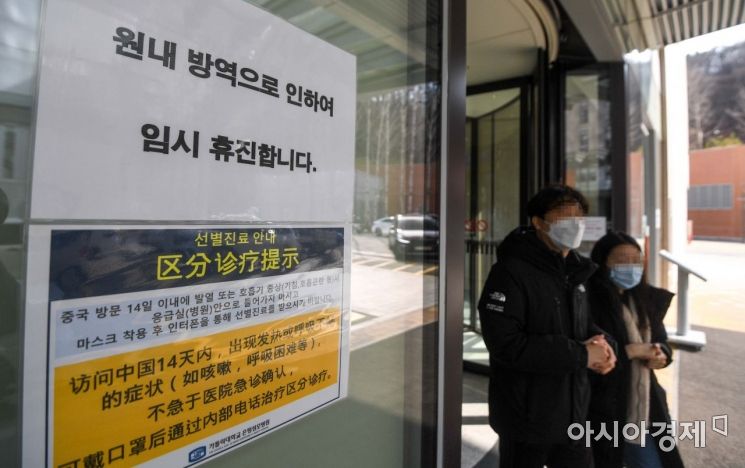 On the 26th, when the number of confirmed COVID-19 cases exceeded 1,000, access to visitors was restricted at Eunpyeong St. Mary's Hospital of Catholic University in Eunpyeong-gu, Seoul. The Seoul Metropolitan Government sent an urgent text message to Seoul citizens, stating that one more confirmed case related to Eunpyeong St. Mary's Hospital was reported the previous day, and at the hospital's request, visitors who have been to the hospital since February 1st should contact their nearest public health center for medical guidance. Photo by Kang Jin-hyung aymsdream@
Rapid Increase of Patients in Daegu and Gyeongbuk Causes Inefficient Use of Medical Resources
Medical Staff Emphasize Need to Focus on Treating Severe Patients
According to health authorities and the medical community on the 27th, the Central Clinical Committee for Emerging Infectious Diseases has recently been discussing with quarantine authorities ways to reorganize the existing COVID-19 patient treatment system. After comprehensively reviewing domestic COVID-19 patient care, overseas clinical information, and recent patient trends, the committee conveyed to authorities the opinion that more active treatment focused on severe patients is necessary. The government is implementing a mitigation strategy at the national level to minimize the speed of patient occurrence and damage such as deaths after infection, and as part of this, it has become urgent to efficiently allocate medical resources according to severity.
The committee is composed of attending physicians and infectious disease experts from the National Medical Center, which is treating domestic COVID-19 patients, and hospitals nationwide. It has advised quarantine authorities on clinical progress and treatment guidelines. This committee also set the discharge criteria after recovery. The committee is currently considering applying several criteria, such as whether mild patients have a guardian who can contact medical institutions in emergencies. Bang Ji-hwan, Director of the Central Infectious Disease Hospital Operation Center at the National Medical Center, said about this reorganization plan, "This is an opinion from clinical experts and may differ from government agencies," adding, "There are opinions within the quarantine authorities that it is premature, so whether it will actually be implemented or when it will be done is undecided, but discussions are ongoing."
Considering that the government initially denied the plan to treat mild patients through self-quarantine without hospitalization?"It is not being considered" (Kim Kang-lip, 1st General Coordinator of the Central Disaster and Safety Countermeasures Headquarters, briefing on the 22nd)?this represents a change in the original stance. COVID-19 is classified as a first-class infectious disease along with Ebola, plague, and anthrax, and the principle is to treat patients under negative pressure isolation. Coordinator Kim explained at the time, "Outside of Daegu and Cheongdo, patients are transferred to negative pressure isolation beds for treatment, and in cases like Daegu where there is a cluster outbreak and medical resources are insufficient, mild patients are treated in designated dedicated hospitals rather than negative pressure facilities."
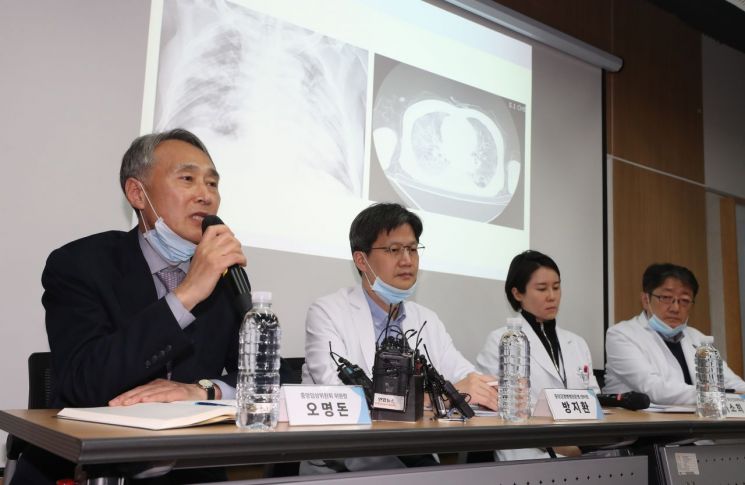 Oh Myung-don, Chairman of the Central Clinical Committee (far left), is speaking at the Central Clinical Committee press conference on emerging infectious diseases held at the National Medical Center on the 26th.
 Medical Staff: "Low Fatality Rate Among Mild Patients Domestically and Abroad"
"Concerns Remain Whether Self-Quarantine Will Be Properly Followed"
In Daegu and Gyeongbuk, where patient numbers have surged recently, it has become difficult to provide timely treatment not only for COVID-19 patients but also for other patients. This means that if patients are received in emergency rooms but not treated promptly, there could be significant casualties. There are also criticisms that the current process wastes administrative effort by spending time assessing severity and finding appropriate beds even after a COVID-19 diagnosis. This is the background behind medical staff advocating for revising the current treatment system.
Additionally, analysis of clinical data from domestic and international patients shows that mild patients have such low harm that separate treatment may not be necessary. Oh Myung-don, Chairman of the Clinical Committee and Professor of Infectious Diseases at Seoul National University Hospital, said, "According to investigations in China, over 80% of patients had mild symptoms, and even including severe patients, there were no deaths. Mild patients can be treated at home, and medical resources can be used more efficiently by focusing treatment on severe patients in secondary and tertiary medical institutions, which would save more lives."
However, it is expected that the government will find it difficult to make such a decision. Since isolation treatment has been the principle so far, changing this could lead to criticism that the risk is being underestimated. There is also concern in civil society that some patients might not properly follow self-quarantine rules, such as engaging in social activities before confirmation, which could increase anxiety about further spread.
© The Asia Business Daily(www.asiae.co.kr). All rights reserved.