
[Asia Economy Reporter Junho Hwang] Domestic researchers have developed a sticker-type secondary battery that can be freely attached and detached anywhere.
The Korea Institute of Energy Research announced on the 25th that Dr. Yoon Hana's research team from the Separation and Conversion Materials Laboratory, together with Professor Kim Youngjin from the Department of Mechanical Engineering at the Korea Advanced Institute of Science and Technology (KAIST) and Professor Kim Seungcheol from the Department of Optical Mechatronics Engineering at Pusan National University, developed a sticker-type micro supercapacitor (high-capacity capacitor).
Development of Sticker-Type Capacitor
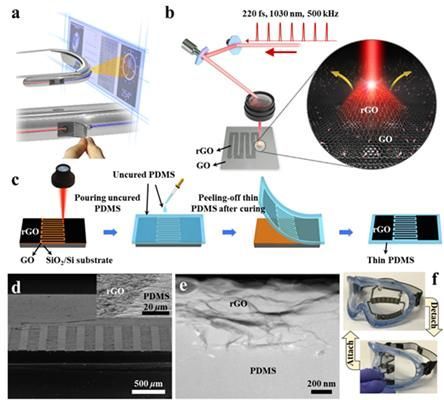
The research team implemented the sticker-type secondary battery by applying ultrashort laser processing technology. They produced special graphene electrodes using an ultrashort laser that generates maximum output instantaneously and combined polymer substrates with adhesive properties with the graphene.
This means they developed a capacitor that secures excellent electrode performance and durability through ultrashort laser processing while being usable anywhere like a sticker.
Improvement of Lithium Thin-Film Battery Drawbacks
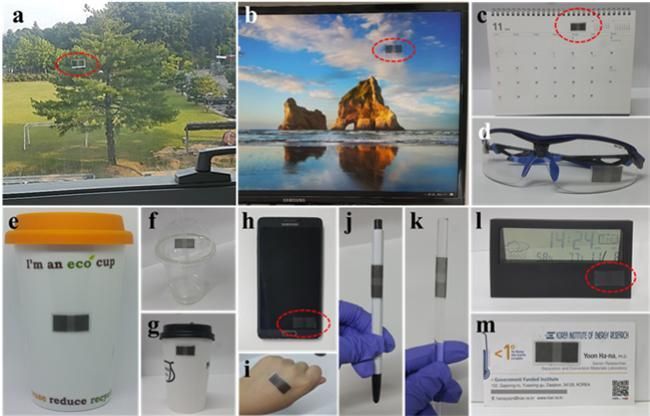
The secondary battery developed by the research team has a similar volumetric energy density compared to existing lithium thin-film batteries. However, its volumetric power density is more than 13 times higher.
Dr. Yoon Hana said, "It can be used in next-generation wearable devices and Internet of Things (IoT) devices, and being eco-friendly, it is expected to solve the problems of existing lithium-based energy storage device technologies."
Professor Kim Youngjin of KAIST stated, "The patterning technology developed in this study efficiently realized graphene formation while minimizing material loss within a short processing time through ultrashort laser pulses," adding, "It is expected to promote various industrial applications of laser-induced graphene."
The research results were published online in December last year in the international journal Chemical Engineering Journal.
© The Asia Business Daily(www.asiae.co.kr). All rights reserved.



















