[Hidden Business Story] Victoria's Secret, a Leading US Lingerie Brand with $7 Billion Annual Sales and 41% Market Share
Closed 82 Stores in the Last 2 Years Due to Amazon Competition
Millennial Boycott Over Plus-Size Model Criticism and Female Sexu
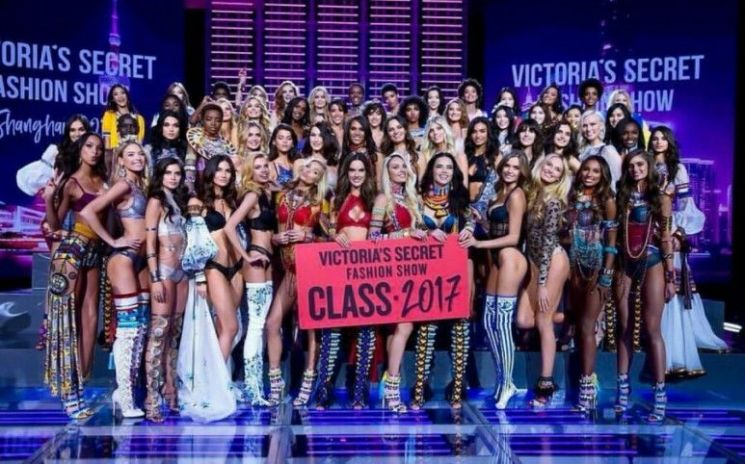
[Asia Economy Reporter Shinwon Yoon] The famous American lingerie brand 'Victoria's Secret' was recently sold to a private equity firm. Limited Brands, which generated annual sales of $7 billion (approximately 8.5 trillion KRW) from the star brand Victoria's Secret, sold 55% of its stake to Sycamore Partners for $525 million (approximately 638 billion KRW). With this, Leslie Wexner, chairman and CEO of Limited Brands, is stepping down after 57 years.
Why did Wexner, who led Victoria's Secret for 57 years, hand over the brand to a private equity firm? Looking back at the history of Victoria's Secret, it started in 1977 when Roy Raymond opened a women's lingerie store after analyzing the lingerie market with his wife for eight years. Five years after its founding, it was sold to The Limited (now Limited Brands), shaping the brand as it is today.
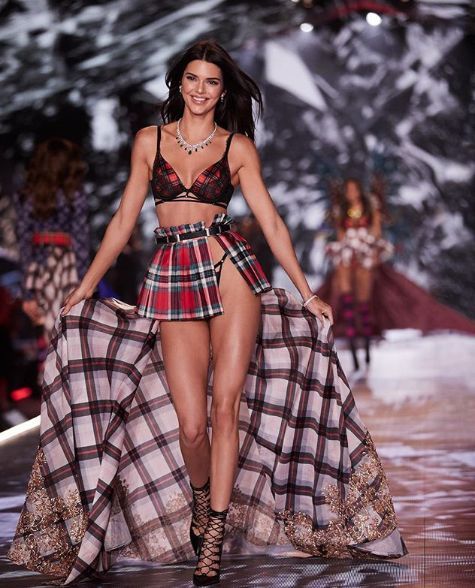
Limited Brands called Victoria's Secret models "Angels" and began holding its own fashion shows from 1995, establishing itself as a unique lingerie brand. At one point, the fashion show was watched by 10 million households, and VIP tickets auctioned for the show sold for over $25,000 (approximately 30 million KRW) each. Top global models such as Miranda Kerr, Gisele B?ndchen, and Gigi Hadid all started as Victoria's Secret Angels.
Victoria's Secret, which had been thriving, has struggled in recent years. After peaking at $7.67 billion (approximately 9.27 trillion KRW) in sales in 2015, it recorded $7.2 billion (approximately 8.7 trillion KRW) in 2018. The bigger problem is market share. Once holding 41% of the U.S. lingerie market, it fell to 24% in just five years, and in surveys of clothing brand preferences among teenagers, a new consumer group, it dropped below the top 10. As a result, Limited Brands' stock price fell by more than 70%.
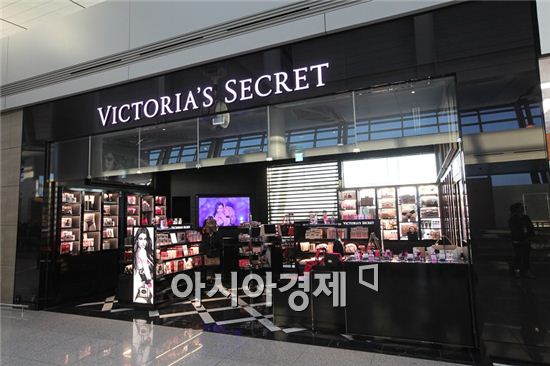
The reason for Victoria's Secret's struggles can be attributed to Amazon. Despite being an "offline powerhouse" with over 1,500 stores worldwide, Victoria's Secret focused only on offline sales even as online shopping became the new consumer trend. Consequently, it had to close 29 stores in the U.S. in 2018 and 53 stores across North America, including Canada, last year.
However, an even bigger problem was inside Victoria's Secret. The biggest issue was ignoring the consumption trends of the millennial generation (born between the 1980s and 2000s), which rapidly emerged as a core consumer base. Millennials are characterized by rejecting uniform beauty standards and focusing on individual uniqueness. Especially with feminism and LGBT (lesbian, gay, bisexual, transgender) issues becoming prominent, millennials began feeling uncomfortable with Victoria's Secret's insistence on female models with slim waists and long legs.
Moreover, the fashion shows featuring Angels were problematic. They were criticized for not including transgender or plus-size models, failing to embrace physical diversity. Along with the #MeToo movement and the "de-corset" movement, there was a strong push for women's rights and accusations that Victoria's Secret was sexualizing women. Despite these criticisms, Victoria's Secret did not relent. Ed Razek, the chief marketing officer, once sparked controversy by saying, "Those models are not examples of 'fantasy.' No one is interested in plus-size models."
When consumers started boycotting due to these remarks, Ed Razek issued an official apology and announced plans to cast plus-size models in future fashion shows, even including transgender models. However, this was not enough to win back consumers. Viewership of the fashion show plummeted to about one-third (3.3 million), leading to the eventual decision to discontinue the official fashion show.
Victoria's Secret's lingerie also focused more on emphasizing femininity rather than comfort and convenience, causing consumers to turn away. Padded and push-up bras that tighten the chest with wires are representative products of Victoria's Secret.
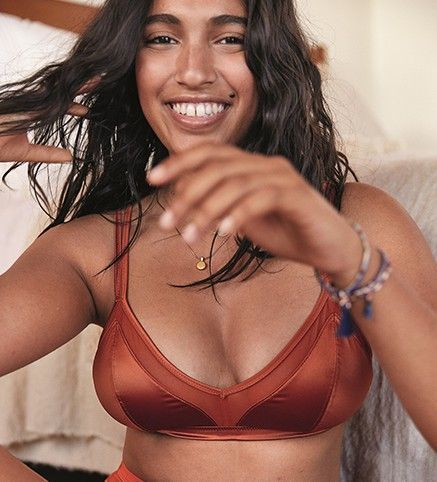
In fact, the brands that have recently taken market share from Victoria's Secret are those like Aerie, NAJA, and ThirdLove, which emphasize physical diversity and convenience. They introduced wireless (without wires), bralettes, and sports bras instead of corrective lingerie. Especially Aerie gained popularity through the "REAL" hashtag campaign promoting body positivity, and Savage x Fenty, launched by singer Rihanna, used models of various races and body types in its fashion shows, receiving positive responses from consumers.
The New York Times (NYT) recently analyzed the lingerie market, stating, "Brands promoting diversity in race and plus-size models, as well as comfortable lingerie, are gaining popularity in the U.S. Victoria's Secret, which emphasizes only 'sexiness,' is going against the times and being pushed out of the market."
© The Asia Business Daily(www.asiae.co.kr). All rights reserved.
![User Who Sold Erroneously Deposited Bitcoins to Repay Debt and Fund Entertainment... What Did the Supreme Court Decide in 2021? [Legal Issue Check]](https://cwcontent.asiae.co.kr/asiaresize/183/2026020910431234020_1770601391.png)

















