Phone Cameras Like DSLRs, Strong in Night Photography
Use a Tripod to Reduce Hand Shake with 100x Zoom
108MP Mode Supports Zoom up to 6x Only
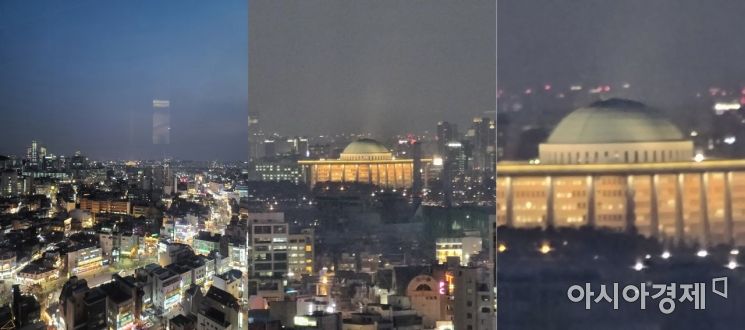 A photo of the National Assembly building taken from a 17-story building near Hongdaeipgu Station using the Galaxy S20 Ultra. The left photo was taken near Hongdae without zoom. The center photo was taken with 10x zoom, and the right photo was taken with 30x zoom. (Photo by Han Jinju)
[Asia Economy Reporter Han Jinju] From a 17-story building near Hongdae Entrance Station in Seoul, I took a photo of the Yeouido direction with the Galaxy S20 Ultra, and the National Assembly building was visible. When zoomed in 10 times on the brightly shining National Assembly building in the distance, even the main building's windows appeared clearly. At 30 times zoom, the windows and pillars became slightly blurry, but the shape of the building was still identifiable.
100x Zoom Shooting... Increased Hand Shake
I experienced the Galaxy S20 in advance through Samsung Electronics' 'Galaxy To Go' service. As known, the Galaxy S20 Ultra can capture the surface of the moon. However, it was difficult to capture a clear moon surface as seen in YouTube videos. When zoomed in up to 100 times, the shaking also increases proportionally. While adjusting brightness at 100x zoom, the screen shook so much that the moon disappeared, requiring multiple position adjustments. Using a 'timer and tripod' can reduce shaking when zooming in.
Using a telescope and tripod together can capture the moon's surface clearly, but there are considerable limitations for non-experts shooting handheld. Optical zoom supports up to 10x, which is sufficient for everyday use to get desired photos. The 100x zoom function is more useful for viewing distant objects enlarged rather than for photography.
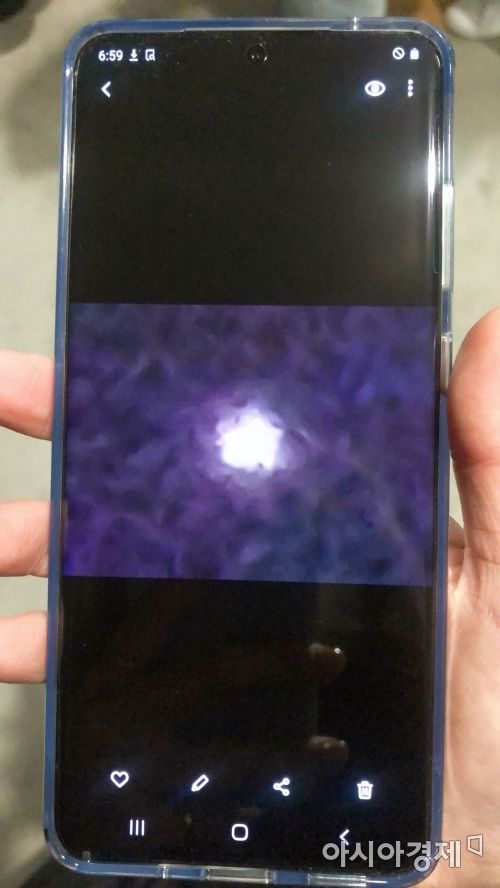 A photo of the moon taken with the Galaxy S20 Ultra. When zooming in 100 times, it is difficult to keep steady and focus due to hand shaking. I wanted to take a clear photo of the moon with bare hands without any equipment, but I failed. To photograph the moon, it is best to use a tripod and timer in a clear, low-light environment. (Photo by Han Jinju)
Camera That Enhances Colors Even at Night
Generally, smartphone cameras are weak at night. In environments without light, photos tend to come out pitch black. Thanks to its image sensor, the Galaxy S20 can take photos with vivid colors even at night. When shooting in night mode, photos are saved after about 5 to 7 seconds of processing. It also provides post-processing effects similar to sharpening outlines in Photoshop. Alleys that appear dark with regular cameras come out brightly as if under streetlights when shot in night mode.
To verify the true value of the Galaxy S20 Ultra's 108-megapixel camera, you need to select the 108MP (3:4) mode at the top of the camera. By default, photos are taken with a 12-megapixel camera. Setting to 108MP mode allows you to take high-resolution photos with deep depth of field, similar to a DSLR camera. In 108MP mode, zoom is limited to up to 6x.
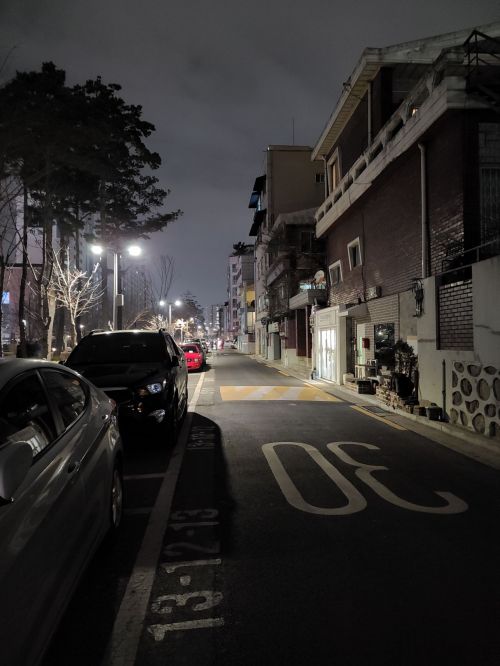
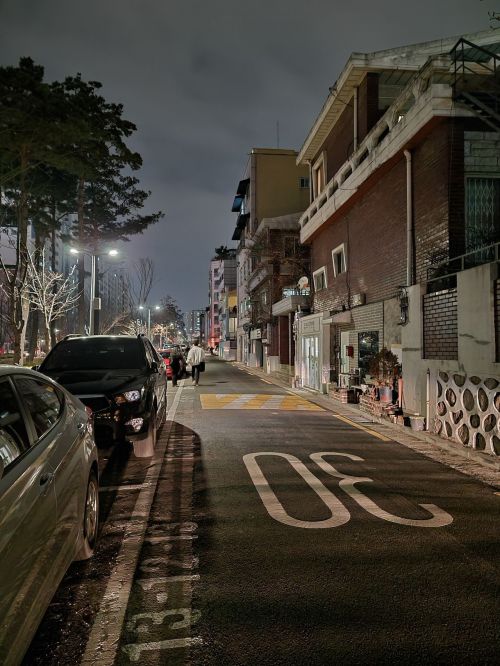 A nighttime alley shot taken with the Galaxy S20 Ultra in 'Night Mode.' It is brighter and clearer than when taken with a regular camera. (Photo by Jinju Han)
Bigger Camera... Case Essential
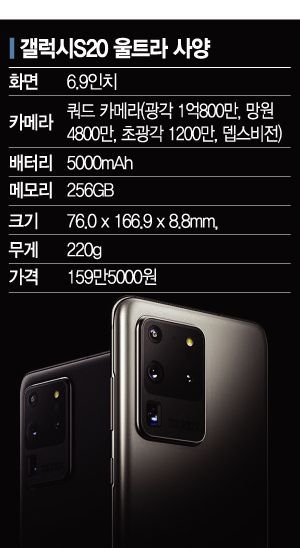
The monster camera of the Galaxy S20 is also reflected in the rear design. Until the S10, cameras were arranged horizontally, but as the number of cameras increased, they were installed in an induction design on the upper left corner. In the Ultra model, with a total of four cameras installed, the camera bump is more pronounced than in previous models. Using a case is essential to protect the camera. The edge drawbacks that Galaxy series users had pointed out have also been greatly alleviated. The curvature of the edge on the Galaxy S20 has been softened, making it much flatter than previous models. The battery capacity is also ample at 5000mAh. Even after taking photos for over two hours, the battery capacity did not decrease sharply.
© The Asia Business Daily(www.asiae.co.kr). All rights reserved.



















