Jeju Region Sees 60% Reservation Cancellation Rate Over 3 Weeks in February
MICE Events Gathering Up to 300 People Per Session Also Face Mass Cancellations
Government Raises COVID-19 Alert to 'Severe' Highest Level
Some Reservation Recovery Sparks... Shincheonji Incident Dampens Hopes
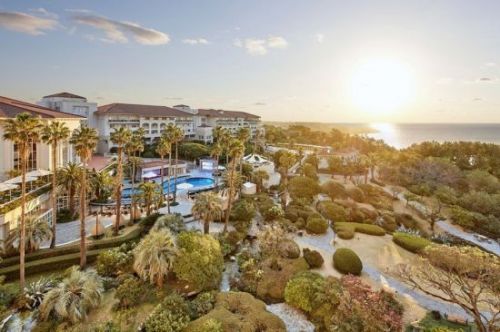
[Asia Economy Reporter Cha Min-young] Domestic luxury hotels are suffering from the 'Novel Coronavirus Infection (COVID-19)' cold wave, with banquet halls empty in addition to cancellations of reservations by domestic and international guests. COVID-19, which seemed to be calming down in early last week, rapidly penetrated the local community after the 31st confirmed case, the first in the Daegu and Gyeongbuk regions, was reported on the 17th. Furthermore, concerns have increased with the outbreak of the so-called 'Shincheonji Incident,' a mass infection event related to the Shincheonji Church of Jesus in Daegu.
◆Even luxury hotels cannot escape 'COVID-19'= According to the hotel industry on the 24th, Jeju A Hotel reported that the cancellation rate of customer reservations reached 60% over the past three weeks since February. During the same period, cancellations or postponements of MICE events reached 90%. Jeju Shilla Hotel, where domestic guests account for more than 90%, did not disclose the exact scale of damage but is known to have suffered damage at the industry average level. The Korean restaurant 'Cheonji' within the hotel temporarily suspended lunch operations in response to the COVID-19 issue. Lotte Hotel, which operates luxury hotels in Seoul, Jeju, and Busan, has seen nearly 160 cumulative cancellations of MICE events since the COVID-19 issue emerged. MICE refers to Meetings, Incentives, Conventions, and Exhibitions, including corporate meetings, incentive tours, conventions, various events, fairs, and exhibitions. The number of attendees per MICE event ranges from as few as 40 to as many as 300, so a single cancellation causes significant damage.
Regarding government events, since the government raised the crisis alert level from 'Caution' to 'Warning' and then to 'Severe' on January 27 due to COVID-19, many events have been canceled one after another. The Ministry of Trade, Industry and Energy, the supervising department, issued guidelines for quarantine management of mass events and recommends minimizing travel. Since midnight on the 4th, the visa-free entry system for Chinese visitors to Jeju was suspended, and combined with the Chinese government's ban on group tourists departing, the hotel industry is experiencing a situation so severe that the term 'business suspension' seems inadequate.
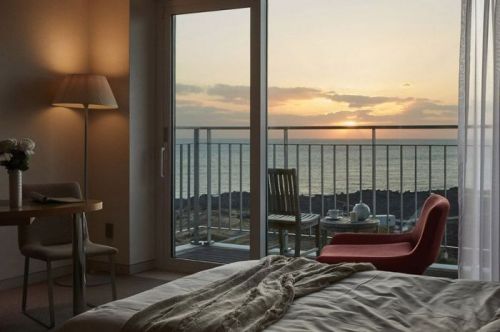
◆Shincheonji Incident triggers wave of reservation cancellations= Just a few weeks ago, luxury hotels maintained that the impact of reservation cancellations due to the COVID-19 cold wave was not significant. The Four Seasons Hotel and Conrad Hotel in Seoul reported that cancellations were not substantial. The Westin Chosun Hotel in Seoul, affiliated with the Shinsegae Group, also experienced minimal impact aside from some postponements of MICE events. Paradise Hotel in Incheon, which has a foreigner-only casino facility nearby, saw a slight decrease in customers immediately after the Lunar New Year holiday but showed a recovery in reservation rates in February. However, with the U.S. raising its travel advisory for Korea to level 2 and a total of 14 countries banning or requesting restraint on travel to Korea, foreign tourists are also expected to be affected.
The same applies to hotels in the Jeju area, where positive rebound signals had been detected. In Jeju, as the rate of increase in confirmed COVID-19 cases slowed in early last week, inquiries from domestic customers increased. With relatively more vacant rooms, room rates were automatically adjusted, attracting the interest of 'Smasumers'?consumers who seek smart and reasonable consumption?leading to a roughly 17% increase in reservations compared to the previous week. However, as the Shincheonji Incident intensified, cancellations surged despite low prices.
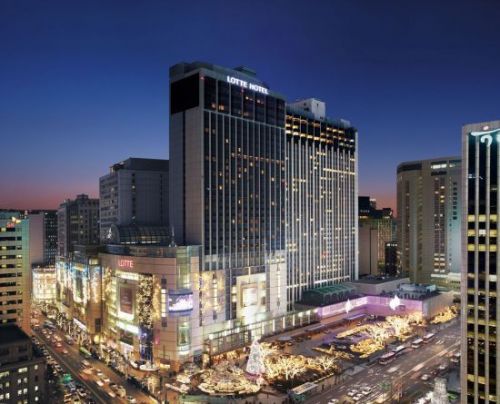
◆Incentive policies needed for the tourism industry= A hotel industry official cautiously stated, "Since the tourism industry has been severely hit, all early-year marketing efforts have come to a halt," adding, "Overall business activities are heavily restricted, and since the industry's possible measures are limited, we hope the government will implement incentive policies to attract tourists in the future." Another industry insider said, "Fortunately, the COVID-19 issue broke out during the relatively off-season month of February," and added, "It is difficult to disclose the extent of the damage because revealing how much the reservation rate has dropped might cause further unrest among customers."
Korea Credit Rating, one of the country's top three credit rating agencies, recently diagnosed the hotel and duty-free industries as very negatively affected in the short term due to the COVID-19 issue in a report. Korea Credit Rating stated, "Among domestic industries, along with the aviation industry, these sectors are experiencing the most significant demand shocks," and predicted, "If the situation prolongs, the growth potential of the duty-free industry will slow down."
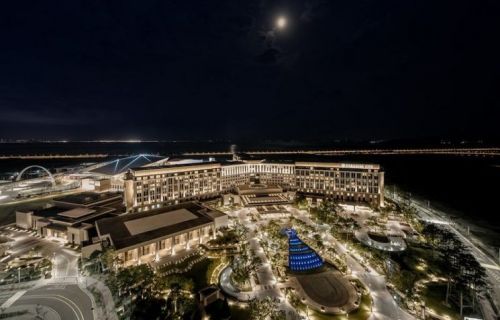
Professor Han Jin-soo of Kyung Hee University's College of Hotel and Tourism Management said, "Since individual travelers currently lead the market for five-star hotels, it is necessary to conduct more aggressive marketing in cooperation with online travel agencies," emphasizing, "At this point, price competitiveness is a very important marketing strategy for hotels, so it is necessary to generate hotel profits through hotel profit management techniques." He also advised that efforts should be made to develop scenarios through long-term structural improvements and proactive risk management.
© The Asia Business Daily(www.asiae.co.kr). All rights reserved.
![User Who Sold Erroneously Deposited Bitcoins to Repay Debt and Fund Entertainment... What Did the Supreme Court Decide in 2021? [Legal Issue Check]](https://cwcontent.asiae.co.kr/asiaresize/183/2026020910431234020_1770601391.png)