Interdisciplinary Academic Societies Including the Infectious Diseases Society, Epidemiological Society, and Emergency Medicine Society Form COVID-19 Countermeasures Committee
"Community Spread, Gatherings, and Use of Multi-Use Facilities Should Be Prohibited"
Public Participation Is Crucial; Maintain Strict Personal Hygiene and Avoid Hospital Visits for Mild Symptoms
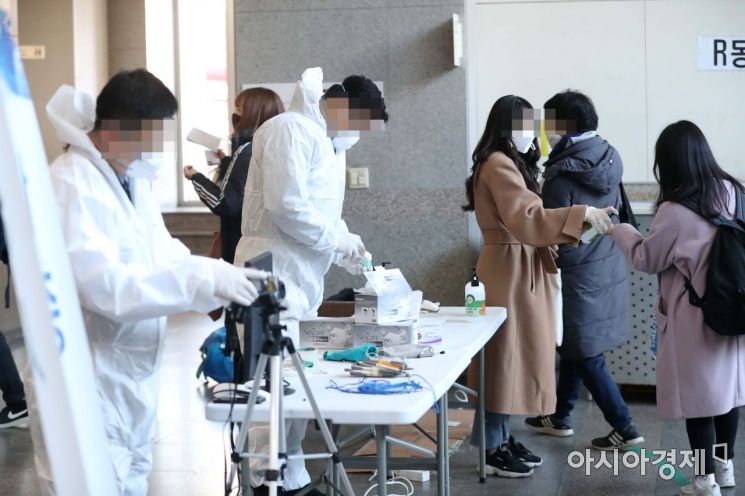 Amid concerns over the spread of the novel coronavirus disease (COVID-19), on the 23rd, the 55th Certified Public Accountant exam was held at the testing site set up at Hongik University in Mapo-gu, Seoul, where officials are checking examinees for fever using thermal cameras. Photo by Moon Honam munonam@
[Asia Economy Reporter Choi Dae-yeol] "Ultimately, as the number of patients increases sharply and spreads nationwide, we expect cases to occur in various regions. We have entered the early stage of community spread." (Kim Dong-hyun, Professor of Social Medicine at Hallym University College of Medicine, President of the Korean Epidemiological Society)
"Although a very large number of patients have increased in the Daegu and Gyeongbuk regions, this kind of (patient) increase is considered an early stage that could occur in other regions as well. Since isolating patients and contacts alone cannot stop the upward trend, all citizens must follow preventive measures to prevent explosive growth." (Choi Won-seok, Professor of Infectious Diseases at Korea University Ansan Hospital)
Domestic infectious disease experts have diagnosed that the novel coronavirus infection (COVID-19) is already spreading to various parts of the country. Since outbreaks have occurred collectively in some regions or facilities/institutions, it is not yet a nationwide epidemic, and this differs somewhat from the government's perception that it is an "early stage of infection transmission in some limited communities" (Kim Gang-rip, Deputy Director of the Central Disaster and Safety Countermeasures Headquarters, briefing on the 22nd).
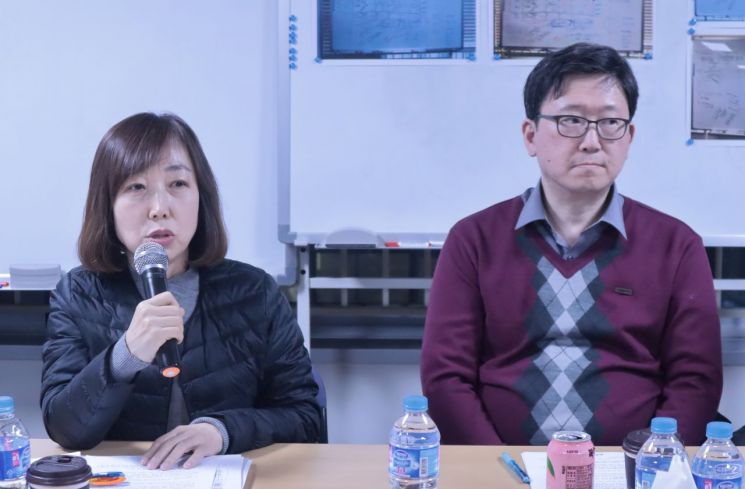 Baek Kyung-ran, Chairperson of the Korean Society of Infectious Diseases (left in the photo), held a meeting at the society's office in Seocho-gu on the 6th to discuss matters related to COVID-19.
 Experts United in Calling for Raising Infectious Disease Crisis Alert to 'Severe' Level
Authorities Declare Damage Minimization and Mitigation Strategies... "Need to Accelerate"
Eleven domestic infectious disease-related academic societies, including the Korean Infectious Diseases Society, Korean Society for Preventive Medicine, Korean Epidemiological Society, and Korean Society of Emergency Medicine, have formed an interdisciplinary COVID-19 Countermeasures Committee (hereafter, the Committee) to respond to the current situation. On the 22nd, Baek Kyung-ran, Chairperson of the Korean Infectious Diseases Society (Professor of Infectious Diseases at Sungkyunkwan University), told reporters, "Currently, cases are diagnosed as related to specific groups, but many patients are emerging simultaneously, and confirmed cases without epidemiological links will continue to appear. From now on, we believe it is necessary to proactively raise the alert to the severe level and respond accordingly."
Professor Kim Dong-hyun said, "Patients are increasing explosively outside the quarantine network," adding, "The strategy of finding and isolating contacts when patients appear is no longer efficient." He further stated, "The authorities' response should also be raised to the severe level, and mitigation strategies should be adopted rather than existing lockdown strategies."
The authorities' lockdown strategy mainly focuses on preventing infectious diseases from entering from outside and, when patients are confirmed, finding and blocking all potentially infected contacts. When domestic cases began to sporadically increase last month, the government banned entry of travelers coming through Hubei Province, China, the outbreak epicenter, and isolated confirmed patients and their contacts. However, with patients exceeding 500 (556 as of 9 a.m. on the 23rd) and the number of isolated contacts estimated to surpass 10,000, experts diagnose that such measures are unlikely to function properly.
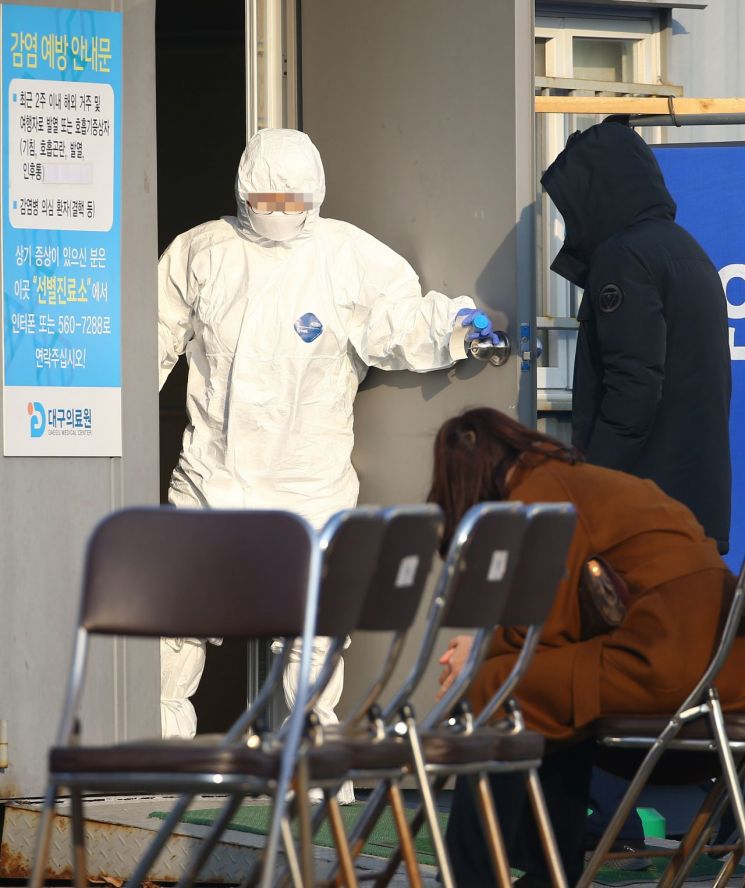 On the morning of the 20th, suspected patients of the novel coronavirus infection (COVID-19) are waiting to be tested at the Daegu Medical Center screening clinic in Jungri-dong, Seo-gu, Daegu.
 Medical System Overloaded in Daegu and Gyeongbuk; Possible Reproduction in Other Regions
Mild Patients Overwhelming System May Prevent Timely Treatment of Severe Cases
The Daegu and Gyeongbuk regions, where patient numbers surged, are facing real overload in frontline medical settings. Treating COVID-19 patients requires negative pressure isolation beds separated from the outside, but due to a shortage of beds, patients are being transferred to nearby regions. A patient from Daenam Hospital in Cheongdo, Gyeongbuk, was transferred to Busan National University Hospital and later died. Professor Lee Jae-gap of Hallym University College of Medicine, who visited a hospital in Daegu that day, said, "I went because help was requested, and the situation was much more serious than expected."
Baek Jin-hwi, Head of Emergency Medicine at Inha University Hospital, said, "When suspected COVID-19 patients come to the emergency room, they must be isolated and treated, so in some regions, severe emergency patients are already unable to receive timely treatment." Professor Song Jun-young of Infectious Diseases at Korea University Guro Hospital said, "Medical staff at government-designated hospitals receiving COVID-19 patients are experiencing high fatigue, and the situation could reach a limit where treatment becomes impossible. Other regions besides Daegu and Gyeongbuk should also prepare their medical systems in advance, including hospitals that selectively treat suspected patients and diagnostic systems."
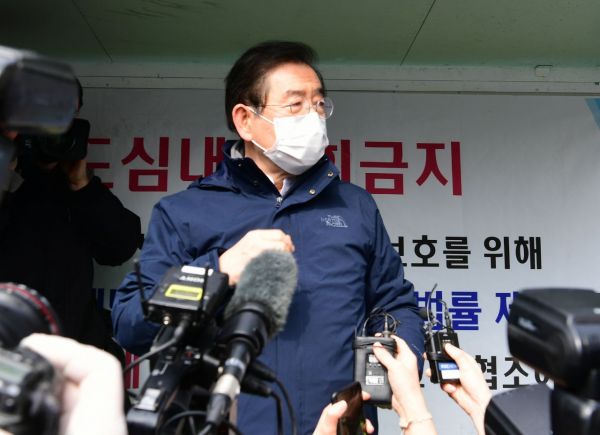 Seoul Mayor Park Won-soon is urging the suspension of the rally held on the afternoon of the 22nd at Gwanghwamun Square in Seoul, hosted by the National Struggle Headquarters for Moon Jae-in's Resignation.
 To Slow Spread, Each Citizen Must Be Vigilant
Thorough Personal Hygiene Such as Handwashing and Cough Etiquette
Rest at Home for 4-5 Days with Mild Symptoms and Monitor Progress
Seek Medical Care if Symptoms Worsen... Large Hospitals Not Necessary for Mild Cases
Experts commonly pointed out that the infectious disease crisis alert, currently at the 'caution' level, should be raised to the highest 'severe' level. Even if the epidemic is not yet nationwide on the surface, slowing the spread is paramount, requiring the full mobilization of administrative power. Currently, there are no vaccines or treatments, making it difficult to artificially slow the spread.
Gatherings such as church services or assemblies where unspecified many people gather in one place are considered risky for the same reason. Chairperson Baek Kyung-ran said, "We strongly recommend prohibiting multi-use facilities like religious institutions and social activities nationwide," adding, "We must focus efforts intensively for several weeks until the spread is controlled."
Shin Hyung-sik, Director of the Infectious Disease Center at the National Medical Center, said, "Since this is a novel virus, no one has immunity, so even a small amount of exposure can lead to infection," adding, "If people with symptoms immediately visit hospitals, the reproduction number (the rate at which the disease spreads) could increase more than tenfold compared to now."
Professor Ki Moran of the National Cancer Center Graduate School of Cancer Science and Policy (Chair of the Preventive Medicine Society's COVID-19 Countermeasures Committee) said, "Mitigation strategies to slow the spread require the participation of the entire population." She added, "Maintain strict personal hygiene, and if mild respiratory symptoms such as slight fever or cough appear, refrain from going out and take common cold medicine while observing symptoms for 4-5 days. If a high fever above 38 degrees Celsius persists or symptoms worsen, seek medical care."
© The Asia Business Daily(www.asiae.co.kr). All rights reserved.



















