
[Asia Economy Reporter Jeong Hyunjin] As the novel coronavirus infection (COVID-19) rapidly spreads both domestically and internationally, there are forecasts that the economic damage caused by it will be unavoidable. With consumer sentiment freezing, not only is consumer spending sharply decreasing, but economic activities are also facing psychological and physical 'barriers,' such as factory operations halting and airport screenings being strengthened.
In particular, COVID-19 started in China, the world's second-largest economy by GDP after the United States, making it inevitably a huge blow to the global market. Since China's influence in the global market has grown even more compared to the spread of Severe Acute Respiratory Syndrome (SARS) in 2003, a reduction in demand due to decreased consumption and impacts on manufacturing are expected.
◆ Freezing Consumer Sentiment = The biggest problem is the sharp decline in consumption. To avoid virus spread, people reduce outdoor activities and avoid visiting crowded places such as shopping malls and theaters, leading to fewer occasions to open their wallets. The service industry as a whole, from restaurants and cafes selling food to bathhouses, delivery services, and theaters, inevitably suffers damage. In places like Wuhan, China, large retailers such as Starbucks and KFC have successively suspended operations. In Korea, as COVID-19 rapidly spreads recently, the number of people on streets and markets has decreased, and large events have been canceled.
The reduction in consumption due to infectious disease spread was also confirmed during the SARS outbreak in 2003. According to CNBC, in May 2003, China's retail sales growth rate was 4.3% year-on-year, marking the lowest level ever. Considering that China's retail sales growth rate was maintained at 9-10% during 2002-2003, this is less than half. ING predicted in a report at the end of last month that China's retail sales, which were around 8%, would fall to 3-4% due to the COVID-19 situation. Martin Peche, Vice President of Moody's, told Forbes, "Compared to SARS, the consumer demand contribution as part of economic growth drivers has increased significantly," meaning "the economic damage could be greater than in 2003."
However, forecasts differ on how long it will take for consumer sentiment to recover after the situation calms down. Some believe that, considering the sharp decline in China's retail sales during SARS did not last long and recovered within a few months, the recovery will be quick once the COVID-19 spread subsides. On the other hand, Forbes suggested that unlike in 2003, this time the negative impact on transportation, retail sales, tourism, and entertainment is greater, so recovery might not be as quick.
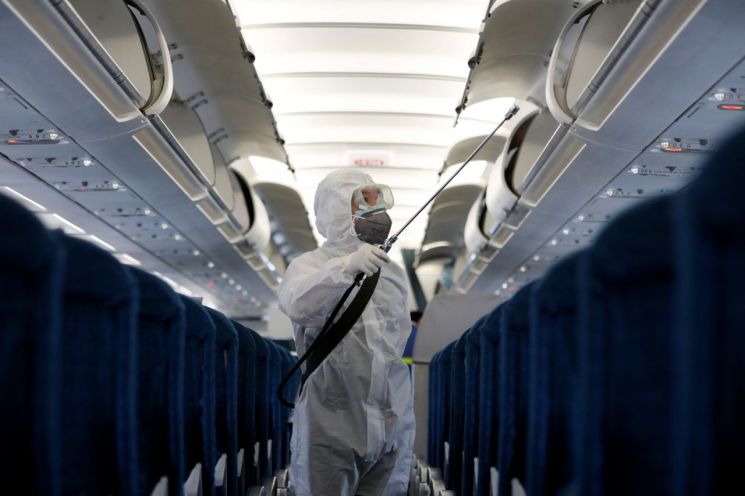
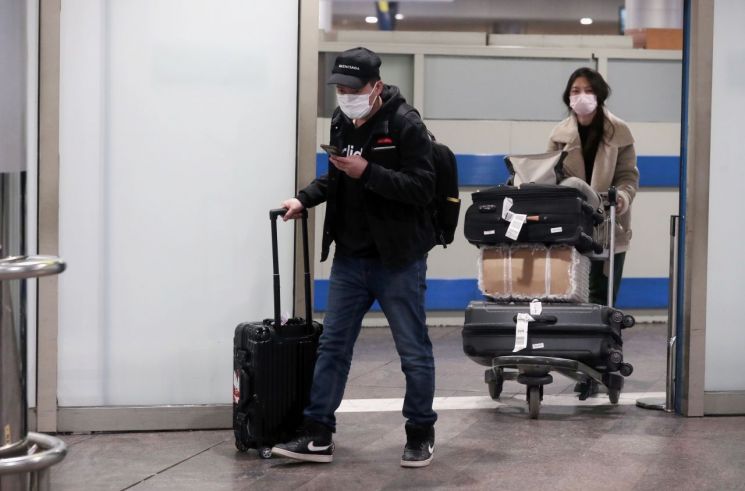
◆ "Don't Travel" Leads to Sharp Decline in Travel = When a virus spreads globally like COVID-19, movement also sharply decreases. This is why the aviation and tourism industries are hit hard. According to The New York Times (NYT), as of the 13th, the number of flights within China was 1,662, down to about 13% compared to 12,814 flights on January 23. The number of flights from China to South Korea or Japan also plunged 83%, from 2,032 to 354 during the same period. Cathay Pacific, Hong Kong's largest airline, requested unpaid leave from employees earlier this month due to the sharp drop in travel demand.
Considering these factors, the International Air Transport Association (IATA) forecasted that global airlines' revenue will decrease by $29.3 billion (about 35.3 trillion KRW) this year due to COVID-19. Earlier, air passenger demand was projected to grow by 4.1% this year, but due to the expected sharp decline in travel caused by COVID-19, the demand forecast was revised down to a 0.6% decrease. If the forecast holds, it will be the first decline since the 2009 financial crisis. Especially in the Asia-Pacific region, air passenger demand is expected to drop by 8.2%, with revenue losses reaching $27.8 billion.
◆ Impact on Manufacturing Due to Hit on World's Largest Production Base, China = The global market is more tense about the COVID-19 situation because the virus started and is rapidly spreading in China, the world's largest production base. Major companies like Apple and Toyota have factories in China, and many companies worldwide use Chinese parts, so they inevitably face production halts and difficulties in parts procurement. Global business research firm Dun & Bradstreet counted that among the world's top 1,000 companies, 5 million companies have at least one secondary supplier in the COVID-19 affected areas, and these companies are expected to be impacted.
Apple already announced on the 17th that due to COVID-19, global iPhone supply shortages and deteriorating demand in China will prevent it from achieving its first-quarter sales target of $63-67 billion this year. Japanese automakers such as Toyota and Honda, which operate factories in China, stopped operations but recently resumed production, though at about half the previous speed. British automaker Jaguar Land Rover also predicted on the 18th that its supply chain for Chinese parts would be hit, leading to parts shortages starting two weeks later.
Experts expect the impact on manufacturing this time to be greater than during the 2003 SARS outbreak. China's global influence has expanded further, and transportation and economic connectivity have also increased. In Japan alone, imports of Chinese automotive parts have increased tenfold compared to the SARS period. Oxford Economics analyzed that "there could be greater damage due to government travel restrictions and company closures."
© The Asia Business Daily(www.asiae.co.kr). All rights reserved.
![Clutching a Stolen Dior Bag, Saying "I Hate Being Poor but Real"... The Grotesque Con of a "Human Knockoff" [Slate]](https://cwcontent.asiae.co.kr/asiaresize/183/2026021902243444107_1771435474.jpg)


















