76% of Office Workers Have Experienced Work-Related Contacts Outside Working Hours
Handling Work on Weekends, Annual Leave, and Other Holidays
Experts Say "Companies Should Establish Rules Suited to Their Circumstances to Protect Workers' Right to Rest"
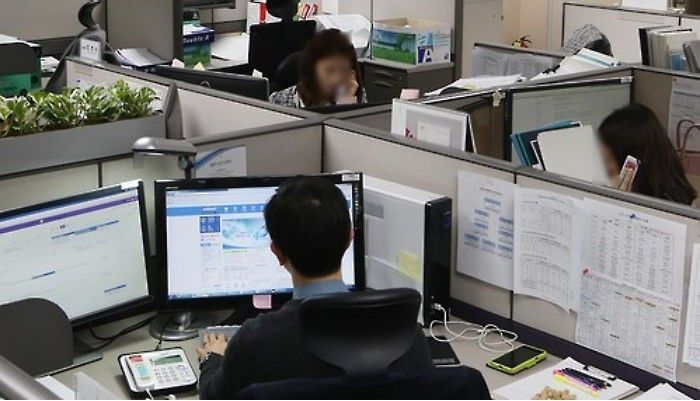
[Asia Economy Reporter Kim Suwan] "Please do not contact me on weekends."
A, a 29-year-old office worker in her third year, recently said this after receiving work-related messages from her boss on a holiday. A said, "There are many cases where the boss contacts me about work on my days off," adding, "Sometimes, they even ask me to handle work during my vacation." She continued, "The 52-hour workweek is meaningless," and appealed, "I don't even expect work-life balance. Just let me not think about work on my days off."
Despite the recent introduction of the 52-hour workweek system, many office workers still feel pressured to work outside of working hours. They cited the so-called kkontae culture as the cause. Kkontae culture refers to a hierarchical culture that forces authoritarian ways of thinking on others.
Experts pointed out that with the advancement of smart devices, the boundary between work and life is becoming blurred.
According to a survey conducted by Saramin in 2018 targeting 550 office workers about 'work obsession,' 76% of respondents said they had experienced work-related contact outside working hours.
The most common reason for receiving messages after work was "anxiety about something happening" (47.6%), followed by "concern that it might interfere with work" (40%), and "it is natural to receive work-related messages" (32.3%).
In particular, 33.6% of office workers responded that they "take work home and handle it on weekends or holidays." On average, work-related contact after work occurs about twice a week.
As a result, controversy continues among office workers regarding the effectiveness of the 52-hour workweek system.
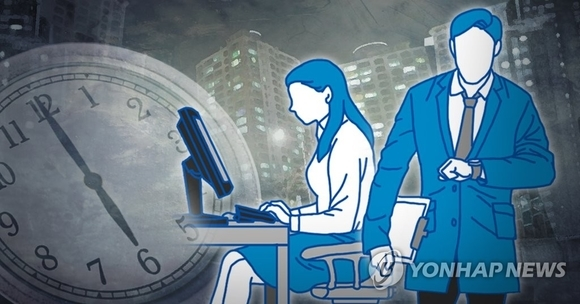 Controversy continues among office workers regarding the effectiveness of the 52-hour workweek system.
 Photo by Yonhap News
B, a 26-year-old office worker, said, "Even vacations guaranteed by the Labor Standards Act are taken cautiously, so how can we be free after work?" He pointed out, "Although kkontae culture is said to be disappearing, it still exists." He raised his voice, saying, "People who say 'You can work even on your days off' are all kkontae."
C, a 28-year-old office worker, said, "In our company, if there is work after hours or on holidays, we have no choice but to do it," adding, "Even if we feel it's unfair, we cannot raise the issue. Everyone holds back, fearing possible disadvantages."
On the other hand, D, a 32-year-old office worker, said, "If you couldn't finish your work on time, isn't it right to do it after work?" He added, "These days, many young people seek work-life balance, but I hope they finish their tasks and then assert their rights." He further said, "There are many people who neglect their duties and only claim their rights."
In foreign countries, work-related contact outside working hours is strictly prohibited by law.
Major European countries have legislated the 'right to disconnect' through laws. The 'right to disconnect' means granting individuals the right to block electronic communications such as emails and messages outside working hours.
France's 'Log Off Law' (Loi El Khomri) mentions the 'discretionary work system' and the 'right to disconnect' to harmonize new forms of labor and labor laws emerging in the digital age. Accordingly, France has enforced labor laws introducing the 'right to disconnect' since January 1, 2017.
In particular, Germany enforces the 'Anti-Stress Law' (Anti-Stress-Verordnung Entwurf), clearly distinguishing between working hours and rest periods.
Experts pointed out that it is common to receive work-related contact even after finishing working hours and leaving work.
Kim Kiseon, a research fellow at the Korea Labor Institute, said in a 2017 study titled 'Research on Prohibition of Work Contact Outside Working Hours and Mandatory Attendance Records,' "The 24/7 contact situation created by the digital age leads to increased actual working hours and mental stress caused by contact outside working hours, infringing on workers' personal rights," adding, "To prevent infringement of workers' right to rest due to frequent work contact outside working hours, it would be more effective to establish institutional measures that allow labor and management to create regulations suited to each company's circumstances."
© The Asia Business Daily(www.asiae.co.kr). All rights reserved.
![Clutching a Stolen Dior Bag, Saying "I Hate Being Poor but Real"... The Grotesque Con of a "Human Knockoff" [Slate]](https://cwcontent.asiae.co.kr/asiaresize/183/2026021902243444107_1771435474.jpg)

















